A law meant to reduce unexpected medical bills has shifted the burden from patients to employers. Plus: solo sailing, and a tale of two farm economies.
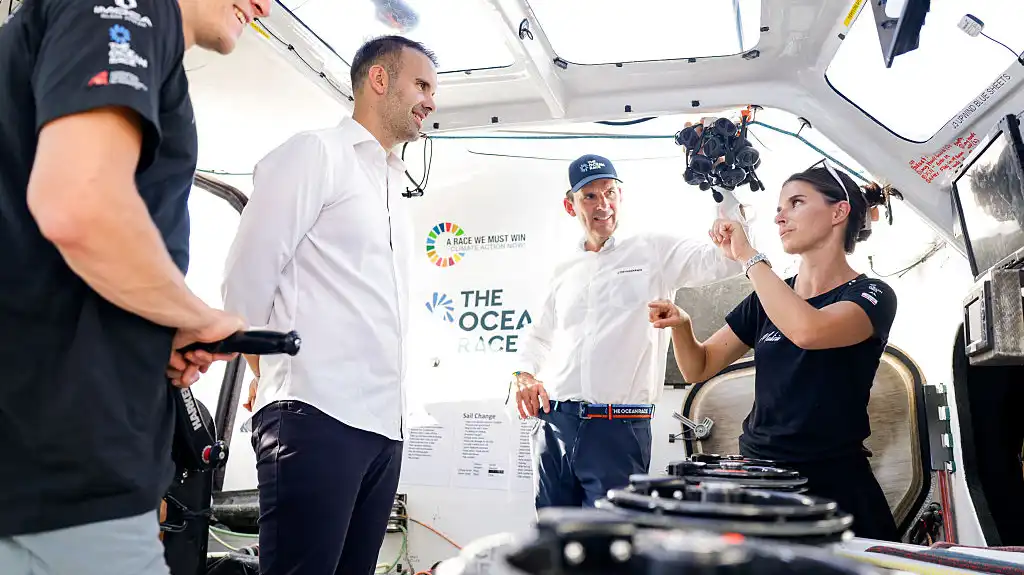
Cole Brauer was the first woman from the U.S. to sail solo in a race around the world. Now, with a new memoir out, she’s already looking to the future.
The 2020 No Surprises Act shielded patients from big emergency care bills and set up arbitration to resolve payment disputes. But now the costs are landing on employers.
The Trump administration announced yesterday that it will no longer allow Microsoft, Adobe, and a handful of other companies to sponsor foreign workers for green cards, at least for now.
People who see increased wealth through the stock market are putting less of their income aside. Others are dealing with higher prices and simply aren’t able to save as much.
Folks from AI startups, Big Tech, research nonprofits and activist groups gathered to hash out ideas for preventing the collapse of civilization over chips and cookies.
Jessica Meszaros, a reporter at WUSF in Tampa, Florida, discusses some of her team’s recent reporting on the rising cost of power in the Sunshine State.
Kalie Robins posted a video singing with her daughter. Then, a Meta AI prompt surfaced her location. The experience led her to rethink what and how she posts online.
“A yield curve is really how the market is expecting Federal Reserve policy rates to evolve over time,” said Meghan Swiber at Bank of America Merrill Lynch.
The AI supply chain is full of mixed incentives, according to researcher David G. Widder. He’s not optimistic that the companies in charge of it will police themselves.
An increasing number of auto loans are several months past due. That’s a sign that people who are already struggling with the higher cost of living are falling further behind.
Third-quarter earnings kick off next week with major financial institutions leading the way, followed by consumer staples companies like Johnson & Johnson, Procter & Gamble and Kraft Heinz.
Recent analysis from the Bank of America Institute found that consumers are spending more on their hobbies like arts and crafts and outdoor recreation.
An initiative on the California ballot would levy the nation’s first wealth tax on billionaires. Supporters say the proceeds would help offset President Donald Trump’s sweeping healthcare cuts. But critics argue that the temporary infusion of cash is a giveaway to politicians.
AI-focused political action committees are spending big. Brendan Glavin, Director of Insights at OpenSecrets, details how these groups are looking to influence AI policy.
This morning, "Marketplace Morning Report" host Kimberly Adams takes listeners to MakerSpace NYC, to hear how a space for hands-on work is launching some small businesses.
Many of them hold effective altruism — the philosophy of making a positive impact with available resources — as their North Star, says Spencer Kaplan who studies AI worker culture as a Ph.D. candidate at Yale.