


The Regency-era novelist who popularized economics through her books
Maria Edgeworth helped introduce the ideas of Adam Smith’s “The Wealth of Nations” to the public.
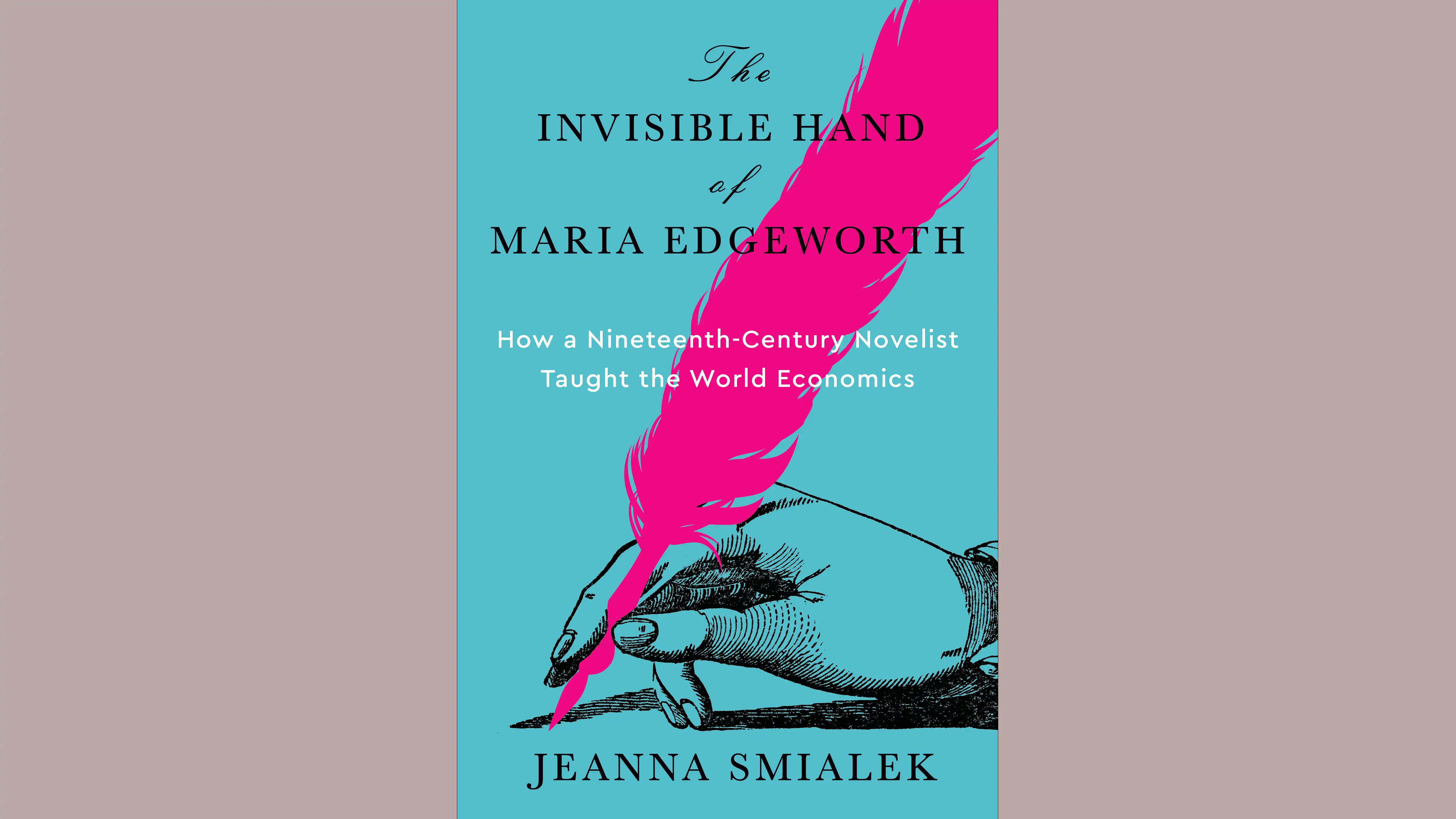
You may have learned in grade school that Adam Smith originated many of the ideas behind modern economics in his book “The Wealth of Nations.” Maybe you’ve also heard about Thomas Robert Malthus or John Maynard Keynes, economists who are also remembered for their contributions to the field. But chances are, you probably haven’t heard of Maria Edgeworth — at least not for her contribution to economics.
Edgeworth was a Regency-era novelist who, at one point, was England’s most popular writer.
“Jane Austen was a Maria Edgeworth fangirl,” said Jeanna Smialek, Brussels bureau chief at The New York Times. “She's obsessed with Maria Edgeworth and is sending her letters and being like, ‘please review my books.’’’
But Smialek also found that Edgeworth was deeply engaged in economics, corresponding with peers like David Ricardo and Thomas Malthus, and working the ideas from Adam Smith into her novels.
“She's taking these ideas that are incredibly complex, that people find very difficult to understand, and she is putting them in the plots of novels that are often meant for women and in some cases, meant for literal children,” Smialek said.
Edgeworth’s life and writing is the subject of Smialek’s latest book, “The Invisible Hand of Maria Edgeworth: How a Nineteenth-Century Novelist Taught the World Economics.” She spoke with “Marketplace” host Kai Ryssdal about her book.
The following is a transcript of their conversation.
Kai Ryssdal: So, tell me how you came to this story of Maria Edgeworth.
Jeanna Smialek: I was reading “The Worldly Philosophers” by Robert Heilbroner, which is one of the classic economic histories, and he has a little aside where he mentions Maria Edgeworth having existed. And I had never heard of her, and I am a big Regency novel nerd, so I was surprised I had never heard of her. So I ordered a bunch of her books, and I was reading them, and I just kept thinking to myself, "This is not sort of casually mentioning economics. She is hiding economics all through these books.” And so I became really interested in why she was doing that. I went down a rabbit hole, and you know that was years and years ago, and here we are.
Ryssdal: Before we get farther into [Maria Edgeworth’s life], give us the lay of the land of economics in 1800. Adam Smith comes out with a Wealth of Nations in 1776. Where do we stand by 1800?
Smialek: We are still very much in, sort of, first generation economics. People are still getting to understand Adam Smith. “Wealth of Nations” was a big, heavy, hard book. It's being reinterpreted in the wake of the French Revolution, and sort it is very much understood in the politics of the moment. And so that's sort of how we come to Maria Edgeworth. She's writing at this moment when the “Wealth of Nations,” the reputation of the “Wealth of Nations,” is still really solidifying.
Ryssdal: And what she does is she takes literally some of his ideas and weaves them into these stories, these novels, these books that she is writing.
Smialek: Yeah, which is so interesting to me because she's taking these ideas that are incredibly complex, that people find very difficult to understand, and she is putting them in the plots of novels that are often meant for women and in some cases, meant for literal children, like they are educational novels for kids. And she is simplifying them to a point where those people can understand them. And it is working so well that she, while doing this, manages to be one of the most famous authors in the English language. Jane Austen is a Maria Edgeworth fangirl, she's obsessed with Maria Edgeworth and is sending her letters and being like, "please review my books.” It is impossible to overstate how popular this woman is as she is writing “The Wealth of Nations” into fiction, which I think is really interesting.
- From October 2026: Min Jin Lee asks, is college still a reliable investment?
- From June 2024: “Temporary” author Hilary Leichter on losing yourself to gigs
- From May 2024: Author Sameer Pandya on how race and class shape our stories
Ryssdal: I think so too. But look, we all know Jane Austen. Nobody knows, or until this book comes out and hits it big, nobody knows Maria Edgeworth. What happened?
Smialek: I think a couple of things happened. The first and most ironic one is that because she was putting so much heavy educational content into her plots, it got labeled as boring. I think another thing that happened at the same time is that English-Irish relations were very, very strained, and remained strained for a long time. And she was Anglo-Irish, born in England, raised mostly in England, had an estate in Ireland, but fit into neither camp. And then I think the third thing is that economics starts professionalizing around the middle of the 1800s. And as it professionalizes, it kind of rewrites the story to suggest that the women who were involved in the early years of economics were just popularizers, and in fact they weren't doing a very good job of popularizing. Basically, they sort of drag the names of the women who are working in the field kind of through the mud, in order to be taken more seriously.
Ryssdal: Let's not skip over that last bit about the men and what they do to her memory, and, honestly, to women throughout the history of economics, as you know better than I. Back then and today, economics is rife with sexism and misogyny.
Smialek: Yeah, well, you can really feel the seeds of this getting planted in the years after Maria Edgeworth's death. So, Alfred Marshall writes the seminal text on the history of economics, and in a footnote to that, he really sort of denigrates what women have been doing to popularize economics. He calls them parasites. I think that sort of lives on to today, to the point where I'm reading Heilbroner 10 years ago, and he says that Maria was the first woman to think of economics, but there weren't really a lot of women in economics in the early years. And I hope that this book helps to dispel that myth. There were actually a lot of women in the early years of economics, and they made major contributions.
Ryssdal: The thing that hits me about Maria Edgeworth's contributions — and obviously that's what this book is about — is how important she thinks it is for regular people to understand what's happening in the economy. That's the whole deal with her.
Smialek: Yes, she thinks that economics is kind of a toolbox. I think she thinks this gives people the tools they need to make good decisions about their own lives. She buys this idea that the invisible hand of markets — that if we all pursue our own self-interest — capitalistic society as a whole will be better off. But she kind of adds to that and says that we have to understand our self-interest in order to do that. That is her major project throughout her life: is trying to give people those tools.
Related Topics
Collections:


Latest Episodes
View All Shows 2 days ago25:17
 3 days ago6:21
 3 days ago12:25
 4 days ago27:11
 6 days ago12:18
 4 months ago24:33