


The price tag might be an endangered species
In her new book, “Gouged: The End of a Fair Price — and What That Means for Your Wallet,” Lindsay Owens writes that personalized prices are, in some cases, replacing set prices — and that might not be so good for consumers.
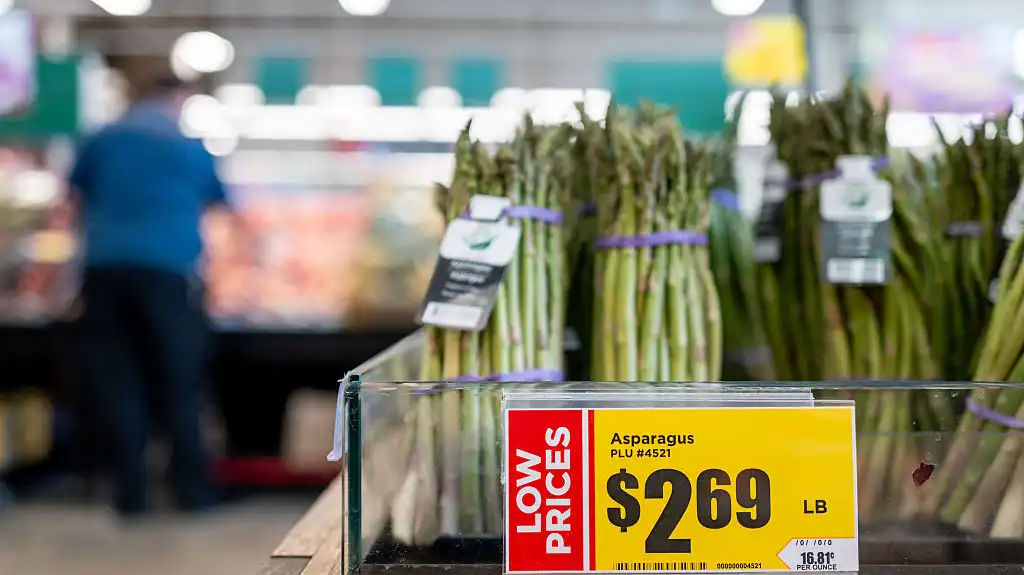
Uber or Lyft users have probably experienced the concept of a personalized price firsthand: two people plug in the same destination, but get completely different prices for the exact same trip.
It’s a trend that’s on the rise as companies learn more and more about what makes consumers tick and tailor their prices accordingly. While the economic adage is “a fair price is any price you’re willing to pay,” for Lindsay Owens, the president and CEO of the think tank Groundwork Collaborative, personalized pricing isn’t necessarily that.
“I think a fair price is a posted price,” Owens said. “And a fair price is a price that is set based on the product and not you, the consumer.”

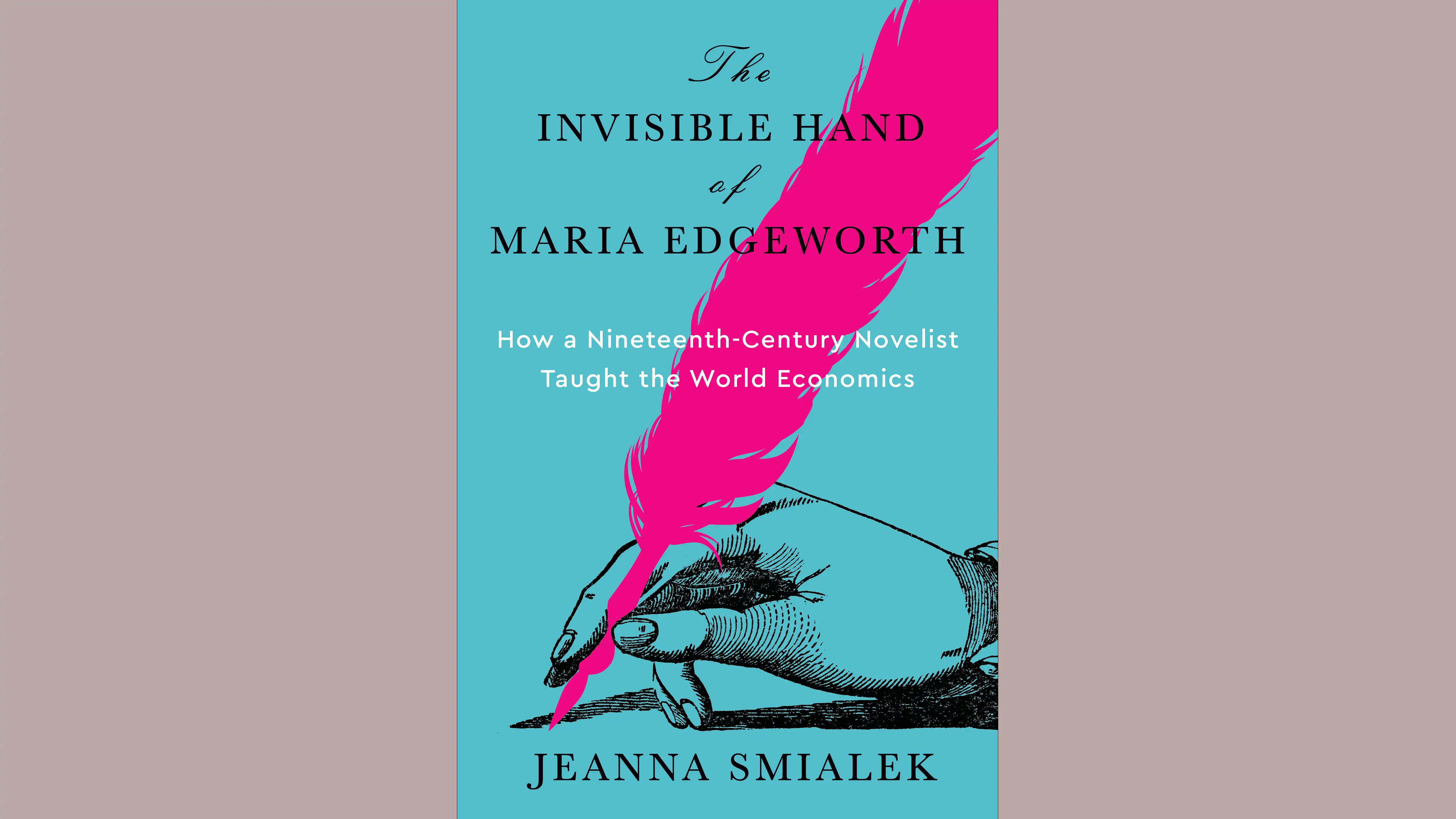
Owens made the case against personalized pricing in her book, “Gouged: The End of a Fair Price — and What That Means for Your Wallet.” “Marketplace” host Kai Ryssdal spoke to her about her writing.
The following is an edited transcript of their conversation.
Kai Ryssdal: Can we get to the subtitle of this book first? The idea of a “fair price.” What does that actually mean? Because I always thought a fair price was what you were willing to pay.
Lindsay Owens: I think a fair price is a posted price. A fair price is a predictable price, and a fair price is a price that is set based on the product and not you, the consumer.
Ryssdal: And therein is the crux of this book, right? Because what is happening, as you point out, is that companies are increasingly using the data that they have on us — all kinds of data — to to change the prices, basically, depending on who you are.
Owens: Yeah, it's very retro. You know, thousands of years ago, we went to the souk, and the merchant set a price based on what he thought we might be willing to fork over. If we had a nice tunic on, we probably paid a little more. But about 150 years ago in this country, we dispensed with haggling. It was the Quakers who said, "Ah, the Puritans are kind of greedy. I don't really like what they're up to." And then it was John Wanamaker in Philadelphia, Pennsylvania, who said I'm going to stick a price tag on my items in my store, both because he was inspired by this, but also he was a businessman, and it's a little time-consuming to haggle for every item in your cart. But right now, I think the price tag is a bit of an endangered species, and companies are now increasingly collecting data on us to get a better sense of how much they think they can get away with charging us as individuals.
Ryssdal: You and Consumer Reports did an experiment involving Instacart. Tell us about that, would you?
Owens: Yeah, Groundwork teamed up with More Perfect Union and Consumer Reports, and we ran an experiment that exposed a massive experiment that Instacart was running on millions of Americans while they shopped for groceries. We recruited 400 secret shoppers, [had them] pick the same pickup location — a Safeway grocery store in Seattle, Washington — [and] pick up the same basket of groceries.
For about 75% of items in that basket of groceries, different people in the experiment were offered different prices. Across all of the baskets in the study, [there was] about a 7% variation. So, we took Instacart's own estimate of how much a household of four spends on groceries in a year and calculated that it could be as much as $1,200 — the result of this sort of Instacart experiment tax for shoppers.
Ryssdal. Okay, so look, on the face of it, and speaking as a consumer, that's outrageous. But speaking as a person who runs a business or a large company, why is that bad?
Owens: Yeah, there were definitely critics of the study who said, "Look, there's nothing to see here. This is classic A/B testing.” But I don't think most Americans, when they shop for groceries, realize that they are guinea pigs so that the company can calibrate exactly how much they can get away with charging you.
I think this is ultimately why within two weeks of releasing our study, Instacart reversed course, effectively promising to shut down the lab. But this was a big part of Instacart's business model. They acquired the AI pricing giant Eversite in [2022], and Eversight promised to help companies run these pricing experiments without consumers' knowledge. This was a big part of what they sold retailers.
Ryssdal: When you, Lindsey Owens, are out in this economy, as a consumer, what do you do to keep yourself on guard, as it were? Because it's got to be exhausting.
Owens: Yeah, I mean, I run a think tank, but I'm also a shopper. I'm also a consumer. I'm the mom of a toddler. I'm tired. I don't want to spend my evenings comparison shopping online. The truth is, from the bottom of my heart, I do not believe it should be every consumer's job to duck and dodge and bob and weave.
The budget shopper is the mechanism by which prices are disciplined in this economy. And when the budget shopper can't do their work because they can't comparison shop or because they're being picked off by a company who knows they need a good deal, that undermines healthy competition in the market writ large.

Latest Episodes
View All Shows 10 hours ago25:26
 17 hours ago6:30
 a day ago4:36
 5 days ago39:00
 7 days ago30:58
 4 months ago24:33