6

Horizon Organic to consumers: sewage sludge is good for you!

Already plagued for falling prices and other woes, the organic food industry is now confronting 800-pound gorilla Dean Food's decision to create a new line of "natural" yogurts and milks through its subsidiary, Horizon Foods. For anyone vaguely familiar with advertising claims, "natural" and "healthy" are big sellers, regardless of the fact that the terms are barely regulated in the food market and are largely meaningless.

The threat -- which is considerable -- is that this move will encourage a shift of organic dollars, the benefits of organic farming and a pretty tight USDA regulatory system toward a Wild West free for all: the ambiguous abyss called "natural."

The feds (aka the USDA and FDA) have respectfully declined to define "natural" except for a very narrow class of products. And so Dean Foods will fill that void with their own: natural Dean products will be those "produced without added hormones, artificial sweeteners, artificial colors, flavors, preservatives or high fructose corn syrup." Well, that's reassuring.

Claims for natural meat and poultry only are defined and regulated by the USDA: for meat and poultry to be labeled "natural" it must be minimally processed (a process which does not fundamentally alter the raw product). The label must explain the use of the term natural (such as 'no added colorings or artificial ingredients' or 'minimally processed'). But this is where clarity disappears.

Dean's new "natural" yogurts and milk can -- and will -- come from dairy cows that have eaten pesticide laden feed such as corn and soy, antibiotics, pig and chicken byproducts, and sewage sludge. The only bad boy from the list of conventional animal feed that Dean has prohibited is hormones. So what's a little sewage sludge and pesticide residue going to do to your kid anyhow?

Debates rage on whether organic food is more nutritionally complete or "better" for the consumer. Opinions vary considerably but even the EPA itself admits that children are particularly susceptible to pesticides for many reasons:

  • children's internal organs are still developing and maturing
  • due to their lower body weight, children have increased exposure to anything in substances they eat or drink
  • pesticides block nutrient absorption

The Score:

1) The International Dairy Foods Association and Grocery Manufacturers Association don't want a definition of natural (just read their letter to USDA's Food Safety and Inspection Service from March 2, 2007).

2) Consumers responding to the recent Shelton Group Survey trust natural over organic (note to organic marketers: Get working!).

3) The FDA will not engage in rule making on "natural" advertising claims due to "resource limitations and other agency priorities."

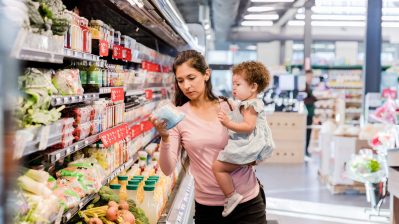
4) The new Horizon products are aimed at toddlers and children (who are particularly at risk for pesticide exposure).

5) Oh, and the American Academy of Allergy, Asthma & Immunology concedes that milk is the number 1 cause of food allergies in children.

So, all you confused consumers out there, remember this: ATTENTION ALL SHOPPERS: Natural = pesticides.

Heidi Siegelbaum's picture
Heidi Siegelbaum - Sep 26, 2009

Great, meaty comments...the sewer sludge on dairy fields is extremely troubling. I wonder if anyone has used it as an energy source.

Rainwater Harvesting's picture
Rainwater Harvesting - Aug 3, 2010

Sewage is already used as an energy source. See http://www.msnbc.msn.com/id/5335635/
Methane and electricity can both be generated form sewage waste.

Helane Shields's picture
Helane Shields - Jul 24, 2009

Dean Foods, makers of Birds Eye products, plans to undercut organic farmers by marketing totally unregulated “natural” yogurts and milks through its subsidiary, Horizon Foods. Natural Dean products will be those “produced without added hormones, artificial sweeteners, artificial colors, flavors, preservatives or high fructose corn syrup.” (On the other hand, the nation's 10,000 small organic farmers must comply with USDA regulations which prohibit the use of genetic engineering, sewage sludge, irradiation, and a variety of other industrial-style agriculture practices.)

"However, Dean’s new “natural” yogurts and milk can — and will — come from dairy cows that have eaten pesticide laden feed such as corn and soy, antibiotics, pig and chicken byproducts, and sewage sludge. The only bad boy from the list of conventional animal feed that Dean has prohibited is hormones. So what’s a little sewage sludge and pesticide residue going to do to your kid anyhow?"

It is, unfortunately, common practice in US to spread sewage sludge on dairy pastures. The pollutants include parasitic worms, prions, viruses, bacteria and other pathogens -- pesticides, drugs, hormones, and lipophilic industrial chemicals which concentrate in the animals' milk and fat. Billions of pounds of toxic industrial wastes are discharged to sewage treatment plants in the US each year. The wastewater treatment process reconcentrates those hazardous pollutants in the sewage sludge.

Milk from cows in Georgia which had been grazed on sludged fields, was found to be contaminated with high levels of toxic thallium.

The US Dept. of Agriculture is presently investigating hazardous perfluorochemical (PFOA) uptake in meat and milk of livestock grazed on sludge-spread fields in Alabama. PFOS and PFOA are man-made fluorinated chemicals which are bioaccumulative carcinogens and highly toxic.If the chemicals are found to have contaminated meat, the results would mark the first time that perfluorochemicals have been traced from sludge to commercially produced food. In 2006, perfluorochemical contamination of two German rivers was traced to fields treated with sludge (Environ. Sci. Technol. 2006, 40, 7108−7109).

Excess Molybdenum in sludge is known to harm livestock by causing copper deficiency and hypocuprosis (Dr. Murray McBride, Cornell University).

"There have already been several incidents in Australia (e.g. Werribee) of cattle contaminated with organochlorine residues after grazing on sludge treated land. A major problem appears to be that close cropping animals tend to ingest significant quantities of soil as well as plants."

Even small amounts of PCBs (Polychlorinated biphenyls) in sludge can cause bovine reproductive and developmental health problems Meat and dairy products are a key source of human exposure to persistent lipophilic organic contaminants including PCBs and dioxins.

Even Dr. Rufus Chaney, a US Dept. of Agriculture sludge proponent, admits

" . . . when the fluid biosolids are spray applied on standing forages, the biosolids particles can get stuck to the forages . .
when such contaminated forages are grazed, livestock can get high exposure to xenobiotics in biosolids." (“xenobiotics “ = Studying the Metabolism and Disposition of Chemicals in Biological Systems -Xenobiotics include such substances as TNT, PCBs, chlorophenols and polycyclic aromatic hydrocarbons.") He further said, "Grazing (not forage uptake) by animals could be getting these compounds into food and milk, especially if the biosolids are surface applied." " . . . Biosolids can represent 12% of an animal's diet if fluid biosolids are surface applied . . ."

Dr. Chaney continued: “Plants can take up enough Cobalt to harm ruminant livestock under worst case model conditions." (Note: Cobalt in sludge is untested, unregulated and unmonitored.

Dairy farmer Ed Roller in Missouri suffered tremendous losses. A few years ago, the court ruled that the sewage sludge "contained substances
and compounds, toxic to humans and animals, i.e., fluoride, cadmium, lead, mercury, iron, arsenic, aluminum, selenium and molybdenum. Said
substances and compounds migrated from the land to the (Roller) neighboring dairy farm, causing damage including diminished milk production, death of cows
and loss of breeding opportunity."

In a letter dated December 3, 1996, Dean Foods wrote to assure me none of its products are grown in sewage sludge. Here is the warranty they require from their suppliers:

"The Seller warrants and represents that no sludge or waste (excluding whey) from any municipal or private source, or from any septic or other disposal system, has been applied to the land. In the event that any sludge or waste has been applied to such land on or after such date, this Agreement shall be void and of no further force or effect, and Seller shall pay Company for all planted seed and other costs related to the crop, and shall indemnify Company against all claims, demands, and losses which is any manner relate to raw and/or processed crop.

I hope this information helps you. Enclosed is a coupon to use towards your next purchase of any Birds Eye products."

Signed by Missy Allen, Dear Foods Consumer Relations Coordinator.

It is time to find out whether Dean Foods will be selling "natural" milk and dairy products from cows fed sludge-fertilized fodder, or grazed on sludged fields.

Helane Shields, PO Box 1133, Alton, NH 03809 Sludge researcher since 1996

Alex Coppock's picture
Alex Coppock - Jul 22, 2009

Would everyone please stop lying to me? Thank you, Greenwash Brigade, for calling out these (to borrow a phrase) lying liars' lies.

Jim's picture
Jim - Jul 22, 2009

Thanks for the post, Heidi. After reading your post, and doing some more digging, I learned that Dean Foods had quietly switched their "Silk" soy milk from "organic" to "natural", substituting conventional soy beans for what had previously been organic soy beans,... with no fanfare and no decrease in price. "Don't mind the pesticides bait-and-switch, folks, just look at the pretty wind turbine."

Catherine's picture
Catherine - Jul 25, 2009

The difference between artificial additives in the milk after it has left the cow and artificial additives to produce a cow are huge, thanks for helping regular folks know what we're buying.
Second point: I don't necessarily want the 'feds' deciding for me/ defining for me what is 'natural'; look what they did with the term 'organic'.