Where’s financial system regulation?


TEXT OF INTERVIEW
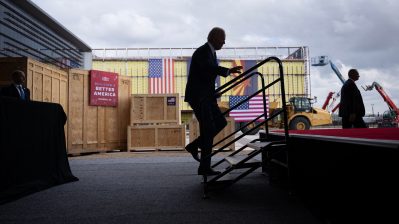
Kai Ryssdal: The president offered his remembrances and condolences for the events of September 11th at the Pentagon today. He will be at Federal Hall in New York City this coming Monday, right across the street from the New York Stock Exchange. He will be speaking just one day short of a year since the collapse of Lehman Brothers and the gut-wrenching beginning of the financial crisis.
Lawrence Summers is one of the president’s key economic advisers, one who’s working on the administration’s plans to re-regulate the financial industry. Mr. Summers, welcome to the program.
Lawrence Summers: Glad to be with you.
Ryssdal: What is the president going to say on Monday to convince people that this administration has a handle on how to prevent something like Lehman Brothers and this whole financial crisis from happening again?
Summers: He’s going to highlight that nine months ago, the conversation was about whether recession would become depression and that today the conversation is about when the recession is going to end. It’ll highlight that we’ve got a long way to go, but that the emphasis can now shift from rescue to recovery.
Ryssdal: What we’ve heard from the White House really so far — the past six or nine months, and the Treasury Department as well — is some speeches about consumer protections, foreclosure prevention programs and the Treasury Department’s White Paper. What is the White House doing right now to make Wall Street safer for investors?
Summers: Right now, the level of regulation, the insistence on capital adequacy, the insistence on transparency, is very different that it’s every been. It’s a consequence of the stress tests that Sec. Geithner initiated a few months ago, but I think it’s hard to look at almost any financial indicator and deny that some real progress has been made.
Ryssdal: You know a lot of things came together at the same time to cause this financial crisis and the collapse of Lehman brothers a year ago. What in your mind was the most important thing that happened?
Summers: I think it was the combination of a very long period of complacency and excess confidence, in which, people lost their moorings in terms of evaluation risk without any real framework of government protection.
Ryssdal: Was it an absence of protection or these banks just working around the regulations that were there, this thing you’re trying to fix?
Summers: I think a satisfactory regulatory framework wasn’t in place and that enabled banks — while complying with the law — to do things that were highly imprudent. You know, somebody once said, the scandal isn’t usually what’s illegal; the scandal is some of the things that are legal.
Ryssdal: Well if that’s the case, can we stop this from ever happening again, no matter what kind of work you do on regulations?
Summers: I don’t want to say after 3,000 years of financial history that we have seen the last financial crisis, but I certainly think we can make our system much less vulnerable than it has been. By providing for much more capital, by protecting consumers, so you don’t see the kind of predatory subprime lending that contributed so much to bringing about this crisis, by stopping the kind of “race to the bottom” competition between regulators.
Ryssdal: Along those lines, a lot of the banks seems to be pretty healthy now, stock markets are doing alright, consumers are feeling better. Have we wasted this crisis, in terms of capitalizing on the fear and the problems of Lehman Brothers?
Summers: I don’t think so. I think people will remember this. We’ve still got millions of homeowners who are underwater on their homes, we’ve got an unemployment rate in excess of 9 percent, we’ve got a government that’s very focused on this. I hope and trust we will not see a return to complacency, but you’re right to give the warning. Too often that’s happened after past financial crises and that’s why moving rapidly on financial regulatory reform is so important to us.
Ryssdal: Lawrence Summers. He’s the director of the White House National Economic Council. Mr. Summers, thanks so much for your time.
Summers: Thank you.
Stories You Might Like



There’s a lot happening in the world. Through it all, Marketplace is here for you.
You rely on Marketplace to break down the world’s events and tell you how it affects you in a fact-based, approachable way. We rely on your financial support to keep making that possible.
Your donation today powers the independent journalism that you rely on. For just $5/month, you can help sustain Marketplace so we can keep reporting on the things that matter to you.