

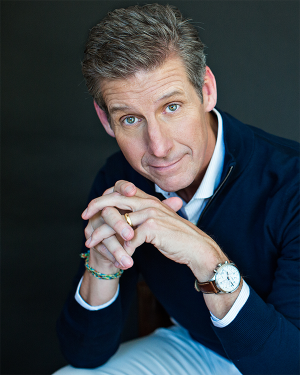
EXECUTIVE SNAPSHOT
WHO: Monsanto Chairman, President and Chief Executive Officer Hugh Grant
EDUCATION: Grant earned a bachelor’s of science degree in agricultural zoology with honors at Glasgow University. He also earned a post-graduate degree in agriculture at Edinburgh University, and a master’s of business administration at the International Management Centre in Buckingham, United Kingdom.
WHAT YOU MAY NOT KNOW: He joined the company as a product development representative for Monsanto’s agricultural business in 1981.
Kai Ryssdal: Hugh Grant, welcome to the program.
Hugh Grant: Thank you. It’s good to be here.
Ryssdal: This is, it seems to me, to be in the agricultural seed business what with food prices and commodity prices. How lucky did you get or how much good planning did you do?
Grant: Well I don’t think it’s luck. I think there’s an urgency. We’ve never seen demand curves like we have right now. I think you probably go back to the Far East when America was feeding a war torn Europe is the last time you saw this kind of demand curve.
So this time around a big piece is China and India and it’s new people arriving on the planet and there’s dietary shifts. So I don’t think it’s luck. I think actually for our kids, we’re in on a whole new phase. For the next generation, this is changing incredibly fast as demand shifts. So it’s a good time to be in agriculture.
Ryssdal: What kind of pressure does that put on you? That speed of change.
Grant: Considerable pressure, but we’re in a business where every spring you plant seeds and every summer you harvest them so you’re living inside a kind of periodicity. I think the pressures that puts you on is you better get it right so as you’re looking at escalating demand making sure you’re planting the right stuff at the right time becomes important, but that’s a great challenge.
Ryssdal: There’s a satisfaction I imagine in essentially helping to feed the world. But it’s not to all altruism. You guys make a lot of money doing it.
Grant: Yeah, we do and I’ve always believed that if you can do well in business and do good that’s about as good as it gets. So I don’t see this as altruism, but the thing that I’m, as I’ve traveled and lived around the world, a big piece of the satisfaction that I get is the seeds that we produce are scale neutral.
The work, if you’re on acre and a half farm in southern India or you’re a 5,000 acre farm in central Illinois, they work just the same. So it’s not altruism. It’s a good business, but it’s a business that works regardless of the sign of the farm.
Ryssdal: There’s a great quote actually from you that I read getting ready for our chat. You said, This isn’t a feel good thing. Satisfying the demand curve is a great business opportunity.”
Grant: That’s absolutely true.
Ryssdal: What’s your biggest crisis then? What’s your biggest problem?
Grant: I wouldn’t say crisis or problem. I think a piece of the work that I continue to do is looking at a lot of the misunderstanding around what we do and the promise that this technology brings.
So I wouldn’t put it in the crisis category, but I think there’s a lot of education around what is agriculture, how do you grow crops, how do you improve productivity on a farmer’s acre. That I think’s a big piece of my job.
Ryssdal: Part of the plan that you guys announced a number of months ago to double crop yields in the next 20 or 25 years, has to do with genetically modified crops. Isn’t there a little bit of opportunism in taking advantage of the world food crisis to build your business that way?
Grant: No, no, no. I don’t think so. I think there’s a crying need for this. So, it’s pure coincidence. Same week, same couple of weeks you get Ban Ki Moon talking about the need to increase yields. We think by 2030 there’s a possibility of doubling yields and perhaps more importantly, doubling yields with a third less stuff.
So doubling yields and consuming a third less resources and if you fast forward over the next 20 years, we think the only way you can double yields is by improving the use of water and improving the use of fertilizer.
The only way you can improve the use of water and fertilizer so that a plant literally sips instead of gulps, the only way you can get that done is with the application of some of these new technologies. That’s what’s going to unlock the potential.
Ryssdal: Do you understand though the hesitation and skittishness some people might have and some countries have about using technology and agriculture in the same breath?
Grant: Yeah, I do and I’ve lived in a lot of different parts of the world that I understand the skittishness. There’s a piece of this you say well, let’s wait. We’ll let the next generation figure it out. Our kids will tackle this one.
I think what we’ve seen in the last – it’s not even a year. What we’ve seen in the last six to ten months is an urgency or the start of the drum beats that say we are going to have to figure this out.
And it’s not even about more mouths to feed. It’s that, plus a whole lot of people eating differently. If you look at the dietary shifts in places like China. People eating bread for the first time. Tasting their first croissant. Eating pasta instead of rice noodles. The torque, the change that that applies to what we need to produce is huge.
Ryssdal: But the seeds that you produce here and sell worldwide don’t go into things like wheat and rice and tomatoes. They go into corn and soybeans and things generally that go to benefit animal feed and thus, the meat-eating populations of the world, the developed countries as opposed to some places that really are suffering drought and agricultural problems.
Grant: Yeah, but I think that’s too simplistic. If you look at take a little farmer in fact, southern India. I was in southern India back end of last year driving down a dusty road. There’s a farmer at the end of his field. He’s plowing the field with two oxen and a wooden plow. So biblical scene. He’s using a cell phone.
So you’ve got a guy that’s using technology that’s been around for a couple thousand years and a cell phone. I think when you look at the application of our drought technologies, technologies that allow crops to grow with less water, they’re going to be used in small-holder agriculture. They’re going to be used in small-holder agriculture in India and I’m hoping that they’ll be used in Africa hopefully within a few years of launching them here.
So there’s the capacity of moving these on other crops over time.
Ryssdal: What do you say though to agriculture ministers of some countries in Europe who have expressed real doubts about GM crops and technology and agriculture? What do you say to people in the developing world who say you’re not really helping us. You’re helping the modern world? What do you say to them when they give you these examples of how you’re not helping them?
Grant: Well, again, in fact the same trip meeting 150 small-holder cotton growers in a big tent in the middle of a field with the wind blowing and the sides bellowing in and out and these are growers that through the Internet so they’re an acre and a half. Smaller than most people’s backyards in this country and they’re saying when will drought technology come to India.
So I think there’s a sentiment and this is arrogance. I think you can afford to take these stances when you are standing at the top of the pile, but for small-holder agriculture, these are technologies that change people’s lives.
So my experience has been when farmers get a chance to try these, when they get the choice or the ability to try them then things change. Things change very quickly. And even in Europe we get five or six countries now in their third year of planting and harvest. So I’m getting good feedback from farmers in Europe who are actually trying this stuff.
Ryssdal: Those gains in Europe didn’t come though without a lot of lobbying and politicking. I imagine you spent a lot of time over there.
Grant: I personally did start 12 years ago. My realization of this is Europe needs to come to their own conclusions, but I think what you see is you see a Europe today that’s continuing to import of a lot of American soybeans and a lot of American corn and they’re looking for the best possible prices they can access and the best possible quality.
So I think the world is changing and I’m a lot more optimistic about the use of these seeds and these technologies than I was 12 years and a billion acres ago. So time’s moved on.
Ryssdal: Why are you more optimistic know?
Grant: Because I think farmers are seeing the benefits to the technology. They’re beginning to see what this can deliver. So, I’ll give you an example.
A few days ago the estimate here this year is 155 bushels of corn per acre, which probably doesn’t mean much to you, but it’s the second biggest harvest the country’s ever seen and one of the wettest springs that we’ve ever seen. Just lousy weather this year.
A couple of years back, the third biggest harvest the country’s ever seen and one of the driest summers that we’ve ever had. The reason that we’re setting those records is farmers are using better seed, they’re using better technology and I anticipate that we’re going to see farmers around the world increasingly reaching for those technologies so that they can enjoy those benefits the same as they are here.
Ryssdal: Where’s the growth for this company?
Grant: The near term growth we think that we get the opportunity doubling the company or doubling the gross profit of the company and a big piece of that comes through corn and improving the performance in corn, as soybeans and driving yields in soybeans.
We’ll launch a product next spring that will lift yields by seven to 11 percent. Normally yields go up by about three-quarters of a percent a year so we’re literally delivering ten years of improvement in one year.
Corn and soy or cotton business and then veggies and the growth comes from those four platforms. It comes not just from the U.S., but it comes from worldwide as farmers look for these opportunities and look for the improved yields in their own backyards.
Ryssdal: Does your size and position in the market make it difficult for farmers, big or small, to not use your products and your technology?
Grant: I don’t think so. Our business model is one where we’re selling the technology directly through our brands, but we also license. So in the U.S. we licensed to 200 and something — 220 mom and pop corn companies around the country.
So the key thing for a farmer is he’s really looking for the choice on a seed that works in his farm and that’s a kitchen table decision and he makes that decision every spring and he’s literally making that seed decision based on not just what works in his farm, but as I’ve talked to farmers and I was on a farm on Monday, they’re making that seed decision based on what works in that field on that farm.
So, I don’t think it does. I think actually it’s the opposite. The weight of the choice he has on the performance of that seed, the better the yield he gets.
Ryssdal: You’ve been criticized though for using your market position to in essence either force farmers to use your seeds or conversely not letting them opt out making it very difficult in the marketplace for them not to use Monsanto products.
Grant: I think it’s a misunderstanding. So, farmers choose their seeds every year, every spring they choose their seeds. So in this country they’ll choose five or seven different varieties of hybrid corn and they’ll run those five to seven hybrids across the farm. Every year they drop out a couple and they bring in a new couple.
It’s like choosing race horses. They’re always looking for that winner. You can’t force the farmer into doing anything and the only way that you win in this business and it’s real simple is to have the best performing seed at that kitchen table in the spring.
We’ve done well in the last few years, not just in the biotech, but the other side of this. Just simple seed and we’ve won because our seed works better.
Ryssdal: You guys make and sell a lot of corn seed and you do really well doing it. I’m curious as to your take on ethanol and the food versus fuel debate.
Grant: I think it’s unfortunate that it’s become a food versus fuel ’cause last time I checked, we got food crisis, but we got an energy crunch as well. Energy isn’t looking too peachy.
So when you set it up as a win/lose, I think it’s a bad start. So it’s a bad start.
Ryssdal: So set it up the way you like then.
Grant: So the way the conversation has been set up is food versus fuel. I think we should be striving for a position where it’s food and fuel and feed and the only way you get to a position where it’s food and fuel and feed is by driving performance.
Ryssdal: Let’s see. Food, fuel, feed, Monsanto makes a lot of money.
Grant: We sell a lot of seed. But here’s the reality. Bio-fuel’s in its infancy. So if you’re in Europe you’re making diesel out of canola. If you’re in Brazil you’re making ethanol out of sugar cane. So far in the U.S. the industry’s been making ethanol out of corn.
My guess is we meet here in five to ten years time, we’ll be looking at the waste streams in these products. So the leafs and stems and turning them into ethanol, but you have to make a start. My fear is – and we’re not in the ethanol business. We’re in the seed business, but my fear is if we stop ethanol today we lose an opportunity and we need all the help we can get, whether it’s solar, wind, bio-fuels or regular gasoline. We need all of these.
Ryssdal: Do you buy the argument then that ethanol production is leading to or helping cause higher food prices?
Grant: Not at all; not at all. I think the biggest – if we closed our eyes, stamped our feet and said ethanol was a mistake; let’s make it go away tomorrow morning, we’ve still got squeezing availability of food because the biggest draw in this is what’s happening in other parts of the world.
If you look at the demand curves in China and India, if you look at the dietary shifts and people tasting croissants, eating beef for the first time in their lives, this dwarfs the impact of ethanol and it’s why I think we’re setting up the wrong discussion at the moment.
The conversation should be how do we double the output and how do we improve productivity over the next 15 or 20 years. That’s where the urgency is.
Ryssdal: How are you going to do that? What’s this company going to do over the next 15 to 20 years to double crop yields?
Grant: There’s two broad areas. One is just improving breeding. So we’ve literally built the street maps. So if you arrive in a new town and you’re looking for the best hamburger or the best French restaurant, then you use one of these Map Quests or street maps – we’ve built a street map for corn breeders so they can literally work out what makes the strongest stems, what yields the best corn. So giving them a street map helps. So that’s one side of the house.
And the other side is our biotechnology. As you look to the next – by 2012 our goal is to have launched our first family of corn that can grow with less water. In America today agriculture drinks about 70 percent of the water. If you go to Africa, it’s 95 percent.
So when you think about the next 15 or 20 years, the only way you can really double yields is be more effective on how we use water. I think the food squeeze that we’re seeing today will be dwarfed by the squeeze on water.
So for us it’s about improving water utilization and then longer term improving fertilizer use.
Ryssdal: Last time you guys announced profits, you announced some price increases as well. How come given that the food crisis is so serious in this country and in the rest of the world?
Grant: Our pricing approach has always been – so we’re on a business that’s generational. We’re selling to farmers and we’d love to sell to their sons and daughters as well. So the deal that we have with our customers is as we create value, we share that value somewhere between two-thirds and 50/50.
So as we’re creating new bushels and new yield and putting that increased productivity on a farm, we share the upside with the grower. That’s why we’ve done so well because our seeds work better and yield more. They produce more bushels on farm.
The nice thing about that model is whether you’re in 5,000 acres in the Midwest or you’re in a couple of acres in India or in Southeast Asia, farmers look at the harvest and they look at what they bring home at the end of the day. If you can deliver a technology that changes that curve, then you stand an even chance of winning.
Ryssdal: Why do you suppose people are so afraid of the technology that you sell?
Grant: I think with new technologies there’s always a fear of the unknown. I think despite the fact that we’ve been selling these seeds since 1996 so we’re now in our 12th year. I think agriculture as a whole is still largely unknown. People think food arrives on the supermarket shelf.
So there’s a piece of this is just basic education. I’ll give you a for instance.
Ryssdal: Go ahead.
Grant: I’ll give you for instance. Cotton, the shirts that we are wearing. Eight years ago cotton was sprayed eight to ten times. So you remember the old Hitchcock movie, North by Northwest and the crop duster? So the crop was sprayed eight to ten times to keep the caterpillars off. Today the crop’s sprayed twice because there’s a technology in the leaf that when the caterpillars eat the leafs, they die, but six sprays and hundreds of thousands of pounds of pesticides have gone away.
I think that there’s some apprehension because that story really isn’t told or understood.
Ryssdal: OK, but you guys have been selling these seeds for 12 years now; plus or minus.
Grant: Yep.
Ryssdal: Agriculture has been around for a millennia.
Grant: That’s absolutely true.
Ryssdal: I guess the question is 12 years is a really short period of time to understand what some of this technology might eventually lead to and that’s where the complaints and the problems come in. I guess we don’t know what we don’t know yet.
Grant: Yeah, but if you took that approach you’d never do anything. If you and I were sitting here today and said so, what we going to do about the continued demand for food and how do we work to improve the closing stocks of grain.
A piece of that is we need to improve productivity on an acre. There’s no new acres around the world. We’re farming what we pretty much have. There’s no new water around the world. We’re farming with the water that we have.
So I think this rather than the what if, I think we need to – and this isn’t just Monsanto. This is how we work together. It’s the what is and the what is is that 12 years, a billion plus acres of these crops been planted around the world and absolutely no problems.
When you look at that relative to the yield improvements we’ve seen and a miserable wet spring that we had this year. These are technologies that will make a difference on satisfying escalating demands.
Ryssdal: Monsanto recently announced that it’s going to put up for sale its technology that goes into letting cows produce more milk. Recombinant bovine growth hormone is the common parlance. Why are you getting out of that business?
Grant: You’re right. We’ve announced that we’re selling that business. Milk isn’t going to be a part of our future so I think if we met here in five or ten years time our goal is how we double crop yields specifically and corn, soy, cotton and vegetables. I don’t think milk’s going to be – milk wouldn’t be a big part of that.
So we’ve been slowly exiting a number of these businesses and this just goes back to focus and resourcing against that focus.
Ryssdal: Before you decided to get rid of it though, you actually worked pretty hard to change the labeling and to not let consumers see those labels that say, ‘This milk comes from bovine growth hormone free cows.’ Why that effort then if you want consumers to have the choice?
Grant: No, the labeling issue on milk for me is – I’ll tell you how I see it because label laws are different around the world, but when you look at the U.S., the ethos is this. If the milk looks the same, if the milk tastes the same, if chemically the milk is identical and nutritionally it’s the same, then milk is milk. It’s that simple.
When you start labeling or implying that there’s differences in that milk, I think you lead to confusing the consumer.
Ryssdal: But doesn’t that go back to the genetically modified crops thing where if it looks like corn and tastes like corn and smells like corn and cooks like corn, then it’s corn, except the innards, the guts have been messed around with. That gives people pause.
Grant: I think we’ll look back on this in the next five to ten years with a wry smile when you think of the debate that has gone on around biotechnology. There’s 40,000 genes in the corn plant. They all come together. It’s the birds and the bees. They all come together. They do their square dancing and they separate and new corn is begat. It’s a sexual function.
These are technologies that add one more gene and that allows that crop for the first time to fight off bugs and weeds. When you go and meet farmers and you talk about the relief on being able to fight bugs and weeds in the spring time that debilitate yield and the ability of that crop to fight off its attacks on its own, that’s a breakthrough.
That’s why farmers are buying these over the pesticides that they’ve been using since the Second World War. That’s the reason for the change in agriculture.
Ryssdal: Some pesticides that you make. You make a Round-Up resistant corn and then you also make Round-Up so that the farmer can spray the Round-Up on the corn. Not hurt the corn, but kill the weeds. That’s a pretty good business model.
Grant: No, that’s right. We compete pretty aggressively in that segment where a whole bunch of people that produce that in China and other parts of the world, but that’s correct.
Ryssdal: What do you see happening over the next five, eight, ten years that’s going to make it hard for you to do business?
Grant: Hard? I think all business is hard. I think for us we meet as a team every Monday morning. We kick the tires and it’s not very glamorous, but we meet every Monday morning. We kick the tires in the business and we are focused on how can we improve and where’s it raining and where’s it dry and how is planting progressing.
So I don’t think it’s been making it hard. I think the key for us is maintaining operational focus, maintaining the absolute focus on that customer and making sure that at that kitchen table in the spring when he looks at the choices in those seed catalogues, that our performance is absolutely understood. As long as we perform, we stand a chance of being in that first pick.
Ryssdal: Let me ask you about your customers for a second. Who are you thinking about when you’re going about your daily work? Are you thinking about the farmers and the agri-businesses or do you think about the people going to the supermarket picking up the produce?
Grant: Yeah, both. So, I think in the earlier days of the company we were focusing on farmers. As you look towards some of the new products that are coming – see we launched a product a couple of years ago called Vistive. It’s a zero trans-fat soybean. So trans-fats are the things when you get margarine and it’s hydrogenated, there’s fats in there that are bad for your heart.
We produced a soybean that has zero trans-fats. So now you’ve got a healthy oil in a soybean. It isn’t biotech. It’s done through breeding. That’s a focus on the consumer.
But the reality of how food is produced is it starts with seed in the ground and it ends up on a supermarket shelf. So as we think about those products, we’re thinking more and more, we’re thinking through the channel.
Ryssdal: Do you worry at all about the rise of organic foods and people being more interested in more natural produce and product?
Grant: No, no, I don’t. I think if you walk through any supermarket there’s a portion of that shelf is going to be organic and that’s just fine and there’s a big piece of that shelf is driven by quality and affordability. A lot of the organic material is still pretty expensive.
So, as we think about it, we’re looking at how you satisfy demand curves and how those curves are evolving. In my book we’re going to continue to see a ramp in those curves. So, whether that’s an Indian supermarket shelf or a shelf here in St. Louis, there’s a piece of this I think is going to continue to be driven by production agriculture.
Ryssdal: Is this a recession proof company? I mean, people gotta eat.
Grant: I don’t think any company’s recession proof. I think that’s a recipe for disaster. I think that we probably tread through recessions better than some companies though because food is pretty basic.
The way I look at it, we need to be able to drive efficiency. So, farmers are business-to-business. They buy inputs, they convert them into commodities that are globally traded.
So if you don’t help him on his farm or in the rest of the world actually, her farm, if you don’t help them with that productivity fight, then you’re irrelevant.
So I don’t think recession proof, but I think we need to deliver efficiency.
Ryssdal: Do you ever buy organic food yourself?
Grant: Yeah, I do. Yeah.
Ryssdal: Here we go. Hugh Grant is the chairman and CEO of Monsanto. Mr. Grant, thanks a lot for your time.
Grant: Thanks for joining us.
Ryssdal: One more time. Mr. Grant, thanks a lot for your time.
Hugh Grant: Thank you for coming here today.
Ryssdal: Hugh Grant is the chairman and CEO of Monsanto.
Stories You Might Like


There’s a lot happening in the world. Through it all, Marketplace is here for you.
You rely on Marketplace to break down the world’s events and tell you how it affects you in a fact-based, approachable way. We rely on your financial support to keep making that possible.
Your donation today powers the independent journalism that you rely on. For just $5/month, you can help sustain Marketplace so we can keep reporting on the things that matter to you.









