10

Need a Year's Supply of Soy Sauce? It'll Cost You

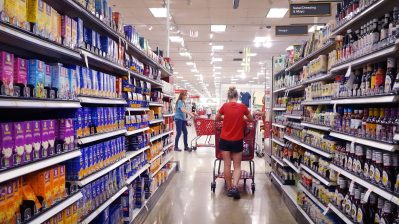
Sam's Club arrived in Shanghai a couple of weeks ago. It's the US retailer's fifth store in China--30,000 square meters of bulk-everything. My wife and I thought it'd be fun to check it out. (Yes, fun--picture Will Ferrell's character in the movie 'Old School,' explaining what his Saturday will look like to a group of frat boys: "We're going to Home Depot, buy some wallpaper, maybe get some flooring, stuff like that. Maybe Bed, Bath and Beyond, I don't know. I don't know if we'll have enough time.")

We were wrong. Instead of scoring a great deal on a metric tonne of jasmine rice, we were sticker shocked within a minute of arriving. You see, Sam's Club's American business strategy has done a 180 for the China market.

My wife first noticed this while looking at some eye make-up remover she usually buys in the states. Her mouth was agape: "This costs three times as much as it does back home!"

The taxi driver who brought us there was curious about the place, so he agreed to come in and browse, waiting for us to hire him for our return trip home. When we were back in the car, he couldn't contain his outrage: "They're charging double what I paid for my shoes! There's no way Chinese people will shop here!"

That's not what He Wenying thinks. He's the manager for Wal-mart China, which runs the store. He told the Global Times the retailer is after middle-to-upper class Chinese. It's a formula used by many US companies when they come to China.

Visit Pizza Hut in Shanghai, and a family-style fast-food experience is transformed into an intimate evening of fine dining. Same goes for many other fast-food chains. By the looks of it on Saturday, though, this formula wasn't working so well. Very few people were perusing Sam's rows of imported bulk food, big screen televisions, and overpriced Spam (two words I never thought I'd utter, but as a Minnesotan, I had to plug a home product).

As my taxi driver quipped, "Nothing scares away Chinese customers like the absence of other customers."

About the author

Rob Schmitz is Marketplace’s China correspondent in Shanghai.
zz ziled's picture
zz ziled - Jan 13, 2011

Speaking of costing you...here is an interesting story from the LA Times:

http://latimesblogs.latimes.com/money_co/2011/01/china-dispute-lawsuit-h...

Can "Marketplace" please do a follow-up story?

James's picture
James - Jan 20, 2011

I agree. Metro is pricey in Nanchang but it's clean and has a great deal of products we can't find in Wal-Mart or RT-Mart (a Taiwanese department store chain). I just wish they would stock fresh ground beef! Last year up north, fresh beef could be had on the street on my way home from work.

ScottLoar's picture
ScottLoar - Jan 13, 2011

Higher pricing to attract middle-to-upper income tiers in China has its snob appeal but not for sundries, basic foodstuffs, articles of daily use and other stuff easily available on the local market. There the obverse is true, the lower the pricing the greater the attraction regardless of income tier. Nothing attracts the Chinese consumer like a bargain.

I can understand though, that Sam's Club, which should know better based on commercial success elsewhere, probably suspended common sense and its own retail experience on the advice of a China expert, maybe the very one named He Wenying.

Paul Jahn's picture
Paul Jahn - Jun 1, 2011

I have not been to a Sam's club in China or in Taiwan but I have been to a Costco and the business they do there is phenomenal. Their prices are a little high too but the customers are their and with that others follow. Chinese will wait in lines for hours if they see others doing it. It is a funny situation that occurs in Chinese society. I think the strategy for making up prices for US goods sold in China is a good idea but you need to be careful at what price customers will come and what price will have them not wanting to enter the store.

Bob Walsh's picture
Bob Walsh - Jan 13, 2011

Is that USD $5.73 for just a CAN of Spam, or the whole case?

Rob Schmitz's picture
Rob Schmitz - Jan 13, 2011

That price tag was actually for the Campbell's soup cans (package of five, I think) below the Spam. I neglected to include the Spam price, which comes out to slightly less per can (they're sold in bulk, too). Spam's an import to China, thus the mark-up.

Malyse M's picture
Malyse M - Jun 1, 2011

Since being in China, I've noticed the difference in prices for American products and Chinese, and while I've been here I've avoided the things I buy at home. Vitamin Water, for a bottle would be frequently on sale $1.00 a bottle, and would normally cost around $1.25 at Target. Here it's roughly around $3.00 a bottle. This is also the case with things like Dove chocolate, etc., but they surprise us, especially if we are regular consumers at home. Sam's Club, even in the States is not always the best deals, and aims to customers to save money by buying in bulk and/or provide easier access to large families that would regularly buy certain products.
That strategy would not work in China, and I can see why He Wenying would say that it is aimed to middle-to-upper class consumers. The factors are space to store the food, refrigerator, and car. You would not like to carry a huge bulk pack of Spam on a walk home, bus, or subway. Those demographics would most likely be able to even consider buy from Sam's Club, but since it is mostly involving food, and not restuarant or service, the turn off to people would be the prices. This would be grocery shopping and unlike in the United States, China as a consumer, even groceries has not made it to that point yet. Even foods in Asian stores in America cost more than the price sold in its country of orgin. But that is because of it being imports and having a specialized communities and people that will pay just about anything to get the food and ingredients they know is hard to find. China does not have this, so Sam's Club may not gain many followers in China.

Howard's picture
Howard - Jan 13, 2011

Hi Rob. I'm a friend of Angie's. Met you and Lenora a few years back when I was living in LA. Love your blog. I'm moving to Shanghai in a few weeks. Where can I find the RSS to your blog? Best wishes.

Dan L's picture
Dan L - May 22, 2011

It is often lucrative to try an enter a market at a higher price range. After seeing the success as Pizza Hut, Buick and other brands as luxury items companies want to mimic such patterns. No one wants to try to enter the market at a lower tier. The example here shows how careful thought needs to be used when trying to change not only the culture to which it is sold but also the culture in how it is sold. The business model is not necessarily dead but changes apparently have to be made.

Bob Walsh's picture
Bob Walsh - Jan 14, 2011

Spam by itself is pretty hideous, a guilty pleasure, but the Chinese equivalents are beyond description for their gelatinous evil.

I think Sam's Club will make some inroads in China if consumer concerns about food safety force more affluent families to turn to imported stuff.

In Nanjing we have Carrefoure, of course, and Metro. Of the two, I think Metro is a bit better. Carrefoure can stock some pretty dodgy looking meats and vegetables, and the seafood can sometimes be vile.