
11

Taking Stock: Health care

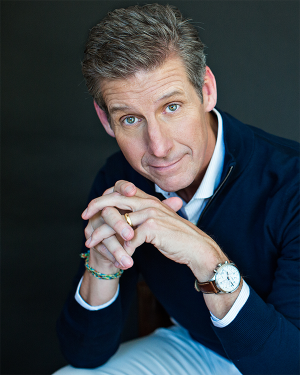
Victor Fuchs, the Henry J. Kaiser, Jr. professor of economics and of health research and policy, emeritus, at Stanford University's Center for Health Policy.

To view this content, Javascript must be enabled and Adobe Flash Player must be installed.

Get Adobe Flash player

TEXT OF INTERVIEW

Kai Ryssdal: It's healthy sometimes to step back. Away from the daily grind of the fallout from the financial crisis. Today we're going continue with Taking Stock, our series of occasional conversations with people who can give us the long view of our economic situation.

Obviously, there are a lot of needs that have to be met right now. Help for homeowners. Insurance for the unemployed.
Not to mention car makers, banks and home builders. But that forgets some of the problems that were around before the crisis. And that will become more important once we do struggle through it.

Stanford University economist Victor Fuchs has devoted the better part of his career to health-care policy.
So I asked him the most important thing that we, as a society, ought to be thinking about as we go through this very tumultuous time.

Victor Fuchs: For me, and this is a matter of values, the good society is one that encourages, that develops and honors both individual and social responsibility. We have tilted too far in the direction of individual responsibility. So if the balance is going to swing, it needs to swing back toward social responsibility. For example, I'm in favor of having some kind of health care system where everybody gets coverage for a basic plan.

Ryssdal: And it gets very quickly into a discussion of politics too doesn't it? I mean, none of this comes without political discussion.

Fuchs: Right. But the recent election suggests that the public, the body politic, is ready to make some kind of swing in the direction that I'm talking about. It won't come easily, for example, to get universal coverage for health care -- that's going to take some fundamental changes.

Ryssdal: Why is it that health care always seems to get worse and worse? The problem is more expensive, it's harder to fix. Why does that happen?

Fuchs: Well, I'm not sure that it gets worse and worse. I would rather say it gets more expensive and more expensive. I don't think health care is worse today that it was five years ago, or 10 years ago. I think it's better. But it just costs us too much.

Ryssdal: How do you get those costs under control in an environment where there are so many other things demanding money and political attention?

Fuchs: Well, we've inherited two ways of doing health care, both of which I think are inefficient and inequitable. One is the employment-based system, and the second is the income-tested system like Medicaid.

If people were to follow my recommendations -- and I have a collaborator on all of this work, his name is Ezekiel Emanuel, he's a physician and a bioethicist. If we had our way, we would replace the employment-based system and the income-tested system with some kind of universal-voucher system. Where everyone had coverage for a basic plan. And you where funded it through a simple tax, let's say just a tax on consumption. In that system, the healthy and the wealthy would be subsidizing the poor and the sick. And the middle class would be paying their own way, which in any sensible society, that's what's going to happen.

Ryssdal: If, as you say we have to work on controlling costs, and cost increases in health care, do we then risk some of the advances we've made in health care science in the past decades?

Fuchs: Absolutely. There's no free lunch. The main reason why health care costs rise every year is new technologies. Now some of those new technologies are wonderful. So what we need, and one of the things that Emanuel and I recommend, is an independent institute for technology assessment. Because up until now, technologies have never been evaluated in terms of their benefits relative to their costs. We need to know which of the new technologies are very valuable, and worth the money, and we need to know which ones are not. But is it going to have some effect? Absolutely. There's no free lunch.

Ryssdal: Let me back up for a second and talk again about some of the big societal issues that we face in this country. It's been clear over the past number of decades in this country that the rich get richer, the poor certainly get poorer and the middle class keeps on struggling. Is there a way that we can effectively level the playing field in this country?

Fuchs: Yes. Yes, but strangely enough it's not through the income tax. Many people fool themselves into thinking that you can achieve a great deal of redistribution by raising, putting in very high tax rates on the high income people. Actually, if you look at the example of countries like Sweden and Norway and Denmark, that's not the way they do it. The way they do it primarily is through transfer programs. In other words, if you have programs of health care, which are universal, so that the poor get them just as well as the middle income people do, if you have programs for social services, that is the most successful way to achieve redistribution in people's real living standards.

Ryssdal: One of the things that people who are opposed to things like universal health care will say is that, "Listen, this is not the way the free market is supposed to work. Let's let the market mechanisms figure out how much it ought to cost, who's going to get covered, and let things happen that way." What's your response?

Fuchs: My response is this: That there are several good things I want and I think most people want. I want efficiency, and I want justice. I want freedom, and I want security. Now as an economist I know that there have to be trade-offs. I can't have all the freedom and all the security that I would like to have. And that's where the judgment and the political balance comes in. We may have to give up a little bit of efficiency in order to get more justice. On the other hand, I would hold up a stop sign to those people who say, "Well, the only thing I'm interested in is security and justice. And I don't give a hang about freedom and efficiency." That's not right, either. What we have to some extent is, I would't say a polarization, but we have a lot of people who take extreme positions one way or the other. And that's not a recipe for a good society.

Ryssdal: Victor Fuchs, thank you very much for your time.

Fuchs: Well, thank you, Kai, it's been a pleasure talking to you.

About the author

Kai Ryssdal is the host and senior editor of Marketplace, public radio’s program on business and the economy. Follow Kai on Twitter @kairyssdal.

Pages

John E's picture
John E - Dec 2, 2008

For what it's worth: put all medical costs on a sliding scale based on income -- then MDs and medical companies who get into financial trouble can apply to the Congress for a Bail-Out.

richard kimmel's picture
richard kimmel - Nov 26, 2008

Mr Fuchs is as out of touch with reality as John McCain; he just doesnt get it! I agree with many of the prior comments, and would like to reinforce two basic inaccuracies in the elderly economist's statements. First, medical technologies are highly tested for efficacy today, and the free market driven economics of healthcare quickly separate the effective from the bogus. Yes, there are 'alternative therapies' out there, but these are usually used when conventional medical therapy has nothing further to offer (ie terminal, end stage cancer). A good example is screening for lung cancer (I am a Thoracic/vascular surgeon). It's been known for decades that annual chest x-rays are not a cost effective method for lung cancer screening. Low dose CT scanning was proposed as an alternative in high risk patients, however the American College of Chest Physicians (amoung other organizations), in their recent publication on current lung cancer management standards, does not support this based on data, as a cost effective procedure. Yet lung cancer remains the number one cause of cancer deaths in North America annually (more than breast, colon and prostate cancers combined!). Second, Mr Fuchs suggests that a consumption tax can pay for universal health coverage. This applies an increased burden on those who can least afford to pay more for the necessities of life. Yes, the wealthy will pay more by buying more, but the lower economic strata will also pay more for their basic purchases. This simply will not work.
Finally, it is not the technology that is driving up the cost of healthcare, it is the care itself. We live in a society that expects perfection and has no tolerance for the unexpected. Birth defect: sue the doctor. Crash your car: sue the hospital. Dementia and in kidney failure: start dialysis. Smoke for 50 years: recieve millions of dollars of care at taxpayer's expense to treat your heart disease, lung disease and cancer.
The single greatest impact on reducing healthcare spending would come from making tobacco illegal (or imposing such a high tax on cigaretts that people can no longer afford to buy them). Between money saved, less time off work for illness, less time taken off for 'cigarette breaks' while at work, less cleaning from the discusting residue from the smoke and the absolute reduction in disease states (heart, lung and cancer), costs would plummet and efficiency would rise. Screw the tobacco lobbyists, let's really do something for the good of the people!

Eric Saldinger's picture
Eric Saldinger - Nov 26, 2008

I listened to your interview with Victor Fuchs and had high expectations when he mentioned “individual responsibility”. Unfortunately my hopes were dashed when he failed to use the term in its most significant context: the responsibility of individuals to maintain their own health. As a physician, my daily experience is in agreement with what numerous studies have shown: one of the main factors driving health care costs is the failure of individuals to maintain a healthy lifestyle. The increasing girth of the average American attests to their failure to make the right choices regarding exercise and diet. Why should those of us who make the effort to maintain our health continue to pay for those who don’t have the will to exercise, eat a healthy diet and refrain from smoking and excessive alcohol consumption? I would propose a tiered health insurance fee structure based on preventable risk factors, such as smoking and obesity. This would be a market-driven approach towards improving the health of individuals.

andy atchison's picture
andy atchison - Nov 26, 2008

Thanks a lot Kai, I literally almost crashed my car when I heard a college professor of economics say: "up until now, technologies have never been evaluated in terms of their benefits relative to their costs."

What the heck?! Up until now that's *exactly* how technologies have been evaluated -- except in cases involving the government, when factors such as campaign contributions, regional special interests, and ignorance are incorporated. (see ethanol)

Holy cow...

jim masciandaro's picture
jim masciandaro - Nov 25, 2008

When you do the numbers, Mr. Ryssdal, this doesn't add up. When you go to Best Buy, do you see the cost of technology going up or down? Some cutting edge medical stuff may cost something to ramp up, but health care has its own Mythology - they’re making a KILLING with profits - including Stanford (worked at LPCH for 4 yrs). But contrary to what Mr. Fuchs implied, most imaging centers are privately owned and have nothing to do with research. As an ultrasound technologist who has worked in ultrasound product development commercially, as well as decades of clinical experience, I can assure you that it was the computer video game industry that pushed-up the speed and processing power of your average PC, to the point that a Best Buy-type computer could be loaded with the right software, plug in a probe, a monitor, and you have an ultrasound system (Phillips HD-11). And today’s premium ultrasound systems cost ~$40-50K for a 5 lb. scan engine built by Zonare - Mountain View, Ca, compared to $250K just 5 years ago for a 500 lb. Acuson, also built in Mountain View. But look at what health care provider's initial charges are before insurance - $1000 for a 10 minute ultrasound Carotid Doppler study. Minutes to read out. All profit. Or how about $500 to check your arm blood pressure and then compare it to you ankle blood pressure (Ankle/Brachial Index)? Compare that to Wal-Mart, where for .50 cents/each, you can run your own numbers on your ankle and arm blood pressures (if your foot will fit). More has to be done by the media to challenge what these health care costs are. Mr. Fuchs implied a risk, but if you listen to what he says, “some” means what? He’s trying to frighten you. Remember the video game/ultrasound machine connection! Ask specifics - what costs more and who uses it? Basic stuff, like blood work, X-Rays (where film was the biggest cost - now it’s all digital), and special imaging (CT/MRI/Ultrasound) doesn’t cost what they say it does. They’re killing us by making health care into a commodity and using fear as a tactic, while no one looks into what the real costs are - w/o huge profits!

Patrick Owens's picture
Patrick Owens - Nov 25, 2008

I cannot believe this leftist tripe is still held by some people. This is the same tired propaganda of socialized medicine that has been around since the sixties.

Mr. Fuchs states that the pendulum has swung too far toward individual responsibility. There can never be too much individual responsibility.

There appears to be no end to the freebies that are lavished on the poor at the expense of the middle and upper classes. There are government subsidized cellular telephones (with free long distance to Mexico), government purchased HD convertor boxes for television, subsidized retirement, and every safety net available paid for by others.

If the "noble poor" truly exist and are not merely victims of their own poor work ethic, then they will be willing and honor-bound to support themselves in all aspects of their lives. I am not totally merciless. If someone is handicapped and their nuclear or extended family or charity are unable to help, then there should be something to help. I find this to be the exception- not the rule.

-One over-taxed, middle class citizen

H McIntosh's picture
H McIntosh - Nov 25, 2008

These comments are interesting and thoughtful, as one would expect. However, the role of social and moral values are much more important in the analysis than the discussion suggests. Using the word "justice" where a more neutal term, " fairness" leads one to think too much has been assumed. There is a clear logical correspondence between economic efficiency and justice ( matching ones actions and rewards) but not between economic efficiency and fairness ( matching rewards and an exogenous intellectual standard).

Unless a society actually supports a coherent exogenous standard it is problematic that a coherent measure can be effected out, and even if it can be, there will remain a question as to how much efficiency should be traded for this increment in fairness. I find the use of Pareto optimality in these analyses to be helpful. But I cannot see that any solution using such trade offs could achieve that status: there will be losers.

Tim Hole's picture
Tim Hole - Nov 25, 2008

I would like to take a aim at Mr. Fuchs statements on your program. First of all, Mr. Fuchs and other so called economist tend to fill their own pockets at the cost of people less fortunate. Mr. Fuchs wants to reform the heath care system with basic coverage for everyone but he doesn't want to put in the same percentage of cost of heath care as the lower income people does he? What if Mr. Fuchs would come up with a program that lessens the deductible that heath care coverage doesn't pay for? I am not hurt by the cost of heath care. It is the out of pocket deductible that I can't afford and I believe millions of Americans feel the same as I do. I simply do not have 20% of a heath care bill setting in a bank for me to use. Imagine getting a hospital bill for 10K and I have to come up with $2,000 that might equal to one months income for someone in the middle class. They want the 20% 30 days after services. I can't be for sure, doesn't new "technology" get federal fundings and some sort of other free fundings? So basically American Tax payers are paying twice for something. Mr. Fuchs should just enjoy his free lunch but listen to us poor Americans for better ideas for his new plans.

Stefano Menci's picture
Stefano Menci - Nov 25, 2008

I agree with the previous comment on the point (the reason of the cost is not in the technology), but for a different reason.
I'm from Italy, I used to break my bones and get my surgeries for free. Now I live here in the States, and the insurance pays.
Actually the difference is not that big: I was paying in Italy with my tax money, and I pay here with the cost of insurance.
The difference between Italy (well, the rest of the world) and US is that here they force you to spend money, in the other civilized countries they try to make you save.
I had 2 experiences with the American health system:
1) After spraining a wrist: cast + X ray at the ER, second cast + X ray at the specialist, third cast + X ray after a week, MRI, splint and X ray, fifth X-ray. Total $600 from my pocket and $5400 from the insurance.
2) After a shoulder surgery they put me a cooled brace, with a little pump that circulates cold water. The insurance paid $540 for that brace that I used only one day. In Italy they would give me three options: I can keep an ice pack for free, I can lease the cooled brace for $1/day, or I can buy it for its real price that is ~$40.

Higher technology?
I don't think so.
Perhaps too many useless tests and huge overcharges.

Deborah Gideon's picture
Deborah Gideon - Nov 25, 2008

I listened with interest to Mr. Fuchs' interview, however, I do not understand what it is that those Scandinavian countries he mentions acutally do. What is a transfer system? Isn't it tax based as well? Where do the funds come from?

Pages




