The economic effects of quantitative easing


QE3 ahoy!
Let’s refresh our memory about how QE happens. The Federal Reserve has a special relationship with banks in which the banks buy or sell bonds whenever the Fed demands. This is called the repurchase, or repo system. And the banks are buying and selling all the time. When the banks buy bonds, they pay money to the Fed, and when they sell, the Fed pays money to them. In this way the Fed can send money in and out of the banking system at will, and that can also control the amount of money in the economy.
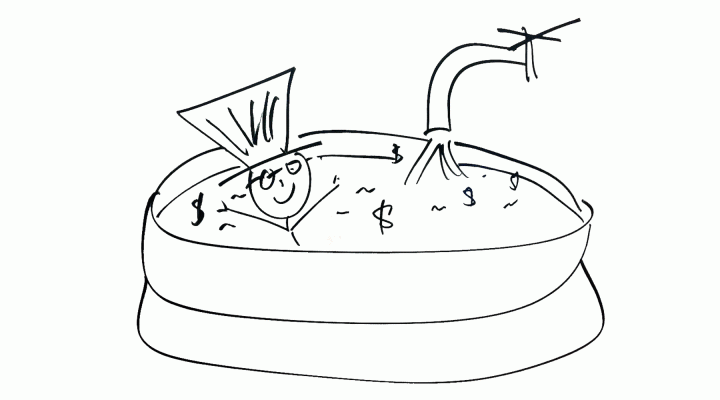
Imagine a swimming pool with a wall about a quarter of the way down it, acting like a dam. The water in the pool is the cash in the economy. Behind the dam is where the banks are located, so they’re up to their chests in money. In front of the dam is the rest of the economy, where we all paddle about in ankle-deep cash. Cash flows in and out of the banking area as we borrow money and save, and the janitor (the Fed) can control the amount of money in the system by taking a bucketload out when he wants the banks to suck more cash out the economy, and by putting that bucketload back when he wants them to lend more cash out to us.
So far the system is operating with a set amount of cash. The Fed’s bucket work, which is done via the buying and selling of bonds, is called open market operations, and it happens all the time. Quantitative easing is when the Fed adds extra money into the system. It’s a bit like the Fed sticking a hosepipe into the deep end of the pool and turning it on. This is new money, and idea is to almost drown the banks.
Which brings us to the reason for QE. Once the banks are in danger of drowning in money, the hope is that they’ll start to bail furiously to get the levels down — and they’ll do that by lending the money to us. You see, banks hate cash, because when it’s sitting in a sweaty vault, cash doesn’t make money. It needs to be invested, lent out, to the likes of you and me. The idea is that once the banks are drowning in cash, they’ll turn around and lend it to us, so that we can go out and buy houses and all the stuff that goes in them. The demand for all that stuff will push manufacturers to hire more people, who’ll then be able to qualify for loans, so that they can go out and buy houses and fill hem with stuff, and so on.
In other words, QE is all about forcing the banks hand, pushing them to lend cash that will reinvigorate the economy.
The danger, of course, is that if the banks turn on the pump and start pouring cash into the shallow end of the pool, we could end up being the ones drowning in cash. Which is an analogy for a little problem called inflation.
Paddy Hirsch the author of Man vs Markets, an explainer on the financial markets and the eocnomy. You can buy a copy of the book from your local or online bookstore, or enter to win one for free by submitting a suggestion for an upcoming Whiteboard explainer video.
Stories You Might Like


There’s a lot happening in the world. Through it all, Marketplace is here for you.
You rely on Marketplace to break down the world’s events and tell you how it affects you in a fact-based, approachable way. We rely on your financial support to keep making that possible.
Your donation today powers the independent journalism that you rely on. For just $5/month, you can help sustain Marketplace so we can keep reporting on the things that matter to you.