What the Occupy Wall Street protesters want


Kai Ryssdal: It’s always tricky to ascribe motive to other people, let alone hundreds of other people, but part of the story of Occupy Wall Street revolves around these two questions: What do they want? And where have they been? The recession, and the bank bailout, and the worst excesses of the housing boom are years old by now.
For some perspective, we’ve called Jeremi Suri. He’s a professor history at the University of Texas. Good to have you with us.
Jeremi Suri: Nice to be here.
Ryssdal: Why now? Why this week? We’re three years from the TARP now, what took them so long?
Suri: Well I think there are two things that we need to look at. First of all, protests never occur right after the event. Generally they take time to organize, they take time to coalesce, people take time to communicate and form an esprit de corps. But the main reason, the second point I’d make, is that this occurring today because after the debt crisis issues of the last few months, people are intensely worried that they are going to face major cuts in their education budgets, in their social service budgets, and that the people on Wall Street are getting off scofree.
Ryssdal: Is it possible that it’s also just difficult to organize economic protests in the richest country in the world?
Suri: It is to some extent. And in addition to being the richest country in the world, we’re a country filled with optimists. So people always assume that we’re going to come out of a recession stronger than when we went in. But the data and the experience of the last few years have belied that assumption.
Ryssdal: Does it matter that they don’t seem to have — not a narrative — but a theme of protest. You know, they’re against a whole lot of stuff.
Suri: Right. It is a big problem that they don’t have an alternative. This is always the Achilles’ heel of protest movements of these sort. We could say the same thing about many of the movements in the late ’60s as well. You have to be against something, but you also have to be for something. And unfortunately they’re not offering any cohesive or coherent alternative to the capitalist system as we know it. But maybe they will. Give them some time.
Ryssdal: One thing I’ve been amused by is the number of intellectuals coming out and saying, ‘All right, you don’t have a plan for something, but here try these 14 different points that I’ve been trying to work on.’ Or Nicholas Kristof in The New York Times today saying do this and do that.
Suri: Well Kai, this is a pretty typical phenomenon of what I would call protest entrepreneurs — those who see a situation as an opportunity to put forth an idea that they’ve been espousing for a long time and been unable to get traction for. And historically, most of the ideas that come out of protests are not new ideas. They’re old ideas that people start believing for the first time. The best example, this is Marxism. Marx had been writing since the mid-19th century. It was only the early 20th century that his ideas really got picked up.
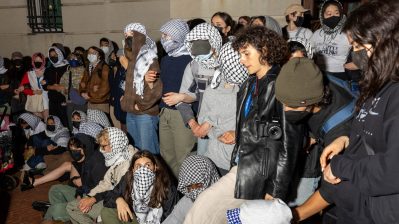
Ryssdal: If you look at the — certainly the videos and some of the interviews with people who have been down there — it doesn’t appear that there are a lot of truly downtrodden people there, you know. I mean, the downtrodden people are at work.
Suri: That’s correct. And this is one of the hardest things for observers of protests to grapple with. Protests are rarely driven and rarely populated by the most poor and suffering elements of society. People who protest are people who have time, have a means of communicating, have a way of exchanging ideas and have the resources to get themselves to the protests and to feed themselves once they’re there. This would be as true of the Civil Rights movement and the anti-war protests of the ’60s as it would be of this today.
Ryssdal: So based on what you’ve seen and read about these protests, where do they go from here? What happens?
Suri: Well, I don’t think they’re going to end very soon. I think we’re going to see continued anguish expressed on the streets and continued sympathy around the country. And I think quite frankly, people on Wall Street and in Congress are going to have to come up with a persuasive narrative about how they’re addressing these concerns.
Ryssdal: Jeremi Suri is a professor of history at the University of Texas, Austin. His most recent book is called “Liberty’s Surest Guardian.” Jeremi, thanks a lot.
Suri: Thank you, Kai.
Stories You Might Like


There’s a lot happening in the world. Through it all, Marketplace is here for you.
You rely on Marketplace to break down the world’s events and tell you how it affects you in a fact-based, approachable way. We rely on your financial support to keep making that possible.
Your donation today powers the independent journalism that you rely on. For just $5/month, you can help sustain Marketplace so we can keep reporting on the things that matter to you.