5

Fed helps, but needs to be accountable

Robert Reich

To view this content, Javascript must be enabled and Adobe Flash Player must be installed.

Get Adobe Flash player

TEXT OF COMMENTARY

Kai Ryssdal: The Fed auctioned off another 25 billion dollars in loans this week to U.S. banks. Sliding that kind of cash over to financial institutions has a lot implications -- some good, some not so good, -- depending on whom you talk to. Commentator Robert Reich says that however you feel about the Fed's monetary policy, you should have more of say in its decision-making.


Robert Reich: Chinese authoritarian capitalism, on display this week in Beijing, has me thinking about America's democratic capitalism, and how we practice it.

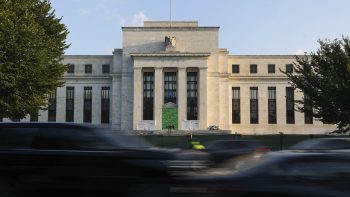
Start with the economy's most powerful government agency: The Fed, of course. Its decisions on short-term interest rates will either prolong this recession or pull us out of it. But the Fed is not directly accountable to American voters, or even to Congress or the President.

Months ago, the Fed decided to bail out major investment banks. That put billions of taxpayer dollars at risk, without so much as a single act of Congress. Lately, the Fed has been looking into the capital assets of these banks and telling them how to bolster their liquidity. Probably a good idea, but here again, nobody authorized the Fed to do this.

Now the Fed is issuing proposed regulations governing the credit-card industry. They specify when credit card issuers can increase interest rates on existing balances and they bar late fees on customers who weren't given a reasonable amount of time to pay.

Seems reasonable. But the Fed should also stop issuers from marketing credit cards to people under age 21 and imposing extra charges on customers for paying online.

But what I or you may want is irrelevant. The Fed's proposal drew nearly 56,000 comments. Yet the Fed isn't compelled to read a single one of them.

Again, the Fed is acting without any authorization by Congress. In fact, two weeks ago a congressional committee reported out a Credit Cardholder's Bill of Rights but the banking industry mounted such a lobbying effort against it, there's no way it will get enacted this year, or maybe ever.

Congress is so immobilized, we have to rely on the Fed, which operates mostly in secret, whose chair is appointed every four years, but whose other governors have 14-year terms, and which doesn't even depend on a congressional appropriation for its own funding.

It's not Chinese authoritarian capitalism, but it's not exactly democracy, either.

Kai Ryssdal: Robert Reich teaches public policy at the University of California, Berkeley.

r t's picture
r t - Aug 17, 2008

Have you had enough of Keynesian yet? Maybe the Austrian model should be tried, especially since: the elected have grossly under reacted to their oath of office...the citizen to lazy to compel those within the shadow of the obelisk to bring back Glass-Segal but more importantly: ACT OF MARCH 14, 1900 Chap. 41--An Act To Define and fix the standard value, to maintain the parity of all forms of money issued or coined by the United States, to refund the public debt, and for other purposes. Be it enacted by the Senate and House of Representatives of the United States of America in Congress assembled, That the dollar consisting of twenty-five and eight-tenths grains of gold nine-tenths fine, as established by section thirty-five hundred and eleven of the Revised Statutes of the United States, shall be the standard unit of value, and all forms of money issued or coined by the United States shall be maintained at a parity of value with this standard, and it shall be the duty of the Secretary of Treasury to maintain such parity. Eph. 5:11

Melvin Burstein's picture
Melvin Burstein - Aug 15, 2008

I was disappointed in Robert Reich’s Market Place commentary, “Fed helps, but needs to be accountable.” It revealed his lack of understanding of the legal structure of the Federal Reserve System as well as the Administrative Procedures Act (APA). First and foremost, the Fed is a creature of Congress. Not only does Congress have the power to modify the structure and powers of the Fed, which it has done from time to time, it has the power to extinguish it. Whatever regulatory power the Fed exercises stems from statutory authority given to it by Congress.

In this regard, one of the commentators on my Mr. Reich’s commentary was under the impression that “the Federal Reserve is not now and never has been a government agency.” The Board of Governors of the Federal Reserve System is a government agency. The Federal Reserve Banks are not but they are subject to the regulation of the Board and, more important, the legislative power of Congress.

Mr. Reich suggest some credit card regulations the Fed is proposing were not the result of power granted to the Fed. I have not seen the proposal but I can imagine several laws that would give the Fed the necessary power. Most significant is the Consumer Credit Protection Act, which is the statutory authority for the Fed’s Truth-in-lending regulation, Regulation Z. But in no event is the proposed regulation based on some authority the Fed undertook to itself.

The notion that the Fed asks for comments on a proposed regulation but than ignores them reveals Mr. Reich’s lack of familiarity with the Administrative Procedures. Having served as an attorney for the Federal Reserve Bank of Minneapolis for over thirty two years, twenty seven of which were as General Counsel, I know that not only does the Fed not disregard regulatory comments, as it must under the APA it takes them very serious. As for the Credit Card Bill of Rights to which Mr. Reich referred, the inaction of Congress may reveal lobbying pressure on Congress but not indifference on the part of the Fed.

The Fed’s extension of credit to banks and investment banks is based on statutory authority, which, as I said, Congress has the power to modify. Mr. Reich is under the impression that the Fed does not have the authority to look into the capital assets of banks or to order them to improve their capital. Mr. Reich would have to look no further than the preamble to the Federal Reserve Act to find banking supervision among the Fed’s responsibilities.

The Fed does not operate in secret and certainly not in secret from Congress. In addition to being required by laws such Humphrey-Hawkins to report to periodically to Congress, Congress exercises its power to call before it from time to time members of the Board of Governors, its staff and representatives of the Reserve Banks. Even its most sensitive information, the actions of the Federal Open Market Committee are disclosed on a regular basis. Moreover, the Board of Governors is subject to the Freedom of Information Act.

The governors and chairperson of the Fed are appointed by the President subject to the advice and consent of the Senate. The terms of the governors, 14 years, and the chairperson, 4 years, are established by law. The lengthy term of the governors is one of a number of structural features of the Federal Reserve System that are for the purpose of keeping the Fed free from political influence. The 4 year term of the chairperson is not co-terminus with the President for the same reason. Similarly, neither the governors nor the chairperson serve at the pleasure of the President. The Fed’s independence from political influence is critical to the integrity of monetary policy, its principal responsibility.

My final comment relates to Mr. Reich’s observation that the Fed does not depend upon congressional appropriations. He is right. Although Congress could make the Fed part of the federal budget, keeping it free of the appropriations process is one of the features that support its independence from political influence. Moreover, it provides a nice source of off balance sheet funds for Congress. For 2007 the Fed turned over approximately $35 billion of its approximately $41 billion annual income to the treasury. The difference was used to cover Federal Reserve System’s expenses, statutory dividends the Reserve Banks pay to the bank’s that must hold Reserve Bank stock, and statutory additions to Reserve Bank capital and surplus. Because the Fed pays its own way, Congress finds it a good place to assign responsibilities that would otherwise appear in the budget.

As I indicated above, I was employed by the Federal Reserve Bank of Minneapolis for over 32 years. I retired in 1998 as Executive Vice President and General Counsel. If anyone from MPR , NPR or Mr. Reich wish to discuss any of the foregoing I may be reached at 952-896-3363.

Brian Carpenter's picture
Brian Carpenter - Aug 14, 2008

"Start with the economy's most powerful government agency: The Fed, of course"

The Fed isn't a government agency. It's a private bank and we're not even allowed to know who owns what stake in it. So it's no surprise that we have no say in how it conducts its business.

A professor of public policy should know this. A radio journalist ought to be able to explain it clearly to the public.

David Gillespie's picture
David Gillespie - Aug 14, 2008

It's my understanding that the Federal Reserve is not now and never has been a government agency so I'm not surprised it is not held accountable by our government for it's actions. The the Federal Reserve is the third time in our 200+ year history our representitives have turned control our money system over to a privately held business with the promise of preventing boom then bust economic conditions. One only has to look at the Fed's track record to see how empty that promise as been over the years.

Eric Murdock's picture
Eric Murdock - Aug 13, 2008

My response to Mr Reich's assertion that "the Fed is not directly accountable to American voters,
or even to Congress or the President..." is 'good!' Congress and the president are either unwilling or
unable to deal with the financial challenges that this nation faces (see our budget deficit and the
pending collapse of social security).
I was taught in American History that our government was designed to only accomplish things with consensus (it
must be a really good idea), but to my Gen X eyes, Congress is too caught up in partisan wraggling to try
to take on the things that the Fed does. Allowing congress oversight over the Fed would only bog it down, and
the Fed is much too important to economy to allow this happen.