


Can chip manufacturers find an alternative to helium?
There are other non-reactive gases out there, but they'd be far more expensive than helium.
This is just one of the stories from our “I’ve Always Wondered” series, where we tackle all of your questions about the world of business, no matter how big or small. Ever wondered if recycling is worth it? Or how store brands stack up against name brands? Check out more from the series here.
Alex Duerre from Anchorage, Alaska, asks:
With AI in full swing and the war with Iran ongoing, helium access is at risk. Helium is critical to making semiconductors. How will semiconductor manufacturers address the shortage of helium? What can replace helium? Helium is a finite element.
The short answer is nothing can replace helium — or at least anything that's cost effective.
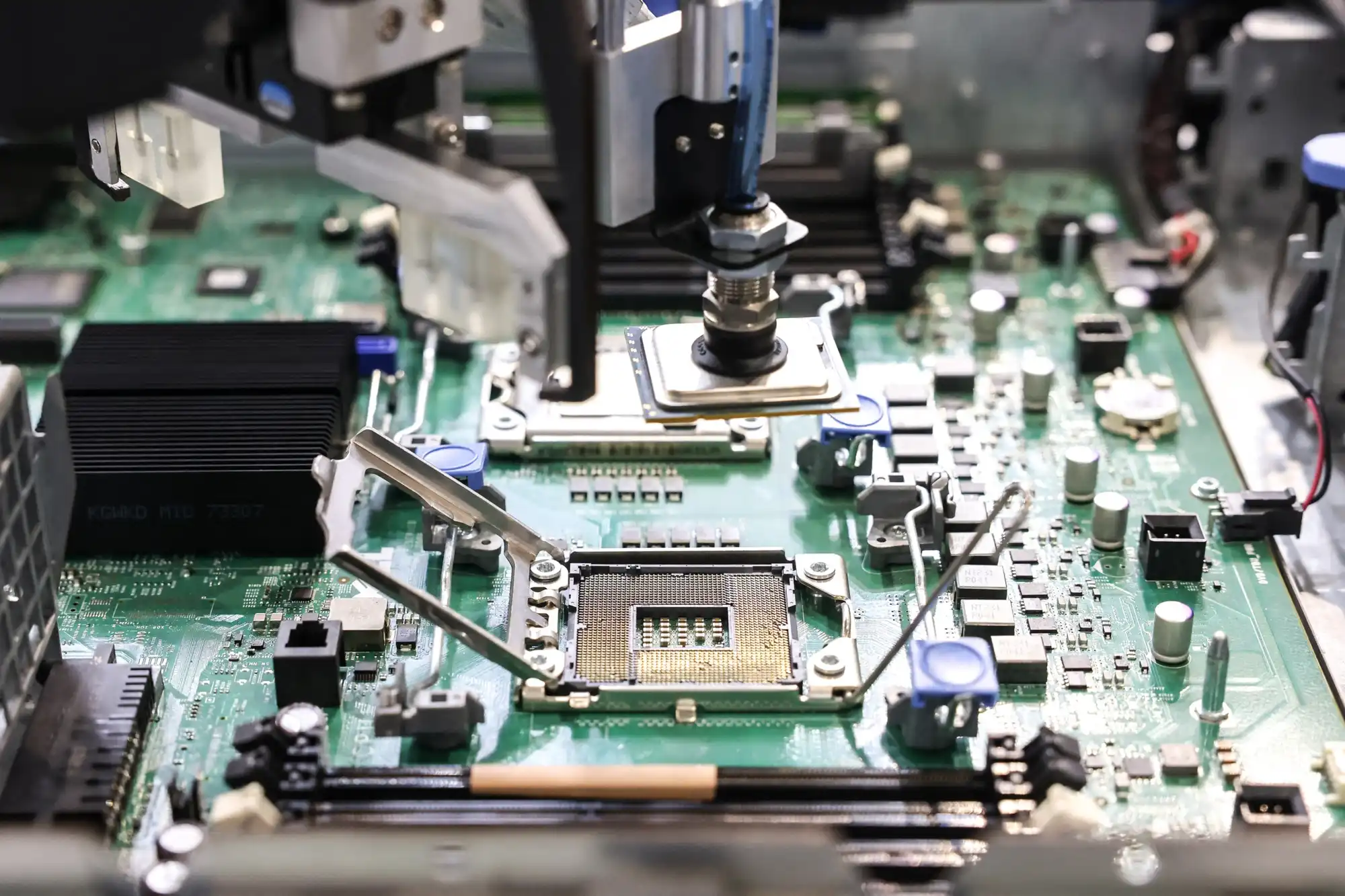
When manufacturers are making semiconductor chips, they need to draw away heat to prevent damage. Helium achieves that goal more efficiently than other gases, explained Moses Chan, a professor emeritus of physics at Penn State University.
You could use another nonreactive gas like neon, but that might be 10,000 times more expensive, Chan said. When it comes to items like party balloons, which rely on helium, you could technically get away with less of it by adding in hydrogen, he said. But Chan said if you add in too much and that balloon is next to a birthday candle, well, that could lead to an explosion.
MRI instruments also use helium, in liquid form, and you can reengineer them to recycle it, said Sophia Hayes, a chemistry professor at Washington University in St. Louis.
But there is basically no true substitute for helium in nearly all uses." You either have to replace the technology entirely with something that doesn't require helium, or you can reengineer things to use less," Hayes said.
In October, the U.S. the Department of Energy announced it would add helium to its list of critical materials, which includes substances or minerals that are both essential for energy technology and at high risk of a supply chain disruption.
When the Strait of Hormuz closed due to the Iran War, that stopped us from having access to helium produced by Qatar, which produces about 30% of the world's global supply.
Meanwhile, the demand for chips has skyrocketed as companies ramp up their investments in AI.
There used to be a Federal Helium Reserve, similar to our Strategic Petroleum Reserve, Chan pointed out. But the U.S. government sold it in 2024, a decision that had been decades in the making after lawmakers wanted to cut government spending.
So what happens in the meantime? "To the best of my knowledge, we are just trying to wait out these supply shortages," Hayes said. Hayes said she hasn't heard of any companies shutting their plants down, but they have that option.
Marketplace reached out to the Semiconductor Industry Association for an interview, but did not get a response by deadline.
Polar Semiconductor — which has a manufacturing facility in Bloomington, Minnesota — said on its website that it sources helium from three suppliers, but one has restricted allocations amid the global shortage.
Other companies have publicly stated that they're not in danger due to the shortage. SK Hynix, a semiconductor manufacturer based in South Korea, told Reuters earlier this year that it has "long secured diverse supply chains and sufficient inventory" of helium. "Therefore there is almost no chance that the company will be affected," SK Hynix continued.
There are some efforts to bolster production. Blue Spruce Operating plans to create a helium and natural gas processing plant in Wyoming, a state that produces 20% of the world's helium supply.



Latest Episodes
View All Shows 6 hours ago6:20
 11 hours ago13:59
 a day ago25:18
 a day ago30:17
 3 days ago29:48
 5 months ago24:33