


When did pipe cleaners start being used in arts and crafts?
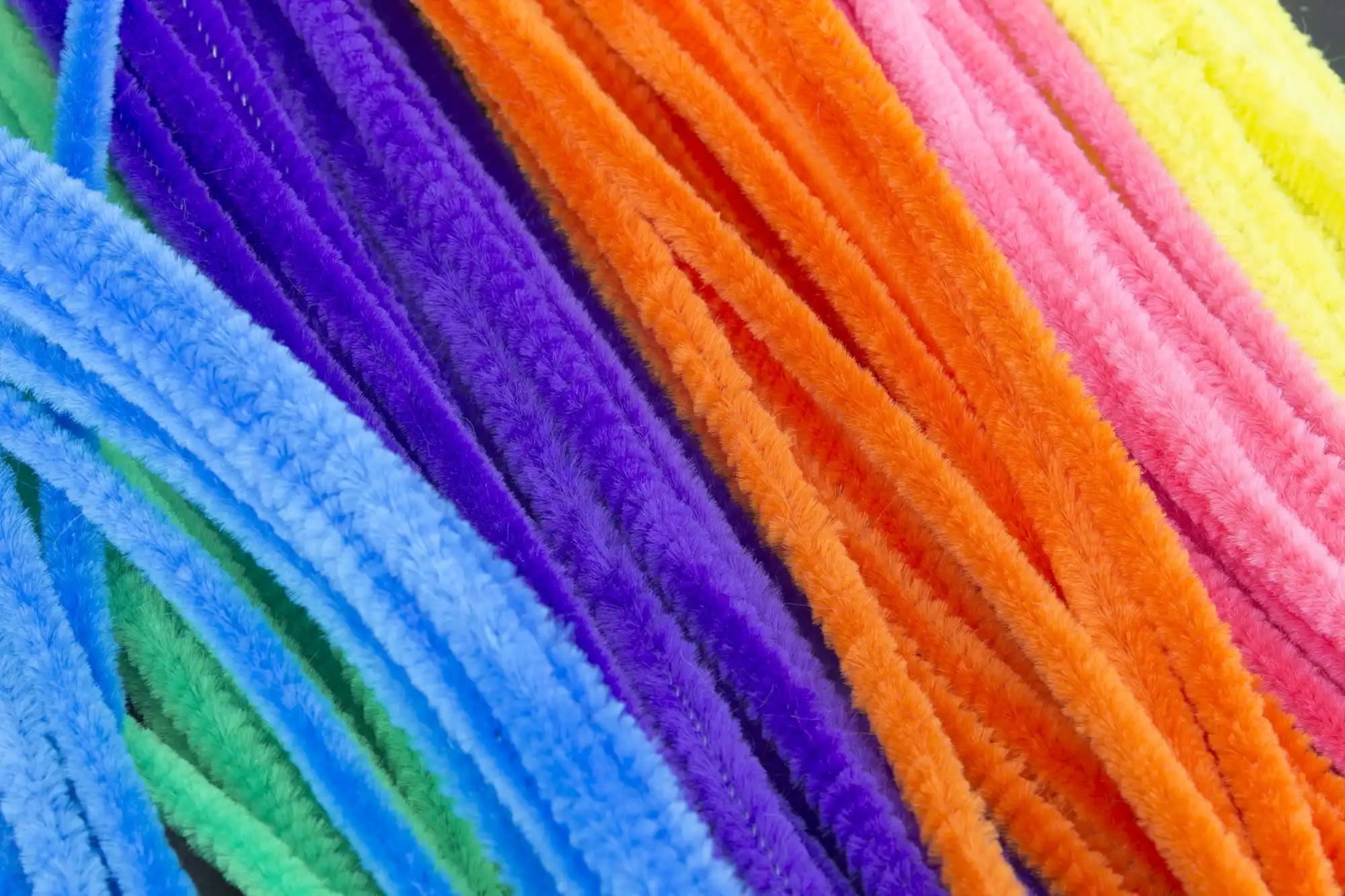
Invented more than a century ago, the pipe cleaner has evolved beyond its intended purpose. It’s been used to repair automobile tires, curl your hair and craft poodles.
This is just one of the stories from our “I’ve Always Wondered” series, where we tackle all of your questions about the world of business, no matter how big or small. Ever wondered if recycling is worth it? Or how store brands stack up against name brands? Check out more from the series here.
Jocelyn Hassanzadeh from San Rafael, California, asks:
When did pipe cleaners transition from cleaning actual pipes to becoming the king of arts and crafts?
The humble pipe cleaner has never gone out of style for a reason. You can use them to curl your hair in a pinch, clean glass laboratory tubes, make textile production easier, repair automobile tires and, yes, craft animal figurines and holiday decorations.
Fuzzy pipe cleaners, also known as chenille stems, were originally intended to clean tobacco pipes, but have evolved over the years. The shift toward craft usage throughout the 20th century may be linked to the rise in cigarette smoking (and the waning popularity of tobacco pipes as a result), greater availability of material used to make craft pipe cleaners, and more leisure time after World War II, said Shirley Wajda, curator of research and collections at Canterbury Shaker Village in Canterbury, New Hampshire.
However, experts are unsure of the exact moment in history when people began using pipe cleaners in craftmaking.
"I am assuming that people began to craft with pipe cleaners before it became a mass-marketed concept. It’s such a simple material and anyone who enjoys fidgeting would have gravitated towards it," said Michelle Parnett-Dwyer, chief curator at The Strong National Museum of Play in Rochester, New York.
Beloved by teenagers and royals
The Democrat and Chronicle credits J. Harry Stedman and Charles Angel of Rochester, New York, as the inventors of the fuzzy pipe cleaner. A quarterly magazine from the Friends of Mount Hope Cemetery in Rochester traces its invention back to the early 1900s.
However, there are alternate theories on its origins. Geoffrey Zeiner, an amateur historian who chronicles the lost history of the city, found that Frederick A. Frick patented a pipe cleaner in 1894. In his blog Gonechester, Zeiner makes the case that this pipe cleaner "is the clearest direct ancestor to the fuzzy pipe cleaners of present day."
Regardless of its origins, people eventually welcomed the pipe cleaner as a crafting tool. You can find references to pipe-cleaner craftmaking in newspapers as far back as the early 1900s.
In the late 1920s, the Stewart Dry Goods Company in Louisville, Kentucky, advertised dog pins made out of fuzzy pipe cleaners, while the Boston Evening Globe showcased Halloween decorations that used these chenille stems.
Newspapers from the 1930s featured articles on how to use the bendy material to make figurines of people and animals like penguins, geese, and ostriches.

One junior high school in Indiana was spotlighted in the South Bend Tribune after students began using pipe cleaners in their art classes.
"Just as small acorns make big trees, this craze, which has kindled the interest of hundreds of youngsters, started with a small group of boys and girls bending single wires to form bodies, legs, and arms. The interest grew, shortly others took it up, and soon such complex figures as men fighting roosters and even winged horses were taking shape," the newspaper said.
In 1933, the London publication "The Daily Mirror" profiled a toymaker who made woolly miniature dogs out of pipe cleaners that were so sought after that members of the royal family purchased them.
Companies directly advertise pipe-cleaner art
Even major companies jumped in on the pipe-cleaner craze. In the 1950s and 1960s, manufacturers like Cleveland Crafts Co., Barry Products, and Larami sold pipe cleaner art kits and instruction booklets, including a Disneyland Pipe Cleaner Art Set, Parnett-Dwyer said.

Barbie also joined Mickey Mouse, Daffy Duck and Pluto in embracing these pliable wires.
"There was Barbie’s first dog, a charming little poodle made from pipe cleaners, who came packaged in the Dog ‘n Duds accessory pack in the mid-1960s. At one of the recent Barbie conventions, a workshop was offered on how to craft a similar example," Parnett-Dwyer said.
Pipe cleaner crafts also became popular in Japan, Parnett-Dwyer noted.
"You can still find examples of these pipe cleaner pets and figures packaged in boxes covered with gorgeous paper. Pipe cleaner poodles were a favorite," Parnett-Dwyer said.
As cigarette smoking became more in vogue, tobacco pipes became less popular, which explains why pipe cleaner manufacturers would have wanted to tap into a new market.
"Americans' smoking patterns changed in the late 19th and early 20th centuries. In the 1880s cigarettes were mass produced in rolling machines, making more cigarettes available than when previously rolled by hand,” said curator Shirley Wajda. “Cigarette manufacturers provided cigarettes to troops in World War I and later in World War II. So the need for pipe cleaners lessened."
And while pipe cleaners for actual pipes used cotton, craft pipes are made out of polyester and nylon, which became more accessible.

"The U.S government took over nylon production for the Second World War, so the material was more widely available after 1945, and just in time for the Baby Boom, prosperity, and more leisure time," Wajda said. "School and home crafts alike increased in popularity because there was more availability. Importantly, nylon and polyester are poorer materials when it comes to cleaning smoking pipes, but they are cheaper and longer-lasting materials for crafting."
Geoffrey Zeiner also pointed out how in the mid-20th century, there was a greater emphasis on encouraging "creative play" among children.
With pipe cleaners, you can make two-dimensional artwork, or more advanced, volumetric pieces of art, Zeiner said. Now, they've become "a beloved touchstone" in our culture, he said.

"Everyone knows what it's like to have played with and made things out of pipe cleaners," Zeiner said.
It's hard to improve on the simplicity of the pipe cleaner's design, but some toy manufacturers have tried.
"Pipe cleaners as crafting materials have evolved over the years. One example of this is Brain Noodles by Holgate Toys from 2004. The kits included enlarged pipe cleaners that were fifteen to twenty inches long with thick piles to craft complex insects and dinosaurs," Parnett-Dwyer said. "While this concept is fun, I think a simple pipe cleaner is all you need to inspire a child’s imagination."


Latest Episodes
View All Shows 6 hours ago6:34
 11 hours ago11:58
 a day ago25:39
 a day ago30:25
 17 days ago29:48
 5 months ago24:33