Throughout U.S. history, there has been a deep suspicion of banks, especially big banks. A common refrain from the days of Thomas Jefferson and Andrew Jackson is that too much bank power would hurt the poor. Concerns about income distribution did lead to tough restrictions on interstate bank branches.
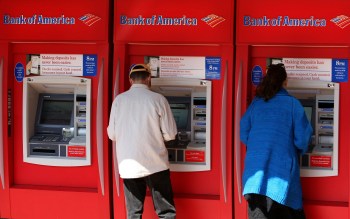
But these restrictions relaxed considerably once financial deregulation took hold beginning in the 1970s. Banks have gotten bigger and bigger (think Bank of America, Citigroup, and Wells Fargo), and the day of the $1 trillion bank aren’t far off.
What has been the impact of banks on income distribution? In an intriguing paper, economists Thorsten Beck, Ross Levine, and Alexey Levkov investigate this question in Big Bad Banks? The Impact of U.S. Branch Deregulation on Income Distribution (NBER Working Paper N0. 13299, August 2007).
The scholars find that the deregulation of bank branches narrowed income inequality (relative to the national trend of widening inequality). “Deregulation tightened the distribution of income by disproportionately helping the poor, not by hurting the rich,” according to their analysis. The main reason: The labor market. Deregulation increased the wages of unskilled workers relative to skilled workers and it narrowed the income gap between men and women, pushing up[ women’s wages relative to men.
Stories You Might Like




There’s a lot happening in the world. Through it all, Marketplace is here for you.
You rely on Marketplace to break down the world’s events and tell you how it affects you in a fact-based, approachable way. We rely on your financial support to keep making that possible.
Your donation today powers the independent journalism that you rely on. For just $5/month, you can help sustain Marketplace so we can keep reporting on the things that matter to you.