


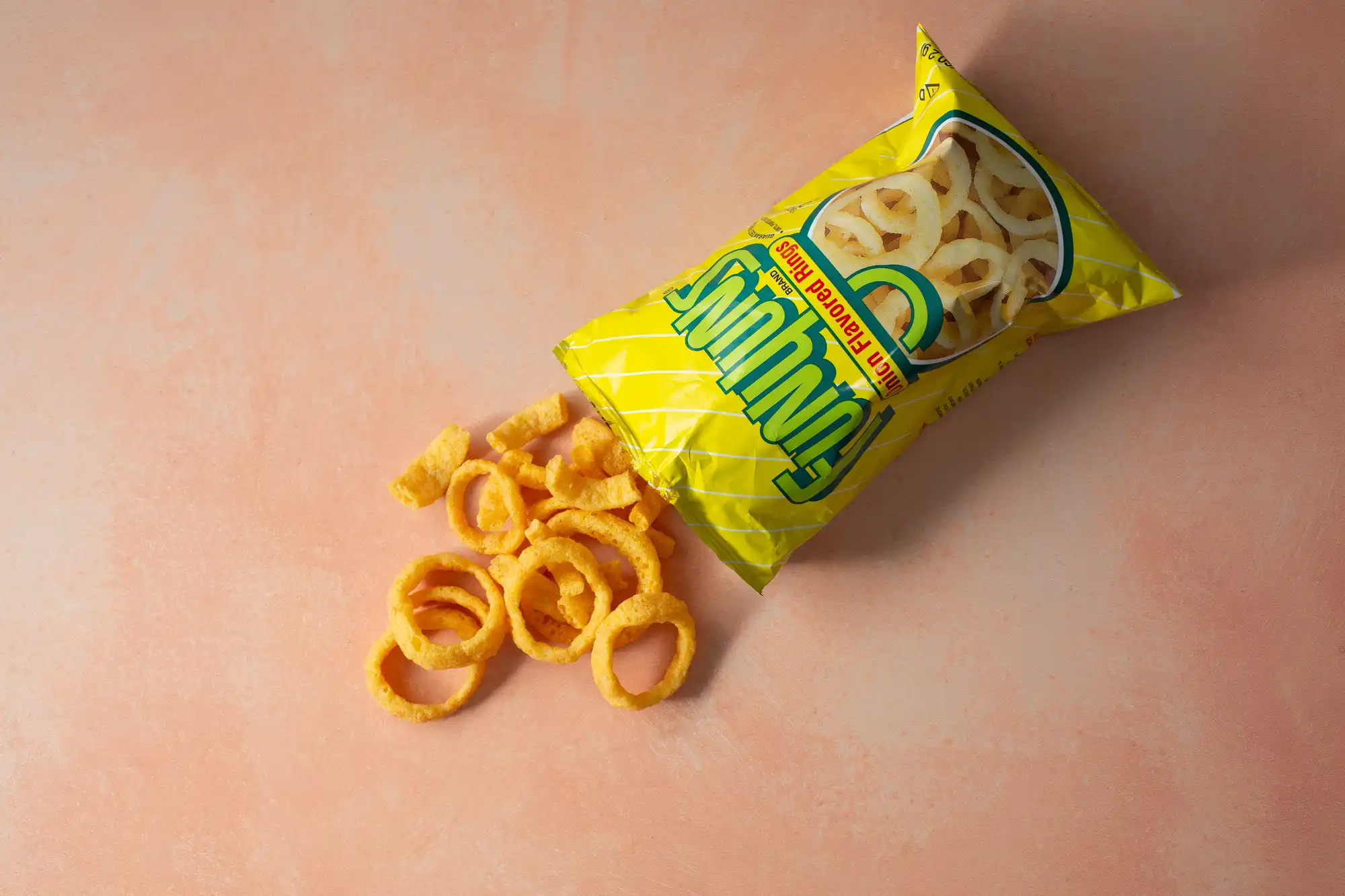
Why is it hard to find Funyuns on sale?
The onion-flavored crisps have a devoted fanbase, which means Frito-Lay has little incentive to offer discounts.
This is just one of the stories from our “I’ve Always Wondered” series, where we tackle all of your questions about the world of business, no matter how big or small. Ever wondered if recycling is worth it? Or how store brands stack up against name brands? Check out more from the series here.
Rob Martin from Atlanta asks:
In the snack aisle at the grocery store (at least in Atlanta where I live), why do you never see Funyuns on sale like the other chips?
While potato chip brands have to battle an endless sea of competitors, the Funyun has few imitators and remains the one ring to rule them all.
“Funyuns sort of exists in its own little world in that it's a unique product, it's got a niche audience,” said Errol Schweizer, author of the substack “The Checkout Grocery Update” and the former vice president of Whole Foods’ grocery division.
Some fans have spotted discounted Funyuns in the wild, but many people – including our reader Robin Martin – have pointed out they’ve never seen them on sale.
Frito-Lay has little incentive to discount Funyuns or sell it at a lower price point compared to their other products because it has a devoted fanbase and minimal competition, experts told Marketplace.
At Target, an 8.25-ounce bag of the onion-flavored crisps can set you back about $6.69, which amounts to 81 cents an ounce. In comparison, a 9.25-ounce bag of Doritos can cost $4.59, for a total of 50 cents per ounce. Over at Publix, a 8.25-ounce bag of Funyuns might go for $8.09, or 98 cents an ounce, while a 9.25-ounce bag of Doritos can cost $6.09 or 66 cents an ounce.
Even though Funyuns can be pricy, there are plenty of fans who still snap up the onion-flavored crisps.
“The people who eat them will eat them every single week,” said Russell Zwanka, director of the food marketing program at Western Michigan University.
If Frito-Lay discounted them often, the company would essentially be “giving money away,” Zwanka said.
Putting them on sale won’t attract new customers either, Zwanka pointed out.
“You've probably experienced the Funyun at some point in your life, and you decided ‘Yes, this is for me’ or ‘No, this is not for me,’” Zwanka said.
Even though Funyuns are more expensive than other Frito-Lay chips, Schweizer said he doubts that it costs Frito-Lay significantly more to produce a bag of Funyuns since its ingredient list isn’t complex. “They're probably making a huge margin on it. It's literally a bag of air with cornmeal and some onion powder,” Schweizer said.
“Snack company gross margins tend to be very high, sometimes 60% or 70%,” Schweizer said.
Marketplace reached out to Frito-Lay for an interview about its Funyuns pricing strategy, but did not get a response by publication time.
Zwanka said you can think of Funyuns as the “perfect” product in the consumer packaged goods space.
“You don't want an item that has to be constantly discounted to sell,” Zwanka said.
You also don’t want an item that can be easily replaced.
“There is no other Funyun,” Zwanka said.


Latest Episodes
View All Shows 2 hours ago25:16
 9 hours ago5:54
 14 hours ago8:19
 5 days ago27:11
 7 days ago12:18
 4 months ago24:33