


Farmers search for a market for oats in the upper Midwest
A group of farmers in northern Iowa and southern Minnesota have started growing more oats. A new mill provides them with hope for the entrance of a new market.
Southern Minnesota farmer Shea-Lynn Ramthun has been taking a gamble on diversifying her crop fields the last few years — leveling up on oat planting in addition to the usual corn and soybeans.
“My grandpa always talked about the importance of diversification and what oats will do for the soil,” Ramthun said.
Federal subsidies and crop insurance incentivize widespread planting of corn and soybeans in middle America. But recently, a group of farmers in Minnesota and Iowa have taken a gamble on oats.
Ramthun is selling this year’s oat harvest at a loss. Farming has been a challenge across the board this year. President Donald Trump’s tariffs drove up prices for farm supplies and equipment and in some cases limited access to global markets.
“It doesn't matter what commodity they're all down and hard decisions are being made right now,” Ramthun said.

Ramthun and a group of other farmers have tried to interest some U.S. cereal makers in their oats, with no luck.
“They do source a lot of their oats from Canada,” said Kevin Smith, a professor of agronomy and plant genetics at the University of Minnesota.
He said Midwest-based companies like Quaker Oats and General Mills already have markets locked in.
“I think both companies would be interested in sourcing more oats locally, but, you know, that's something that just has to work its way through the system,” Smith said.
Growing oats is good for the environment because oat plants absorb excess soil nitrates, a byproduct of commercial fertilizer. The oat roots prevent nitrates from leaching into waterways.
Instead of selling to the big companies, oat farmers in Minnesota and Iowa could mill and sell their oats locally.
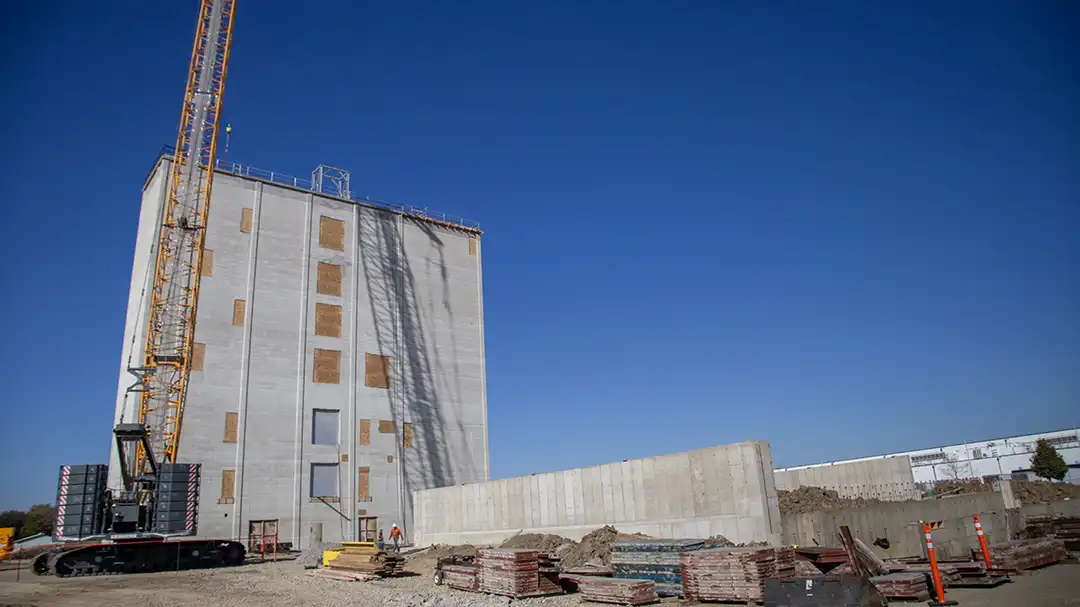
That’s where Iowa farmer Landon Plagge comes in. He’s building Green Acres Milling, an oat mill just across state lines in Albert Lea, Minnesota.

“We need to move beyond being just commodity producers, and we have to do it at scale, and we also have to do things that are better for the environment,” Plagge said.
The hope is that the mill will eventually process 4 million bushels of oats each year. Plagge said consumers will be able to trace oats back to their farms and having a local mill means farmers here can increase oat production.
“We're quadrupling the number of acres of small grains that we grow,” Plagge said. “Then you multiply that by the corresponding impact on corn acres, soybean acres, this mill will change the rotation on 120,000 acres of farmland in northern Iowa, southern Minnesota. And that's a scalable change that can make a difference.”
If construction stays on track, the new mill should be up and running by harvest time next year.
A version of this story first appeared on Minnesota Public Radio.


Latest Episodes
View All Shows 7 hours ago25:23
 14 hours ago7:25
 19 hours ago30:58
 19 hours ago8:04
 6 days ago28:46
 4 months ago24:33