


Why more consumers are ditching their smartphones for "dumbphones"
New companies like Techless and Sleke are offering scaled back phones or software to help you ditch your screen addiction. Some old-school brands, like Nokia, are also attracting new customers.
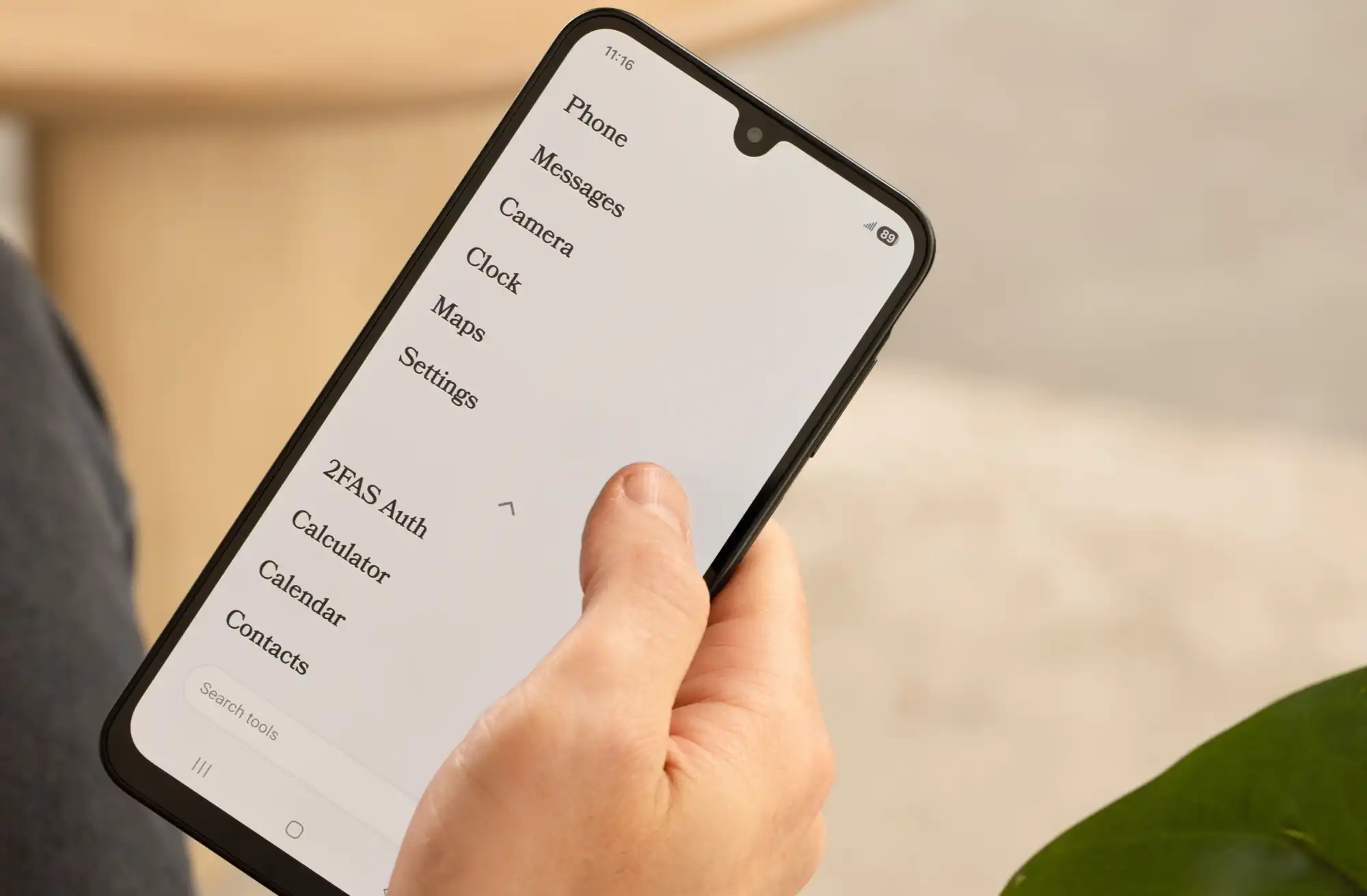
As Apple's first foldable iPhone hits stores, some customers are making the choice to forgo smartphones entirely and opt instead for "dumbphones," scaled-back devices that will stop them from doomscrolling.
Dumbphone companies and consumers who use these minimalist devices say that they allow people to have greater control over their time, escape the constant bombardment of notifications, cultivate better relationships with their friends and family, and focus more on their hobbies.
Sarah Givens, a 23-year old from Georgia, felt that smartphones hindered her ability to fully connect with other people. "If your main mode of communication is always through your smartphone, then the relationship is with the smartphone. It's not with the person," Givens said.
So in 2025, she got a Nokia, which came with a few basic features like a note app and an outward-facing camera (no selfies).
Givens said cutting back on screentime and limiting the information you post about yourself can cultivate closer relationships in real life.
"If you're constantly updating your profiles, at a certain point, people don't have to ask questions because you're freely giving [information]," Givens explained.
She now takes the initiative to strike up conversations with the people around her.
"I would just learn to turn to the person next to me in my class and ask them questions, or the teacher, or the random person in the coffee shop," Givens said.
And she's started reading more, picking up books like Charlotte Bronte's "Jane Eyre" and David Foster Wallace's "Infinite Jest."
Kimberly Hubacek, a 37-year-old from Chicago, said that browsing social media and constantly getting negative news updates felt overwhelming, a feeling that was heightened during the start of the COVID-19 pandemic.
In 2020, she purchased a dumbphone – a Sunbeam F1 flip phone that still had helpful features, like a GPS and voice to text. "I went fully remote for work. So that kind of gave me an opportunity to explore a dumbphone a little further," Hubacek said.
She used the phone for about four years. "One thing that I noticed with switching over to a dumbphone is my mental health greatly improved," Hubacek said. That meant better sleep and less anxiety.
But due to return-to-office mandates, she realized she needed access to more apps, like a more robust GPS and two-factor authentication, a security measure used by many companies so that you can securely log in to your accounts.
So she went back to a smartphone and opted for a Google Pixel. But she uses an operating system that limits the features on her phone, allowing her to still reap many of the benefits she got from using her flip phone.
What the market for dumbphones looks like
There are a variety of tools and devices on the market aimed at limiting your screentime use. You can download apps that limit the amount of time you can use, like ScreenZen, a free app that accepts donations, or use tools to block them entirely, like Brick, a physical device and app that costs $59.
You can go old-school and buy a Nokia flip phone, which can retail for under $100.
And there are dumbphones that look like smartphones, along with modern flip phones, that still have some advanced features, but have barred social media and browsers.
Those companies include Sunbeam Wireless, which sells flip phones starting at $359. Techless, which sells the Wisephone, a device that resembles smartphones and starts at $399. And the Light Phone, which sells flip phones for $359 and more modern-looking devices, like the Light Phone III, which costs $899.
There are also operating systems, or software that can be installed on certain smartphones in order to limit your internet activity, like Sleke.
Austin Boer, co-founder of the operating system Sleke, said the product is the sort of "middle ground" option. The operating system has an "answer engine" and gives you the ability to do things like scan QR codes, make calls and use two-factor authentication. But you can't open a browser to surf the internet and you can't play games.
Boer and his co-founder Brennan Jordan sell Google Pixel 8 and 9 phones that come loaded with the Sleke operating system, which range between $499 and $690. If customers already have these devices, they can ship it to them and have the operating system added to their phone for $230.
Boer said that the company is developing its own hardware, a physical dumbphone, that it plans to ship early next year.
A rising customer base
Last year, Sleke had a couple hundred users. Now, the company is up to 1,300 users, Boer said. He attributes this to partnerships the company has with influencers and greater consumer interest in dumbphones and dumbphone-related tools.
People want to participate in real-life events and build a community with others, Boer said. He also noted that people are tired of the constant notifications.
Boer said he and his co-founder have also observed that there's been a rise in new parents who are interested in dumbphone-related technology.
"You have new parents who want to set good examples to their kids with technology use, and they're making buying decisions because they don't want to be the parents who are on their screens in front of their kids," Boer said.
The concern over children's smartphone use is how the Wisephone got started. Founder Chris Kaspar and his wife wanted their foster daughters "to stay connected without exposing them to the risks and distractions of a conventional smartphone," explained Holly Tully, the chief marketing officer for Techless, maker of the Wisephone.
"That personal need became a broader mission: creating technology that helps people live more intentionally," Tully said.
Tully declined to share sales figures for the Wisephone, but said "we’ve been growing significantly."
Orders through Shopify, a Canadian e-commerce site, reveal that landline phone orders surged 277% in June, corded phones rose 115% and basic feature phones increased 99%, according to data that the platform shared with Retail Brew.
Consumers are increasingly attracted to older products that have incorporated new features that meet their current needs, said Vijay Govindarajan, a management professor at Dartmouth College.
It's a phenomenon he calls "retro innovation."
Govindarajan said he sees the market for dumbphones expanding, with potential entrants from other countries like China and India.
But while there's a rising interest in dumbphones, smartphones have modern capabilities that make it difficult to make a complete transition away from the device.
"The biggest barrier is convenience. People still need tools for banking, travel, calendars, and everyday life," said Holly Tully from Techless.
For those that are interested in buying a dumbphone, Kimberly Hubacek of Chicago first recommends scaling back your smartphone usage and looking into software that could limit your apps.
"I think it's good that more people are interested in dumbphones. I think that we tend to be overly connected, and we are forced to be on 24/7. I feel like there is a lack of peace, a lack of sort of introspection," Hubacek said.


Latest Episodes
View All Shows an hour ago25:16
 8 hours ago5:54
 13 hours ago8:19
 5 days ago27:11
 7 days ago12:18
 4 months ago24:33