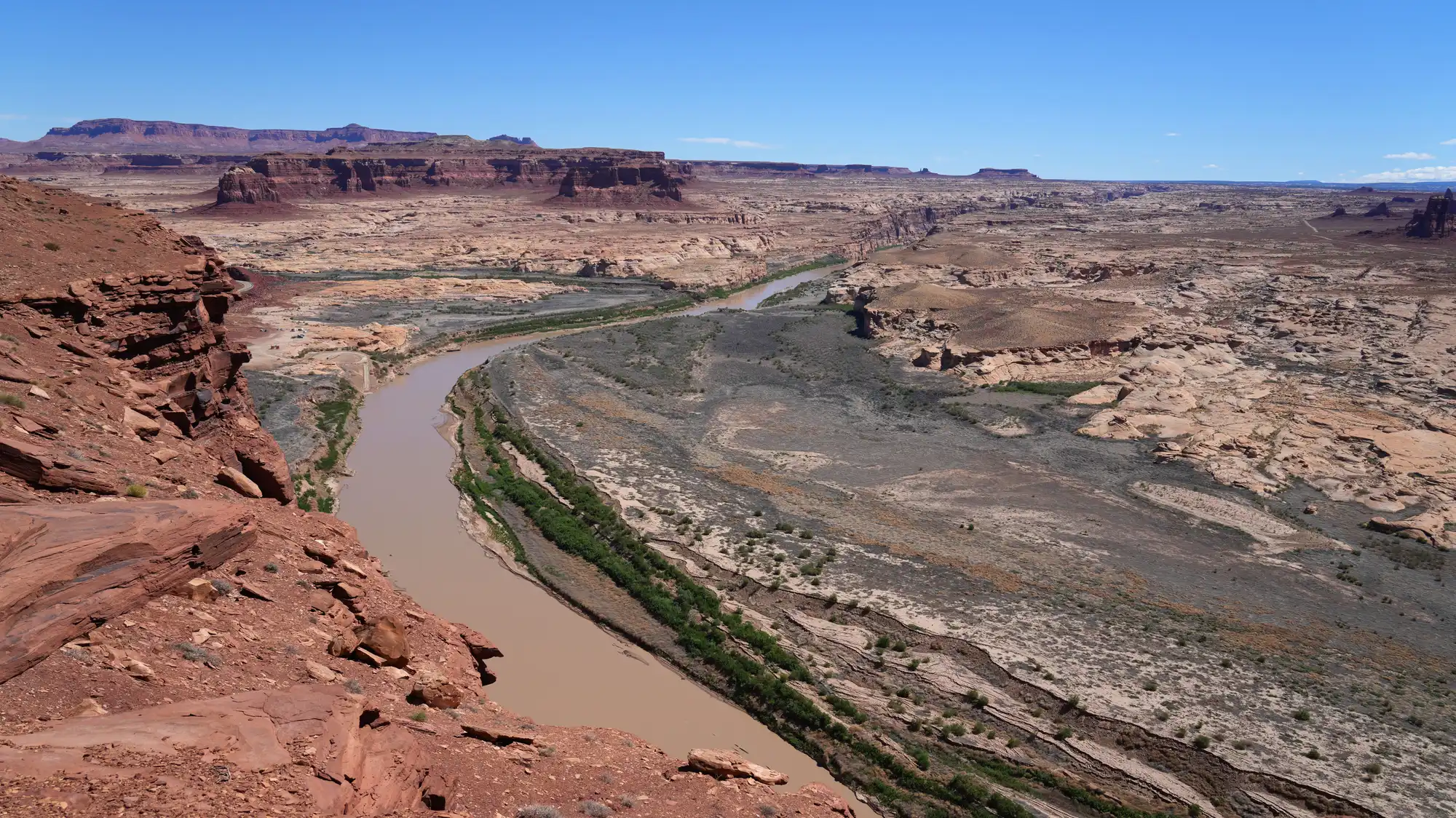
The Colorado River provides water to some 40 million people across seven U.S. states and Mexico. And, after a historically hot and dry winter, those western states are scrambling to shore up supplies.
One solution comes from California, Arizona, and Nevada. The three Lower Basin states recently announced a water-saving plan that aims to “stabilize the Colorado River through 2028.” The proposal suggests a 13% reduction in California’s use of the river water; Arizona and Nevada will also cut back.
To help explain the ongoing water crisis in the Colorado River Basin, “Marketplace Morning Report” host Sabri Ben-Achour called up Amy Scott. She’s been following the situation from her home base in Denver and covered the topic as host of Marketplace’s climate podcast “How We Survive. The following is an edited transcript of their conversation.
Sabri Ben-Achour: Just how bad is the situation right now?
Amy Scott: Oh, man — it is pretty grim. I mean, you can see it just looking at the mountains here in Colorado and also in Utah. We've had the lowest snowpack on record, which just means less water flowing into the Colorado River, which has already been in decline for most of this century because of overuse and drought, which has been made worse by climate change. So right now, Lake Powell, which is the reservoir created by the Glen Canyon Dam near the Arizona-Utah border, is at risk of falling below the level necessary to generate power or potentially even send water downstream.
Ben-Achour: How do you fix that? Like, the water's got to come from somewhere or not go somewhere else?
Scott: Yeah. I mean, it's really tough. The federal government has started some emergency measures to prop up Lake Powell by releasing water from the Flaming Gorge reservoir, which is upstream on the Green River in Wyoming. So up to a third of its current storage will be released over the coming year. It's also reducing how much water is released from Lake Powell to downstream communities, which will mean significant water restrictions. And one interesting development: San Diego County has excess water, actually, from its desalination plant. And so, it's talking with Nevada and Arizona about potentially selling some of its water to make up for some of those shortages.
Ben-Achour: And I know from listening to your podcast that you have visited that plant.
Scott: Yeah, it's interesting. So, “How We Survive” did a whole season on the water crisis in the West a few years ago. And we toured this plant in Carlsbad, California, that pumps in water from the Pacific Ocean and treats it through a process called reverse osmosis. I tried tasting it. It's totally normal. Here's a clip from our tour from Michelle Peters, who is now the CEO of Channelside Water Resources, which owns the plant.
Michelle Peters: It's not going to be the end-all, be-all solution for everyone. It’s not going to be the one thing we can do, and that’s it. But it is very much a fantastic tool to have in the tool belt when you're looking at how to increase new water supply sources.
Scott: San Diego County wouldn't actually pipe desalinated water to Arizona or Nevada. But the county itself holds rights to the Colorado River, some Colorado River water. So, this would involve selling some of its allocation to these other users. And then using the proceeds to produce more desalinated water. I should say desal is a bit controversial. It's really energy-intensive, and there are concerns about the brine that is created as a byproduct and how it affects marine life. But no question: There will continue to be growing demand for desalination around the world, as climate change and overuse threaten water supplies.




 10 hours ago25:16
 18 hours ago5:54
 a day ago8:19
 5 days ago27:11
 7 days ago12:18
 4 months ago24:33