


How federal layoffs have affected one family, six months on
Amy Uccello was laid off from her job at USAID in late January. Her husband lost his job at a nonprofit working with the agency shortly after.
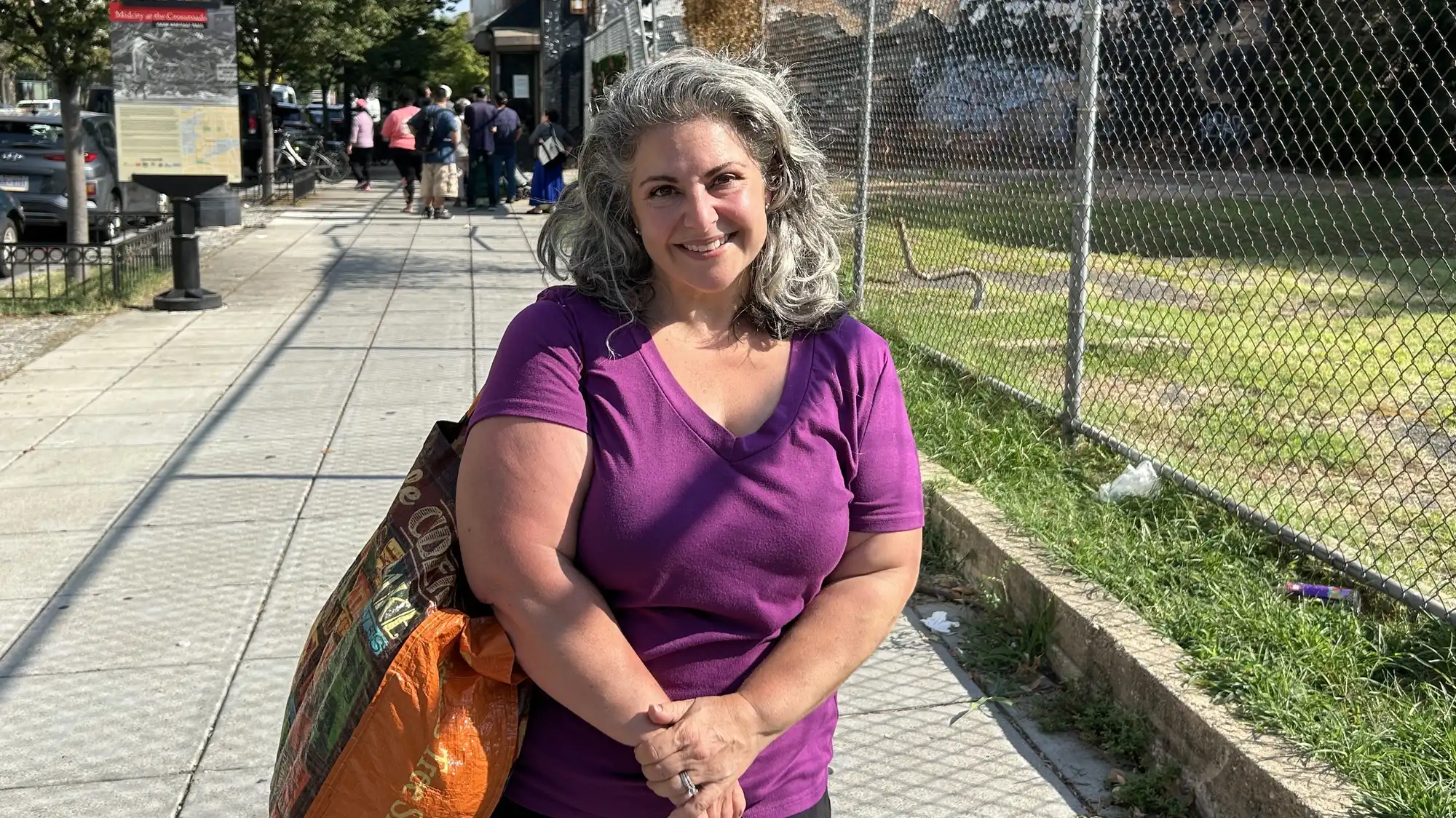
It’s about 9:30 on a sticky morning in downtown Washington, D.C. But temperatures are already headed toward the 90s. Amy Uccello is standing near the back of a line stretching to the end of the block, waiting for a chance to get some fresh produce at a food bank.
“The first time I was in this line, I was hoping no one would drive by that I would know,” she said.
But she’s used to it now. Uccello has been coming here every Friday since the end of January, when she was laid off from her job at USAID. Shortly after that, her husband lost his position at a nonprofit working with the agency.
Inside, there are carrots, cabbage, greens, and melons. Uccello holds her bag open. “Thank you so, so much. You can just drop it.”
It’s been about six months since the Trump administration began firing thousands of federal workers, including Uccello. Some of the first to go have burned through whatever severance pay they got and are up against the end of their unemployment benefits. They, too, are turning to food banks and Medicaid, and reevaluating their career paths.
As we head to the car, Uccello sees something fluttering on her windshield. It’s a parking ticket. The fine? $100.
Her eyes fill with tears. “That’s — that’s gonna cut,” she said.
Uccello thought she’d be in and out of the food bank — before parking restrictions kicked in. She ignored a new, nagging thought: Don’t take any chances that could cost money.
“It’s sort of an ever-present thought on your mind,” she said. “And it should have been a thought when I parked.”
Well, it is what it is, she said.
When Uccello gets home, her husband, Christopher Feddersen, and their year-old daughter are waiting.
After she unpacks the groceries and the baby is fed, Uccello usually turns to the task of job hunting. She figures she sends out about 10 applications a month, while taking on as many side hustles as she can manage — including cleaning a friend’s Airbnb.
“She asked me if I knew anyone who could clean it and I said, ‘Yeah, me,’” Uccello said with a chuckle.
Behind Uccello’s laughter, there’s a lot of stress. Her hair is starting to fall out. She finds a bunch in the drain after a shower.
She worries about former colleagues, too. Some have lost their homes. One committed suicide. Job loss is a form of trauma, said Washington State University psychology professor Tahira Probst.
“It ranks right up there alongside things like the loss of a loved one, the dissolution of one’s marriage, experiencing a major health crisis,” she said. “It is incredibly stressful.”

Adding to the stress, Uccello’s expertise is in a field that’s rapidly shrinking. Now, she’s at a crossroads. Does she keep looking for work in her field or change careers? Or, should she go back to what she did before grad school: waiting tables?
Holding their baby, her husband talks about a more drastic option.
“I think if I’m to do the work that I’ve been [doing], that my companies have invested skills in me for, and that I’ve become an expert in, that work is probably not in the United States anymore,” Feddersen said. “It probably means going overseas.”
They don’t have long to ponder their next move. Their unemployment benefits just ran out.


Latest Episodes
View All Shows 4 hours ago25:16
 11 hours ago5:54
 16 hours ago8:19
 5 days ago27:11
 7 days ago12:18
 4 months ago24:33