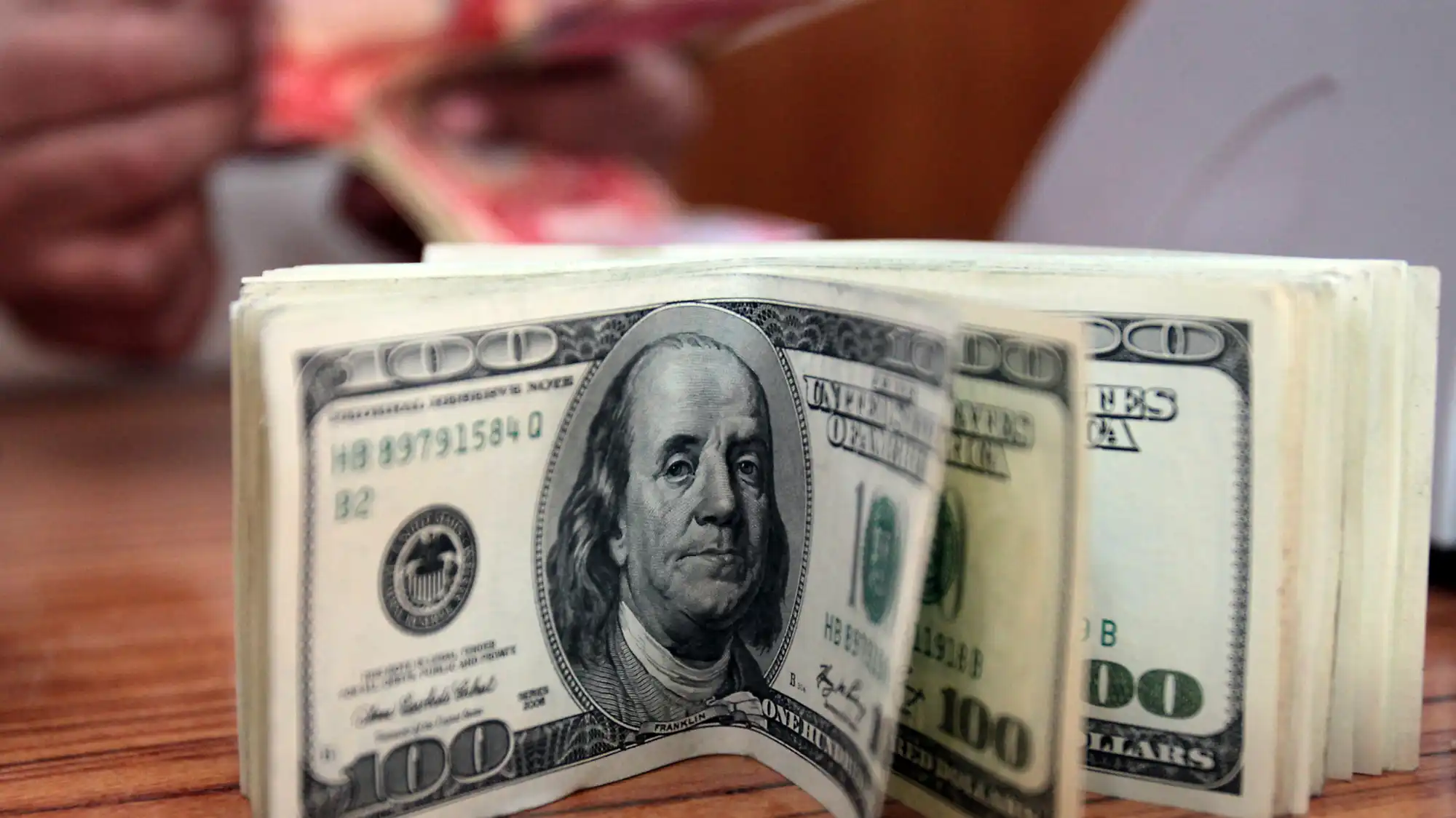
After a volatile week for Treasury bonds, investors aren’t feeling as confident about the market. Plus, Atlanta Fed chief Raphael Bostic weighs in on our economic moment.
The president’s executive orders calling for an end to DEI across the federal government is set to change the way tens of billions of dollars in federal contracts are awarded.
Stephen Nowland, courtesy Federal Reserve Bank of Atlanta
Businesses, consumers and the Fed are moving carefully because of uncertainty, says Raphael Bostic. “When the fog gets thicker, you're going to pull over and wait.”
In most of the country, sending a kid to day care costs more than sending one to a public university. But in New Mexico, most families can pay nothing at all.
If U.S. products get too expensive in China, American farmers are worried about losing a key market for things like chicken feet that people in many other countries don’t eat but are hugely popular in China.
Nick Daniel, chief product officer, says the LLMs connect buyers’ desires to Etsy’s vast inventory of unique, handmade items. The business model, though, still relies on the expertise of human trendspotters.
Universities issue bonds to compensate for federal funding cuts and companies rescind their 2025 revenue projections. Plus, benzene and the trade imbalance.
Universities have long issued bonds to raise money, but the amount being issued has nearly doubled in recent years —and is increasing as government funding is paused.
Chad Bown of the the Peterson Institute for International Economics explains the trade deficit and foreign investment “open loop” system. But wait, there’s more!
The stated purpose of Trump’s import levies is to draw production back to the U.S. from around the world. Benzene illustrates that it won’t work with all products.
The Nationhood Lab recently released survey results that found a majority of Americans share a common view that the U.S. is held together by values espoused in the Declaration of Independence.
Consumers won’t be buying as many gadgets during the potential downturn that’s slamming tech stocks, forecasts Daniel Newman of the Futurum Group. But the tariff-fueled disruption could widen giant companies’ advantage over the rest.
Amid deepening uncertainty about the economy, companies have nearly stopped issuing bonds. Plus, sluggish lending in Texas and doing business with Russia from a distance.
Charles Hecker, a geopolitical risk consultant, says a lot of questions about the country’s future need resolving before Western businesses put down long-term roots there again.
Additional taxes on European wines and winemaking supplies will challenge American businesses that sell EU wines — and domestic wineries that buy bottles or barrels from abroad.
The software titan is celebrating its 50th anniversary this month and building up its AI assistant, known as Copilot. Microsoft's consumer marketing chief, Yusuf Mehdi, touts the program's abilities and discusses the company's AI ambitions.
Copper prices rose rapidly a few weeks ago, ahead of further tariff announcements. But the metal ended up on a short list of goods exempted from import taxes.
The small, modular reactor industry could bring safer, low-carbon electricity production closer to populated areas. Professor Aditi Verma at the University of Michigan is teaching students about designing these facilities with community needs in mind.