


An Eddie Murphy comedy shaped insider trading law for prediction markets
The ‘80s comedy depicts an insider trading scheme that spurred new regulation. How it will apply to prediction markets is still unsettled.
Recently, a number of suspicious bets on events like the ouster of Venezuelan president Nicolás Maduro and the war with Iran have raised eyebrows. The concern is that people with access to government secrets might be using them to profit on prediction markets.
On Tuesday, a group of House Democrats called on regulators to go after war bets on offshore platforms. Lawmakers have also introduced several bills to rein in prediction market activity.
Kalshi and Polymarket have announced new policies to crack down on insider trading, and the federal Commodity Futures Trading Commission, which oversees the platforms, named it as an enforcement priority.
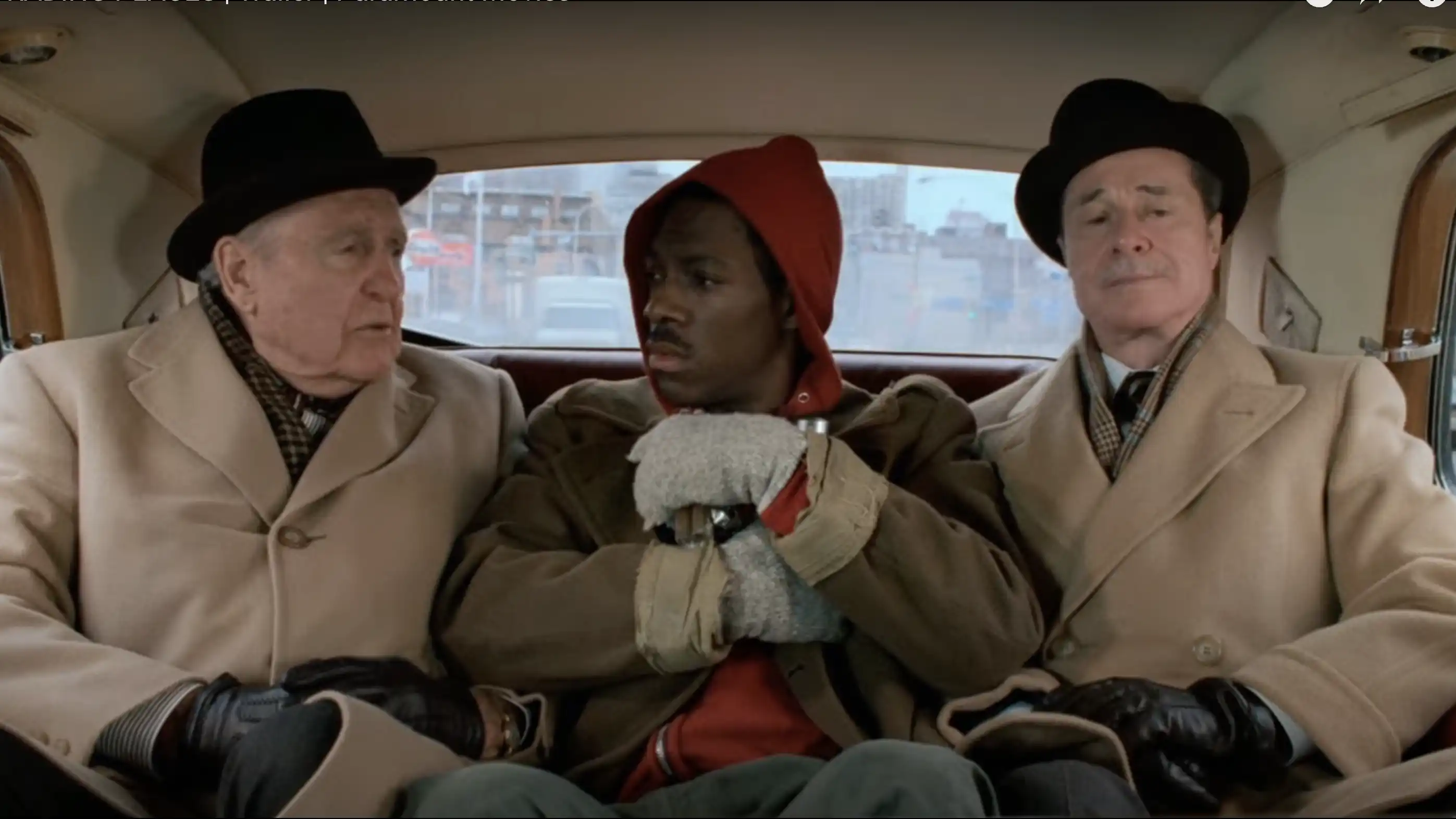
But laws preventing insider trading in commodities markets are more recent and untested than you might think. To understand how they work, it helps to get familiar with the 1983 movie “Trading Places,” which turns on a plot to trade on government secrets.
It’s definitely a movie of the ‘80s, and there’s a lot going on. Basically, Eddie Murphy plays a down-on-his-luck conman, and Dan Aykroyd is a hoity-toity commodities broker.
Aykroyd’s evil bosses, the Duke brothers, enact a convoluted scheme to make the two trade places as a social experiment. Then, Murphy and Aykroyd team up to get revenge.
They intercept a secret U.S. Department of Agriculture report on the orange crop the Dukes were planning to use to make a killing on orange juice futures. They feed the Dukes a fake report, then they use the real secret information to get rich themselves and retire to a tropical paradise.
The setup is pure Hollywood, but the idea that you could get away with a scheme like this was accurate, said Andrew Verstein, a law professor and co-director of the Lowell Milken Institute for Business Law and Policy at UCLA.
“For most of American history, if you came to have some information that gave you a really strong sense of what was going to happen in commodity prices, you could trade commodity futures and options and make money with that information, and there wouldn't be any possible legal consequence to you,” he said.
Commodities were seen as different from stocks: They don’t have shareholders who would get screwed over by share price manipulation, and most people trading in the markets — like farmers with knowledge of their own crops — are insiders to a certain extent.
It wasn’t until 2010, with the passage of the Dodd-Frank Act in the wake of the financial crisis, that trading on material nonpublic information was actually made illegal in commodities markets.
“The CFTC chairman had gone to Congress and said, ‘We actually do want to be able to prosecute insider trading. We saw the movie ‘Trading Places,’ and we want that stuff to be illegal,’” he said.
One provision was even nicknamed “The Eddie Murphy Rule.”
But Verstein said that how the law should be applied in the real world is still somewhat unsettled. And how it should be applied to prediction markets — which fall under the same regulation as orange juice futures — is even more unsettled.
“I am mostly interested in these as an information institution,” said Robin Hanson, an economist at George Mason University. “The main social value is that they tell us about things.”
Hanson is part of an intellectual movement that has long promoted prediction markets as powerful forecasting tools. Want to know how rent control will affect housing prices or if interest rates will rise or fall? Prediction markets, the argument goes, give you fast, real-time data — the aggregate beliefs of people willing to put their money where their mouth is.
“And that means we want it to be OK for people who have big advantages to use them, because that'll give us the information,” he said.
Inside information makes predictions more accurate. But it can also lead to corruption and mistrust, according to Yesha Yadav, a law professor and associate dean at Vanderbilt University.
“People may never want to get involved ultimately, down the line, if they feel like, ‘Hang on, you know, this market is going to be super rigged against me at all times,” she said.
There’s broad consensus that the law prohibits people from trading on government secrets or stolen information, she said. Kalshi and Polymarket have also banned anyone with influence on real-world outcomes from betting on what they call “events contracts.” But Yadav said enforcement is the challenge.
“Prediction markets are home to goodness knows how many different types of contracts,” she said. “The number of contracts are multiplying and proliferating every single day.”
Contracts about specific details of what will happen during the Super Bowl halftime show, for instance, could involve hundreds of potential insiders.
Yadav said it looks like the platforms recognize insider trading is a threat to their business and are taking actions to prevent it.
Kalshi is working with a third-party gambling monitor to screen users for insiders in politics and sports; Polymarket has beefed up its rules against insider trading; and both platforms require identity verification for traders, at least in the U.S..
Some of the most questionable bets have happened in Polymarket’s offshore operation, where users trade anonymously with cryptocurrency.
In 2023, Marketplace dug into the film “Trading Places” as part of our “Econ Extra Credit” series. Check out some of the newsletters from that series below:
From Dec. 11, 2023: The barrow boys
From Dec. 8, 2023: The nicer the car, the more likely the driver is to break the law
From Dec. 4, 2023: The unfairness of capitalism
Related Topics
Collections:


Latest Episodes
View All Shows 2 days ago25:17
 2 days ago6:24
 2 days ago16:16
 3 days ago28:46
 5 days ago30:57
 4 months ago24:33