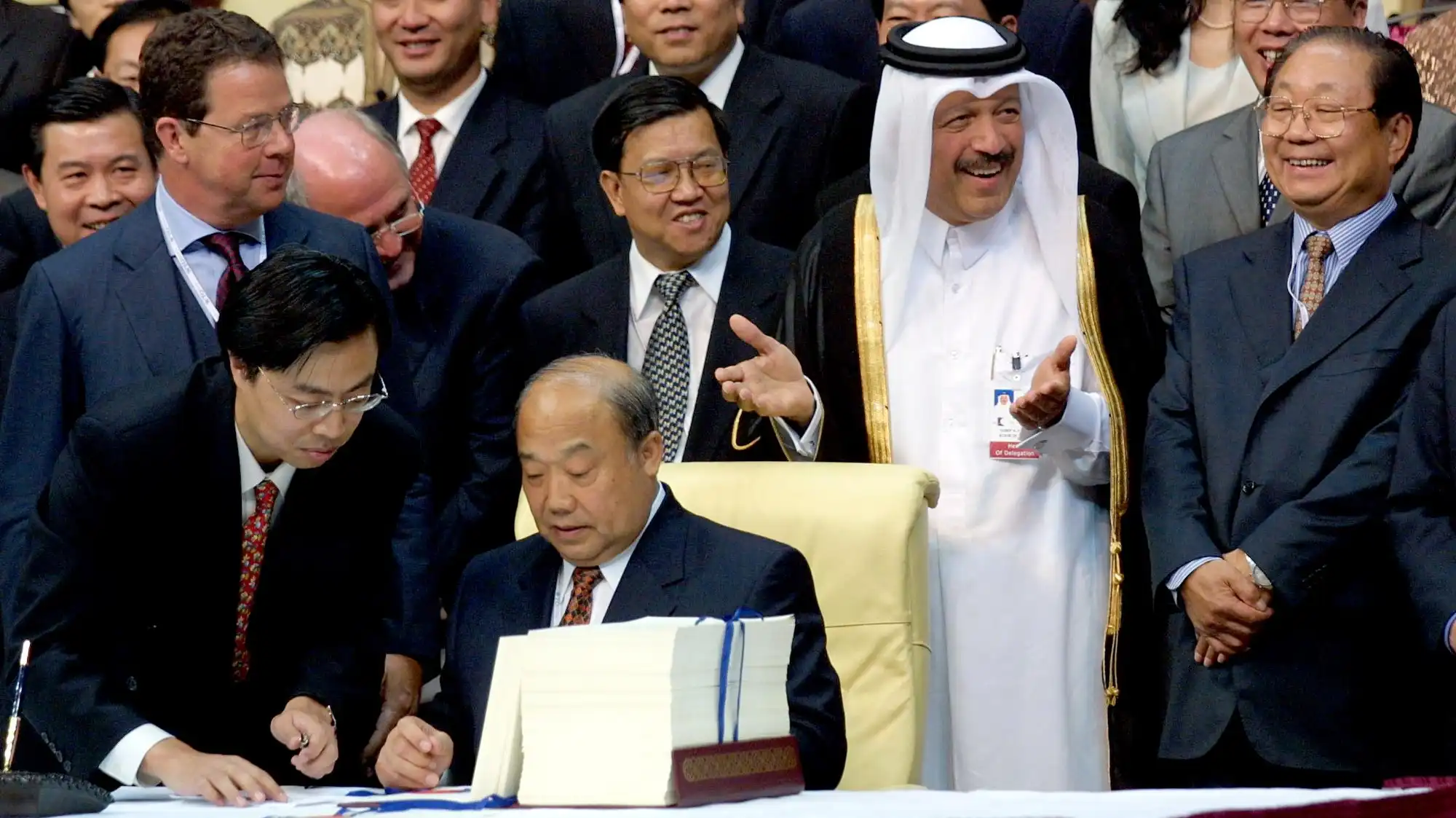
When China joined the World Trade Organization in 2001, it reshaped parts of the U.S. economy. Research has shown the so-called “China shock” hit manufacturing jobs, wages, and labor force participation in certain regions.
But a new study from the University of Iowa suggests the ripple effects didn’t stop there. In some of the hardest-hit communities, local banks suffered too.
“Marketplace Morning Report” host Sabri Ben-Achour spoke with the researcher on the project, Jiajie Xu. She’s an assistant professor of finance at the University of Iowa Tippie College of Business. The following is an edited transcript of their conversation.
Sabri Ben-Achour: By now, I think a lot of people are familiar with the fact that China's entry into the World Trade Organization, onto the stage of international trade, had major costs for manufacturing jobs in the U.S., wages in some cases, even life expectancy in some instances. But how did that affect banks?
Jiajie Xu: This is really the start of our research project, because we all know that it already hit the global trade and hit American manufacturing hard. But what we found is that the China shock didn't just empty factories, it actually quietly weakened the local banks, leading to higher loan rates and less credit for the local community.
Ben-Achour: Now, how exactly did that happen? Is that because local industries weren't taking out loans as much, because their businesses were undermined?
Xu: Yes, that's part of the reason, because the local employment got hit, local factories got hit. But then banks are no fool in this, right? They are also running a business. So, what they do is that they would increase the loan rates and then also cut down some of the loan supply. And that’s kind of creating a ripple effect on other industries that were not directly hit by the trade shock.
Ben-Achour: Oh, wow. So, you have one part of the economy that is in trouble because of the China shock, banks have to raise rates for their own sake, and that affects everybody else.
Xu: Exactly, that's what we find. And actually, more interesting, is that some of the local, small banks also got hit really hard compared to the big bank conglomerates.
Ben-Achour: Yeah, I was wondering, did this affect the consolidation in the banking industry — which has been ongoing?
Xu: Yes, so small banks lost market share in the regions that were more affected by this trade shock. And these banks are typically less diversified, and they're more vulnerable to local economic downturns. So, this is really leading to local banking markets becoming more increasingly concentrated.
Ben-Achour: How widespread was this? Where did we see this happen?
Xu: Yeah, it's kind of a national study. So, we observe this across the U.S., but those regions with more manufacturing are more affected.
Ben-Achour: Now the China shock happened at the turn of the millennium. How long did these effects last?
Xu: Yes, so this is a long-lasting effect. We are finding it persistent, at least for 10 years and 15 years. So, it's not going away.




 7 hours ago5:54
 12 hours ago8:19
 3 days ago25:17
 4 days ago27:11
 6 days ago12:18
 4 months ago24:33