Twenty-five years ago, when Jason Ginder started selling insurance for the Missouri Farm Bureau, adding earthquake protection to his clients’ coverage wasn’t even a question.
“The rates were so low, I didn't even ask people. I just put it on their policy,” he said.
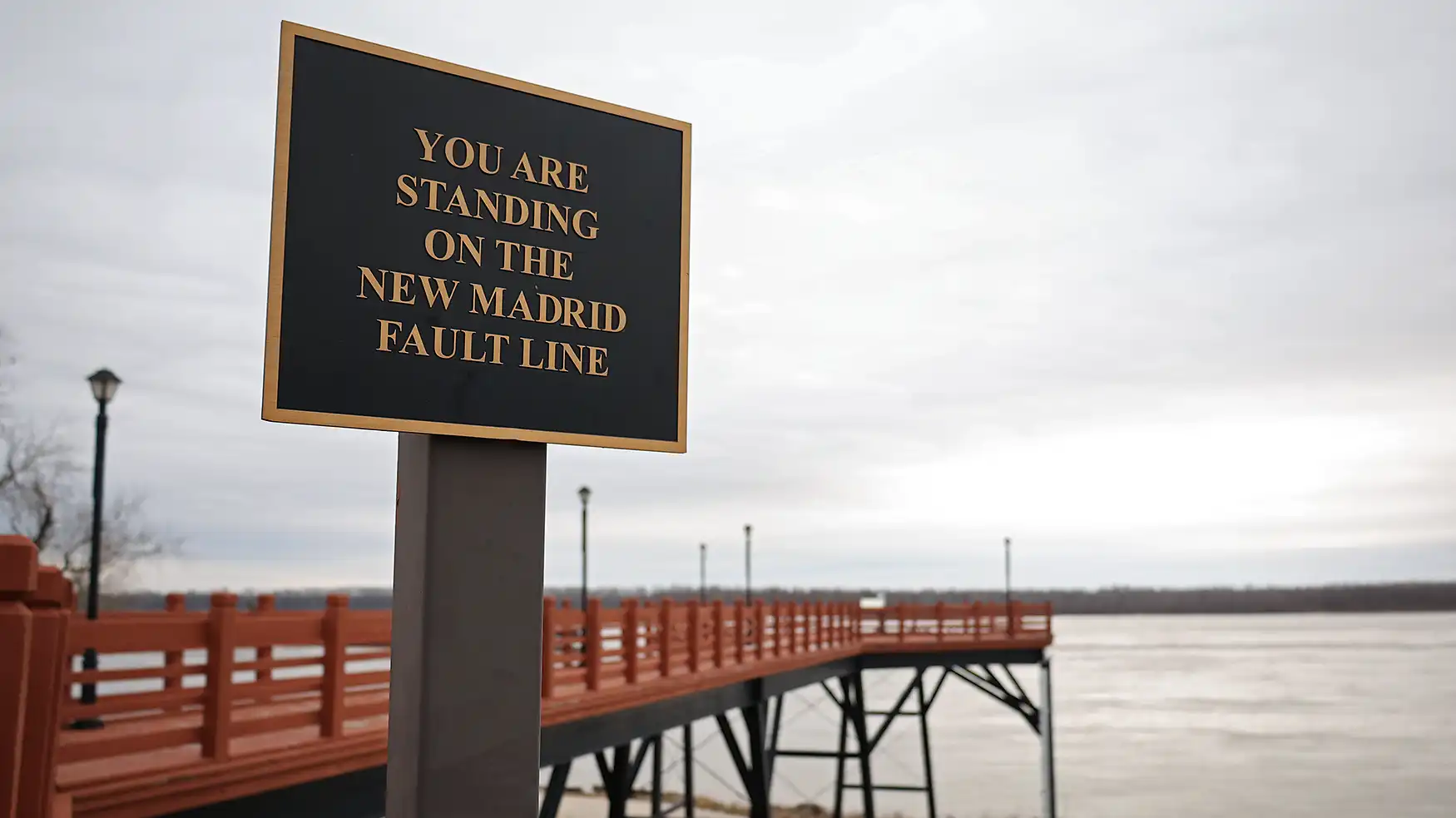
In the year 2000, more than 60% of homes around New Madrid, Missouri had earthquake insurance. But now, it’s only about 10%. Plus, the average cost of earthquake premiums went from $57 a year to $569 in 2023.
Other parts of the country are seeing the same trend. Following the Palisades Fire in California and recent hurricanes in Florida, homeowner premiums for some in those states could increase by more than 30%.
And that’s if homeowners can even get coverage. Lots of private companies are leaving the market because of the increasingly high risk of disasters.
But the last major earthquakes in southeast Missouri were way back in 1811 and 1812, so why are premiums today so high?
“It's probably just due to risk,” Ginder said.
Earthquake risk has traditionally been hard to predict in areas where they don’t hit that often. But the thing that caused this spike in premiums is a change in how insurance companies model that risk.
“The models used by insurance companies, the statistical models, have become more reliable,” said Michael R. Powers, a retired professor from Tsinghua University who studies the international insurance market.
“They found that they have to be more cautious,” he added.
He said the models have improved because of better seismology equipment and clearer satellite imagery. And in Missouri, the risk of a major earthquake was upped to 7 to 10% in the next 50 years.
With new data, insurance companies raise prices to make sure that they have enough money in reserves to pay out claims if — or when — an earthquake happens. That can trigger a feedback loop when the price of insurance goes up.
“Some customers, they would say, ‘Oh, I don't want this anymore, too expensive,’” said economist Hong Li, who studies insurance at the University of Guelph in Canada.
Li said those customers tend to have the least need for insurance — maybe they think their house is sturdy — so the high cost of premiums isn’t worth it to them.
When those homeowners drop out, the insurance pool has a higher proportion of risky properties, and companies bring in less profit to buffer against higher future payouts. So, insurance providers become even more risk averse.
“You have to update your model, you update your reserve, you update everything, and then you further increase the price,” Li said.
That leads to homeowners dropping their policy, and the loop starts again. Premiums rise, homeowners drop coverage, prices rise again. That’s why it's a spiral.
There are ways the government could step in. For example, most states have an “insurer of last resort” program that provides coverage for residents who struggle to get insurance on the private market. That coverage can still cost homeowners tens of thousands of dollars. Missouri has a program like that for home, farm and sinkhole protection, but not for earthquakes.
There’s just not any urgency. Former New Madrid State Legislator Donnie Brown says there’s a perception that coverage is unnecessary.
“Well, we haven't had a big one in 200-plus years. So, you know, maybe that's never going to happen,” he said. “It’s kind of out of sight, out of mind with people.”
Still, even in places where disaster risk is obvious and hurricanes or wildfires are common, the insurance market is on shaky ground. And it will only get worse if more homeowners drop coverage.




 an hour ago25:16
 8 hours ago5:54
 13 hours ago8:19
 5 days ago27:11
 7 days ago12:18
 4 months ago24:33