


The pope calls on Catholics to take on economic inequality
Pope Leo XIV’s first teaching called on Catholics to engage with and help solve poverty.
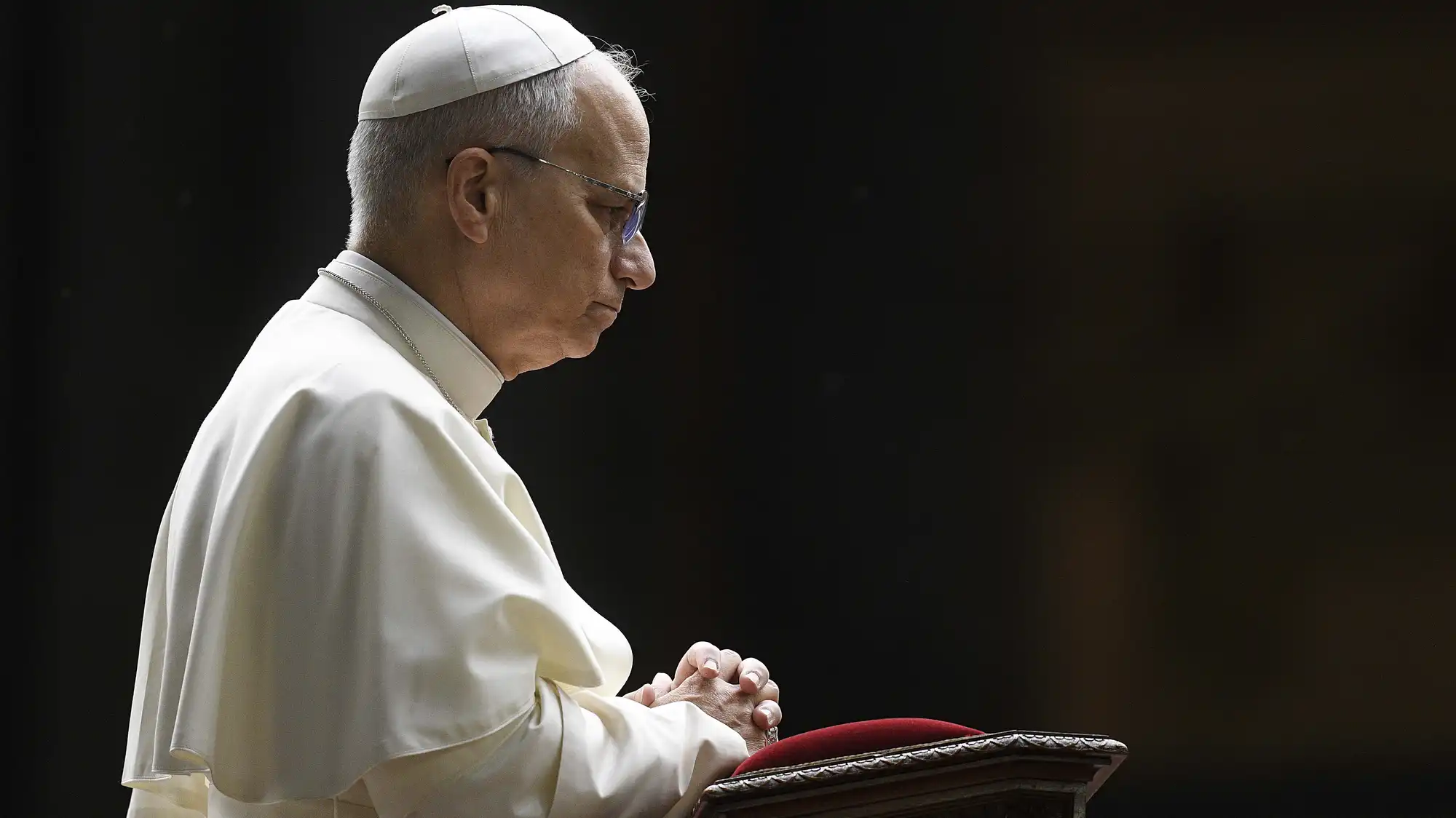
“Dilexi te.” In English, “I have loved you.” That is the title of Pope Leo XIV’s first teaching, released last week.
Now, Marketplace doesn’t often cover the minutiae and teachings of the Holy See. But for his first teaching, the new leader of the Roman Catholic Church opted to focus on the gap between the rich and the poor. And that’s very Marketplace-y.
Anna Rowlands is the Saint Hilda professor of Catholic social thought and practice at Durham University in the United Kingdom. She recently spoke with “Marketplace Morning Report” host David Brancaccio about the pope’s teaching, which calls into question some basic tenets of mainstream economics. The following is an edited transcript of their conversation.
David Brancaccio: Looking at the 100-page document the pope released the other day, he calls on Catholics to focus on inequality. Is that, would you say, central to that document or just one standout point?
Anna Rowlands: The document as a whole is really an attempt to tell a consistent Christian history of an engagement with poverty and the reality of those who are made poor. So, in other words, to say this isn't something that's a new focus for Pope Leo, it's not something that's born of liberalism or of being left-wing as a pope or any of those things, but rather the focus on inequality and specifically on poverty and the experience of being made poor, those are consistent realities that are part of the witness of the Church throughout history.
Brancaccio: But not just history. There are action points for this moment in that document. He says people shouldn't wait hoping the market will solve poverty. The time to help poor people — the way I read that document — the time is now.
Rowlands: Absolutely, and the point of the pope writing this document is to remind us of that history, if you're a Christian, so that you can engage with it as a living reality now with a sense that it is something that can be solved. And again, I think this is one of those sort of ideological questions that the pope is touching on in the document: How do we see in terms of our moral and intellectual imaginations, the very question of poverty itself? Do we see it as just an inevitability of social life, or do we see it as something that, both personally and structurally, we have a responsibility to engage with, such that there might be a reality which is less unequal than the world that we have right now?
Brancaccio: I mean, he comes right up against mainstream economics. Catholics should confront what the pope calls in that document "unjust [economic] structures."
Rowlands: Yeah, absolutely. And again, one of the things that I think people often — because we're so shaped by a sort of dominant understanding of liberalism — don't necessarily grasp, is that the place that the pope is speaking from is a specifically theological view of economics and the economy. Which is to say, from the perspective of the Scriptures, the world is made to meet the needs of all. So "the goods of creation" is the way that the tradition talks of it are there for the benefit of all. Therefore, when you have radical inequality, what you're seeing is a failure to meet that basic criteria.
So that's not just a question of redistribution. It doesn't sort of just sort of boil down to a redistributionist agenda, but it is to say there's something very wrong in the way in which we're living together, if those goods are so radically unevenly distributed, and that there are some people who are utterly powerless in the face of those structures to realize their own goals, to have equal opportunities, and where — and this is crucial language for the pope — where their dignity is undermined by the way in which they have to live.
Brancaccio: It makes fascinating, I would say, vivid reading looking at this document. But what effect do you think this text might have?
Rowlands: Well, I think it's a reminder that there is a consistent Christian witness. We so often hear this line that the church ought not to be involved in politics, ought not to have anything to say in economics, and the pope is — in a very quiet and steady and consistent way — reminding the world that Christians have to have something to say on these matters in order to be faithfully Christian.
This isn't a question of interference or intervention or being a rival ideology, but rather simply the confession of Christian faith leads to these views on economy, on politics, and therefore it's a reminder to business leaders, to politicians, and to the average person making economic decisions themselves, that they have a role themselves in responding, and that we have far more capacity for imagination on these questions than perhaps much of our dominant mainstream media tells us. So he wants to open that imaginative space, remind us that there is a possibility to live and to do things very, very differently, but that we need to challenge various structures in our own minds, as well as literal institutional structures, in order to make that possible. So I think it's a massive, very creative invitation to have very different kinds of conversations on these questions.
Related Topics



Latest Episodes
View All Shows 2 hours ago25:16
 9 hours ago5:54
 14 hours ago8:19
 5 days ago27:11
 7 days ago12:18
 4 months ago24:33