


“Every Screen on the Planet” dissects the fraught geopolitical conflict over TikTok
In her new book, “Every Screen on the Planet: The War Over TikTok,” Forbes journalist Emily Baker-White looks at the story of TikTok and the developments that led to a potential deal with the Trump White House.
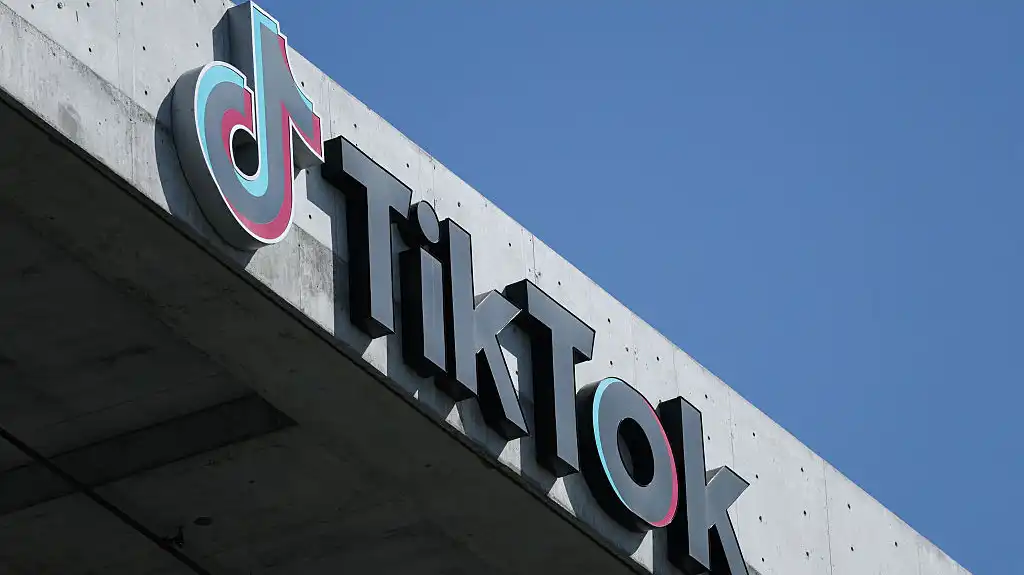
Last week, President Trump signed an executive order that could pave the way for a deal allowing TikTok to operate in the U.S. While details remain scarce, Forbes senior writer Emily Baker-White will be watching what happens to TikTok’s biggest feature.
“Right now, ByteDance, the Chinese parent company, will keep control of the algorithm that powers the ‘For You’ page,” said Baker-White. “They'll keep control over that recommendations algorithm.
The “For You” page algorithm has long been one of the big sticking points negotiations surrounding TikTok, in large part because of its ability to reach a lot of people. According to Baker-White, this gave national security experts a lot of pause.
“They worried that the Chinese government might force ByteDance to subtly change the mix of messages that we see on TikTok to seed propaganda or turn us against each other,” she said.
Baker-White covered the history of TikTok and how it became controversial in her new book, “Every Screen on the Planet: The War Over TikTok.” She spoke to “Marketplace” host Kai Ryssdal about the book; the following is a transcript of their conversation.

To listen to the interview, use the media player above.
Kai Ryssdal: With the understanding that you just wrote a 330-page book on this, could you, in appropriate radio broadcast length, give us the TikTok origin story? Would you?
Emily Baker-White: Yeah, Tiktok is one of many apps that grew out of what's known as an app factory, a big tech giant in China called ByteDance. ByteDance was founded by a man named Zhang Yiming, who many people see as sort of one of the founding fathers of the recommendations algorithm. And TikTok rose to power on its ability to predict what you next want to see, largely using the cues that you're giving the app revealing your preferences, rather than stating your preferences to it.
Ryssdal: So that's like Reels or not Reels, actually, because that's a different app, but videos that you like or share or whatever, right? And that tells the algorithm what you want ot know?
Baker-White: Yeah, right, but even more subtle than that, just where you linger a little bit before swiping to the next video, what brings you back to the app, what makes you rage quit the app. Things that you don't even think are signals to the algorithm became a really important part of how TikTok came to seem to know you.
Ryssdal: Right. And that actually goes a long way to answering this next question, but I'm going to need you to flesh it out. This is a very controversial platform. How come?
Baker-White: Yeah, so what has made TikTok different from the other tech giants that we know, such as your YouTube, your Instagram, your Facebook, is that TikTok was built by and created by a Chinese company. And people are concerned about that for two primary reasons. One, they’re worried that the Chinese government, which has tons of control over Chinese companies, could force TikTok's parent company ByteDance to either spy on Americans, hoovering up data about what our eyes linger on, etc. Or they worried that the Chinese government might force ByteDance to subtly change the mix of messages that we see on Tiktok, to seed propaganda or turn us against each other. And those two parallel concerns are sort of the core of the concern about TikTok that you have heard about for the last five or so years.
Ryssdal: We should probably point out here that you actually have been surveilled by this company. They have looked at your data to try to figure out who you were talking to about what they were doing.
Baker-White: They sure did. I wrote a series of stories about the company, including a story based on a whole bunch of leaks from inside the company that freaked the company out. A group of people who were responsible for investigating leaks made the terrible decision that the best way to figure out who was leaking to me was for them to pull data off of my TikTok app to see physically where I was, to see if I was physically near the devices of any ByteDance employees, on the theory that they could then figure out who was meeting with me. This didn't help them figure out who was meeting with me, but it did sort of show the worst case scenario that a lot of people were worried about. Some of the people who pulled my data were actually physically in China, and if they did this to me, which is like, not really very scary, but very, very dumb of them, they could have done it in a way that's much scarier. They could have done it to American service members. They could have done it to Chinese dissidents living overseas, and that's not what happened, but it showed that people's concern about that was legitimate.
Ryssdal: Terrifying, though, that is your reaction to it amused me. You were a little disappointed in them. You were like, 'you guys, come on, be better, would you?'
Baker-White: I was totally disappointed in them. Like, it just felt like a massive unforced error. Like, what were you thinking? Truly? What were you thinking? This is exactly what you're telling the world will not happen. You will not do this. Like, come on.
Ryssdal: So let's get to the current state of play, about which you know far more than I do. But I am going to read back to you a thing you wrote in Forbes the other day, first sentence of which is, "after years of unsuccessful negotiations, TikTok's Chinese parent company ByteDance appears to finally have found a White House it can sweet talk.” Where do things stand, and what did you mean by that?
Baker-White: Yeah, so for years, TikTok and ByteDance have been trying to convince the White House, various White Houses, but whoever's in the White House--
Ryssdal: Not just this one, right? Yeah, that's important.
Baker-White: They were trying to convince the first Trump White House, then they were trying to convince the Biden White House, and now they came back to Trump 2.0. They've been trying to convince them that the way to assuage the national security fears is not to force ByteDance to sell TikTok entirely, but to put in place a mitigation plan where ByteDance sort of separates some parts of TikTok to some degree. Essentially a series of ethical walls, security walls that keeps American data safe from people in China. Eventually, the Biden administration, they looked at this deal, and they said, at the end of the day, we don't think this can work. We don't think this is enough separation. And it appears that parts of what ByteDance and TikTok were pitching have come back in this deal that they are now trying to work out with Trump and Vance.
Ryssdal: So what do you think? You're the expert.
Baker-White: I'm gonna give a really annoying answer to that question, which is that we need to know more about the deal. Right now, ByteDance, the Chinese parent company, will keep control of the algorithm that powers the "For You" page. They'll keep control over that recommendations algorithm.
Ryssdal: That's a big deal, right?
Baker-White: It's a huge deal. And that's been a huge deal in negotiations for years because the Chinese government won't allow them to sell it. There are a lot of different types of software licenses. This new TikTok is going to license the algorithm from ByteDance. Until we know what kind of license we're talking about-- You know, J.D. Vance says he's satisfied, and he's seen the details of the deal, but I haven't, and so I just have many questions.
Ryssdal: To the title of this book, and then the actual last page. TikTok is, if not literally, then very nearly on every screen on the planet, right? It's just everywhere. And it is that rare company that has superseded national borders and has become sort of a transnational thing. And so I go to the last sentence of this book, which says, in literally the last words, "President Trump and Chinese President Xi Jinping have defined this app's future." It is now the subject of geo-strategic conversation.
Baker-White: At very least geo-strategic conversation. I think it is the subject of negotiations between the two [countries], and that's another place where they say there's a framework of the deal that's been agreed to.
Ryssdal: Yeah, framework.
Baker-White: Concepts of a plan do not a plan make. And so I want to be clear here that we don't have an executed contract agreement yet. That said, yeah, Trump and Xi Jinping are only going to approve this deal if they ultimately think it's in their interest. And so whatever happens to TikTok in its next iteration, is happening with the express blessing of those two men, and that's a really important way to think about this app that has so many eyeballs and so many people's attention for so many minutes every day.

Latest Episodes
View All Shows 7 hours ago5:54
 12 hours ago8:19
 3 days ago25:17
 4 days ago27:11
 6 days ago12:18
 4 months ago24:33