Tuesday marks the start of what has to be one of the more awkward Federal Reserve meetings in recent memory.
New Fed Governor Stephen Miran joins the Federal Open Market Committee this week, despite concerns that he hasn’t resigned from his position at the White House. Somewhere presumably in the same room will be Lisa Cook, whom President Trump, Miran’s former/current boss, attempted to fire.
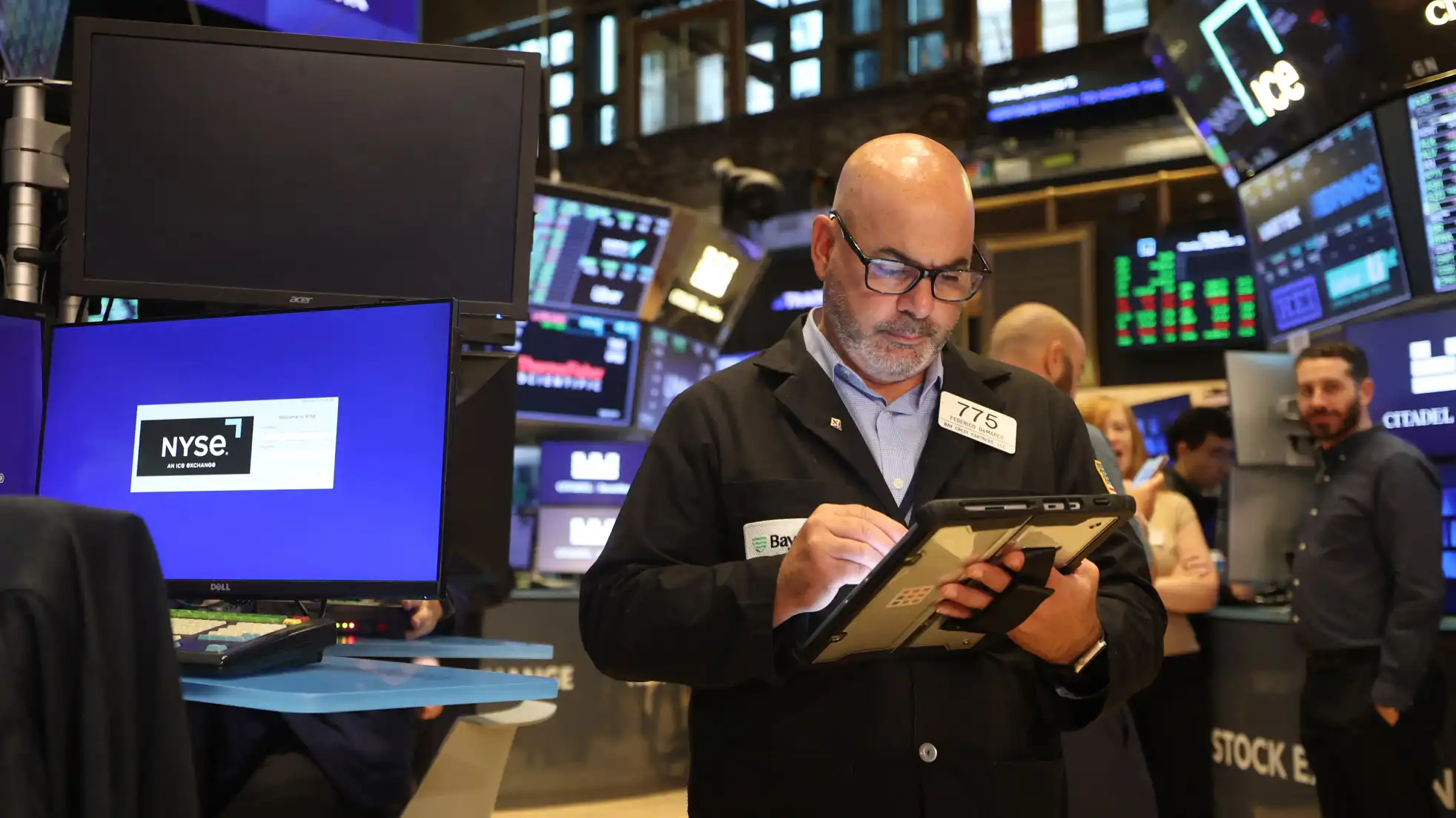
Even with all the drama over Fed independence we’ve seen the past few months, not to mention tariffs and the national debt and sticky inflation and souring job numbers, the stock market doesn’t seem to care all that much.
Economist David Kelly at J.P. Morgan Asset Management said if the Fed lowers rates this week, it’ll be more about politics than monetary policy.
“I think they are cutting rates because they know how much pressure they're getting from the administration, how much more pressure they'd get if they didn't cut rates,” Kelly said.
To be clear, a lot of experts think a rate cut is the right move, but the specter of eroding Fed independence has people freaking out about the economy’s long-run health.
To which the record-setting Dow Jones or S&P 500 countered, who cares about the long run?
“In the short run, low interest rates means that asset prices can go higher, and so people are bidding up the asset prices, knowing that what the Federal Reserve is doing may be creating a bubble in the future,” Kelly said. “But for right now, the market is partying, and everybody must be part of the party.”
It’s not just the prospect of lower borrowing costs boosting corporate cash flows.
“The reconciliation bill is also going to juice the economy first quarter of 2026,” said Olu Sonola at Fitch Ratings.
Investors expect those trillion-dollar tax cuts in the Big Beautiful Bill to goose corporate profits too. But all that boosting, juicing and goosing from the federal government could come with a longer-term cost.
”We’ve all experienced what it feels like to live through inflation — it doesn’t feel great,” said Kristy Akullian, an economist at BlackRock. “So, if inflation kind of gets out of hand, that’s the biggest risk that we’re facing.”
It’s a risk, but she said there’s a growing share of individual investors in the stock market, and they tend to be more optimistic.
Of course, it’s very possible interest rate cuts and deficit-financed tax breaks won’t create inflation or the types of asset bubbles we’ve seen in the past like dotcoms in late ‘90s and housing in the mid-aughts.
But the thing about bubbles — it’s really hard to tell when they’re about to pop.
“No party lasts forever, and so eventually we're going to have a bear market,” Kelly said. “We do not know the day nor the hour. That's the way markets work.”
No one quite knows when the short run ends and the long run begins.




 2 hours ago6:16
 4 hours ago7:34
 16 hours ago25:22
 a day ago30:57
 6 days ago28:44
 4 months ago24:33