Marketplace®
Every story is an economic story

Episodes 2151 - 2160 of 4493

  • In China, your credit could depend on how often you visit your parents
    Justin Sullivan/Getty Images

    Few Chinese citizens have credit cards or any sort of credit history. But the country has started incorporating more credit into its economy and culture, and the government is working on a way to measure creditworthiness for both businesses and individuals. Its plan? A social credit score. The idea is akin to the American FICO system in that it’s a financial record of whether you paid your bills or traffic tickets. But the Chinese government is also tracking social behaviors — like whether you jaywalk or refuse to visit your elderly parents — and it’s figuring out how to incorporate those into your score. Amy Choi talked with Marketplace China correspondent Jennifer Pak about how the process for calculating social credits is taking shape.  (08/20/18)

  • Americans are using less social media, including tech insiders
    MANAN VATSYAYANA/AFP/Getty Images

    Engagement is a key measure of health for social media platforms. It’s measureed not only by how much time users spend there, but also how often they upload, share, comment and “like.” Investors want to know that these platforms are integrated into users’ lives so that advertising revenue can continue to grow. But some platforms, including Snapchat and Facebook, are seeing engagement decline. Jessi Hempel, a senior writer for Wired magazine, points to a gradual boundary setting with social media that she thinks a lot of people have been doing, intentionally or not. (08/17/18)  

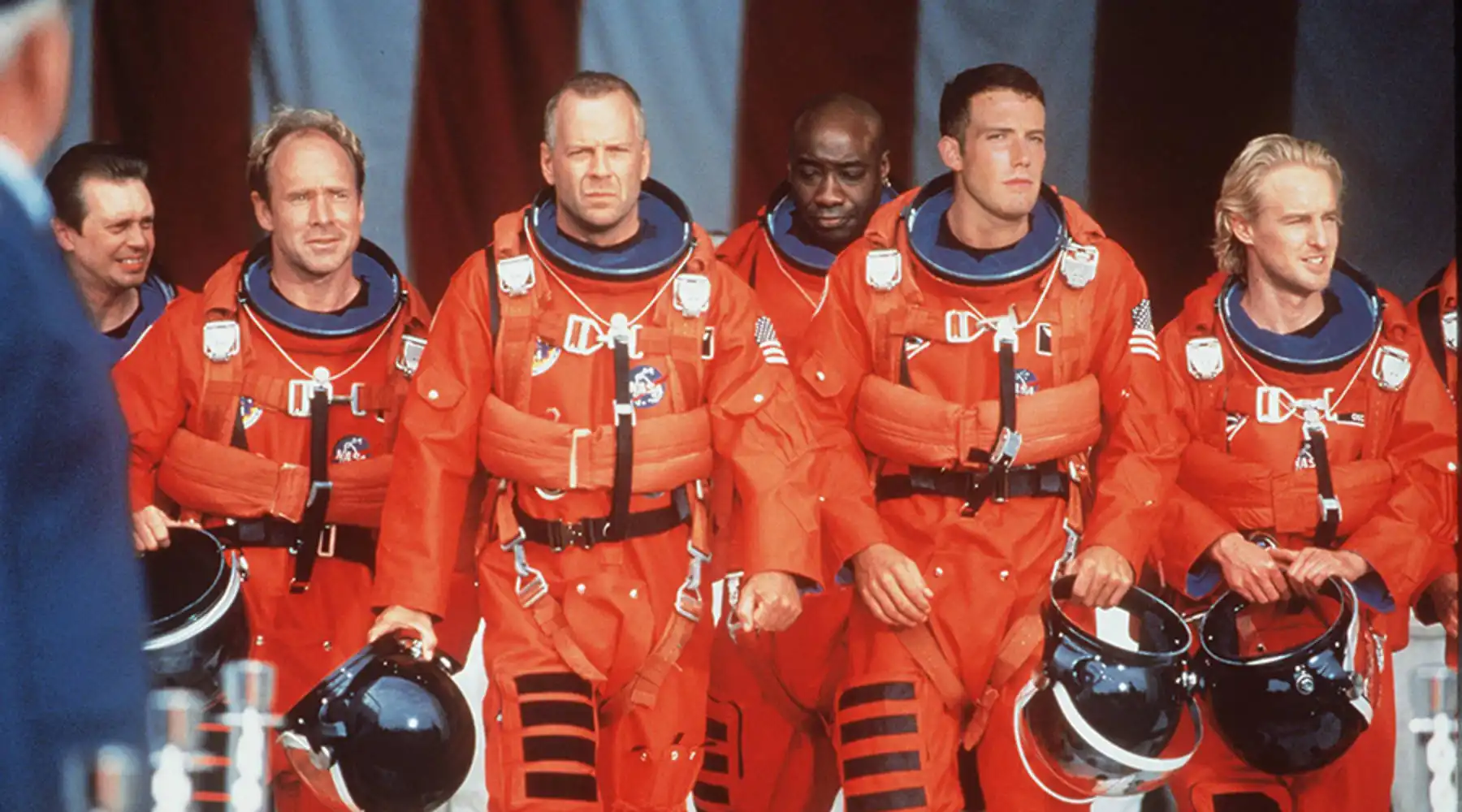
  • From left, Steve Buscemi, Will Patton, Bruce Willis, Michael Duncan, Ben Affleck, and Owen Wilson are on a mission to save Earth from an asteroid in “Armageddon.”
    Getty Images/Handout

    This summer, Marketplace Tech is exploring tech in movies. Today, we’re looking at the Bruce Willis classic “Armageddon,” which was the highest-grossing film of 1998. Willis’ character, Harry Stamper, is a “deep core” oil driller sent into space to drill a hole and drop a bomb in an asteroid hurtling toward Earth. We meet Harry on an offshore oil rig, managing a surly crew, with oil flying everywhere. It’s a depiction of oil-drilling life that has stuck with the public, but has very little to do with reality. Eric van Oort, a professor of petroleum engineering at the University of Texas, talked to us about the space drilling technology in “Armageddon.” (08/16/18)

  • Slow internet? Fast internet? You might be paying the same price
    MARK RALSTON/AFP/Getty Images

    How much do you pay for internet service each month? And what do you get for that price? The National Digital Inclusion Alliance found that lots of customers are paying about $60 a month for their internet packages. And, some get super slow internet speeds, while others get super fast speeds. Internet service providers say they’re working to upgrade networks for everyone. Today on the show, NDIA executive director Angela Siefer talks with us about what it means for families paying full service prices for outdated internet service. (08/15/2018)

  • Can the "creator economy" survive if creators are all broke?

    The “creator” economy is made up of companies that host platforms, of social media, of marketing dollars, and of course, the talent uploading and sharing their music, comedy, photographs, and videos. Some of those creators make a living, but most of them don’t. Gaby Dunn knows first-hand the emotional rollercoaster of the creator economy; of never being sure if her videos or other work will pay off by the time rent is due. And that’s despite being a proven online success. Dunn has translated her online presence into a podcast, several book deals, and also a career as a prolific screenwriter, editor, actor, and comedian. We talk with her about what it means to make a career as a “creator,” even though she’s not a huge fan of the term. (08/14/2018)

  • Assault rifles hang on the wall for sale at Blue Ridge Arsenal in Chantilly, Virginia, in 2017.
    JIM WATSON/AFP/Getty Images

    In the past few months there has been a lot of debate over guns that can be made with a 3D printer, which would make it easier for people to get a gun. But there’s also a push happening in the tech startup world that is focused on making guns safer. “Smart gun” technology has been around since the 1970s. While the tech has evolved over time, the idea behind it has stayed the same: that only the rightful, registered user of the gun can operate it. Marketplace Tech guest host Amy Choi talked with Alex Yablon, a reporter at nonprofit newsroom The Trace, to find out why this technology hasn’t come to market. (08/13/2018)  

  • Blockchain is the digital ledger used for bitcoin transactions.
    (Yoshikazu Tsuno/AFP/Getty Images)

    To finish out our series on venture capital, we’ll take a look to the future. Cryptocurrency may have its disruptive eye cast toward venture capital. The initial coin offering is a type of crypto-crowdfunding that startups can use to raise cash quickly without kissing the Silicon Valley ring. But do ICOs really have the potential to replace venture capital for startups? We go back to the time Marketplace Tech host Molly Wood spoke with Yuliya Chernova, who covers venture capital for the Wall Street Journal, about the pros and cons of ICOs. 

  • Venture capital: Giving minority entrepreneurs a chance
    Wikimedia Commons

    This week we’re diving into stories about venture capital. There’s a group of venture capital firms that want to change the world for the better and make money. This is called impact investing. One of the firms working in this space is Impact America Fund, which invests in companies with diverse missions — for instance, a startup that helps African-American stylists sell their own hair extensions. Marketplace Tech host Molly Wood talked with Impact America Fund founder Kesha Cash about the sometimes complex collision of money and mission in venture capital.

  • The payroll services market is about an $80 billion business.
    Joe Raedle/Newsmakers

    The Japanese multinational SoftBank Group launched its $98 billion VisionFund last year. Since then, it’s dramatically changed the landscape in tech and venture capital. The fund has taken a majority stake in Uber, poured billions into WeWork, Nvidia, DoorDash, Slack and the dog walking startup Wag. SoftBank’s influence is so big, it’s pushing other venture capital companies to raise more money. Sequoia Capital, one of Silicon Valley’s best-known firms, is reportedly trying to raise more than $12 billion in new capital just to keep up. In our series on venture capital’s promise and perils, we’ll relisten to Marketplace Tech host Molly Wood’s conversation with Anand Sanwal of CB Insights about how VisionFund is changing everything. (08/08/2018)

Talk to us

You must complete the reCAPTCHA above to submit your message.
By submitting, you consent to receive information about our programs and offerings. The personally identifying information you provide will not be sold, shared, or used for purposes other than to communicate with you about Marketplace. You may opt-out at any time clicking the unsubscribe link at the bottom of any email communication.

About the show

Every weekday morning, Marketplace Tech demystifies the digital economy. The radio show and podcast explain how tech influences our lives in unexpected ways and provides context for listeners who care about the impact of tech, business and the digital world.

All Shows