Marketplace®
Every story is an economic story
Latest Episode

Who owns genetic testing results?

Oct 16, 2018
A visitor looks at a digital representation of the human genome which is a sequence of colored squares.

Episodes 2111 - 2120 of 4493

  • Are narcissistic CEOs bad for business?
    ThoroughlyReviewed/Visual Hunt

    Silicon Valley loves a charismatic founder story. But there’s a difference between vision and leadership and … narcissism. And new research shows that narcissistic CEOs are bad for business. Jennifer Chatman, a professor of management at UC Berkeley’s Haas School of Business who has researched the tech industry, found that narcissistic CEOs tend to pay themselves more and pay their executives less. They get involved in more lawsuits because they take more risks than they need to. And they tend to hire people more because of their loyalty than their skills or judgment. Molly Wood asks Chatman if the myth of the genius founder means a lot more narcissists in tech. (10/15/18)

  • An assortment of recently launched Amazon devices, including an Echo Input, Echo Show, Echo Plus, Echo Sub, Echo Auto and Fire TV Recast are pictured at the company headquarters in Seattle in September.
    Stephen Brashear/Getty Images

    In just the last week, Facebook and Google have both announced new smart speakers with video screens. And Amazon is heck-bent on putting Alexa in everything. On the one hand, people seem to want these doohickeys. Research firm Canalys says global smart speaker sales grew 187 percent in the second quarter of this year. On the other hand, an always-on, always-connected listening device in the home really freaks some folks out. Let’s dig into this in Quality Assurance, the segment where we take a deeper look at a big tech story. Molly talks with Tom Merritt, host of the podcast Daily Tech News Show. He says, before you decide whether to worry about smart speakers, you should know what you’re worried about. (10/12/18)

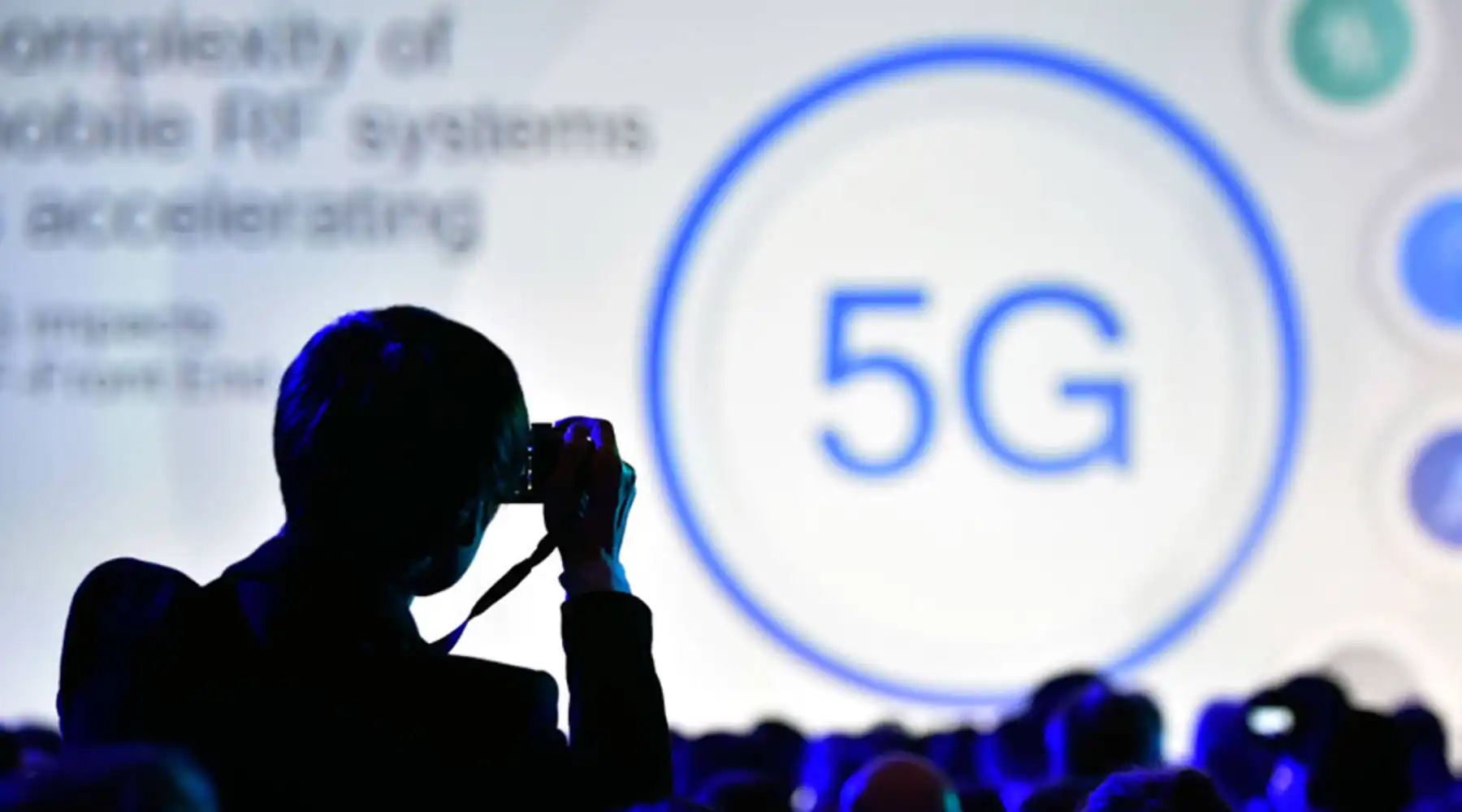
  • An attendee photographs a 5G logo display during a Qualcomm press event for CES 2018 at the Mandalay Bay Convention Center on January 8, 2018 in Las Vegas, Nevada.
    David Becker/Getty Images

    The whole multitrillion dollar promise of 5G and its millions of jobs and new businesses is just a pipe dream without infrastructure. Unlike 4G, which can be delivered through a relatively small number of tall towers, 5G wireless service relies on lots and lots of small receivers placed fairly close together. And installing all those little 5G cells is turning into a big fight. (10/11/18)

  • Apple's Oct. 13 event demoed a new iPhone 12
    JOSEP LAGO/AFP/Getty Images

    The next generation of wireless technology, 5G, could be a huge deal. The speed and the number of devices that can be connected could spawn new businesses we haven’t even thought of yet. Last year chipmaker Qualcomm and tech research firm IHS Technology put out a report that said 5G could enable $12 trillion in economic output across the world by 2035 and add some 22 million jobs. The report compared 5G to electricity. Compare that to 4G, which, just in the U.S., contributed about half a trillion dollars to the economy in 2016. And even a whiff  of that potential is why there’s a race to get to 5G first between companies and even countries. Molly talks with Scott Tong, Marketplace reporter and former China correspondent. He says the U.S. won the race to 4G, and China doesn’t want that to happen again. (10/10/18)

  • A worker inspects motherboards on a factory line at the Foxconn plant in Shenzen on May 26, 2010. 
    VOISHMEL/AFP/Getty Images

    A report last week from Bloomberg Businessweek suggested that Chinese spies had embedded tiny microchips on motherboards that control computers in order to steal information from nearly 30 U.S. companies, including Apple and Amazon. Both of those companies, and Super Micro, the electronics maker that was allegedly infiltrated, and the Chinese government have categorically denied the report. But the story is lingering, in part because it brings up a very scary reality that lots of cybersecurity experts keep talking about. Molly Wood talks about it with cybersecurity expert Bruce Schneier. (10/08/18)

  • A reel tender helps install fiber-optic cable onto telephone poles in Louisville, Colorado, in 2001.
    Michael Smith/Getty Images

    Almost 40 percent of rural America, or about 23 million people, don’t have access to broadband internet or reliable mobile service. Long term, this digital divide is a huge economic problem. Companies need high-skilled workers, and people without decent internet access can’t find those jobs or get the training they might need to do them. Now the Fed is trying convince businesses that the digital divide is their problem, too, Jeremy Hegle told us. He’s a senior community development adviser for the Federal Reserve Bank of Kansas City. Its territory includes Kansas, Nebraska, Wyoming, Colorado, parts of Missouri and northern New Mexico. (10/08/18)

  • Why the Facebook breach isn’t just about Facebook
    JOEL SAGET/AFP/Getty Images

    Facebook announced this week that it had suffered its biggest hack ever, compromising the accounts of at least 50 million users. Part of the reason a Facebook hack is so scary is that the social network connects to so many other apps and services. You might use it to log in to Spotify or Tinder or OpenTable — a whole string of apps might have your information connected to your profile. So far, Facebook has said hackers did not access any third-party apps. But it’s still investigating the scope of the hack. We dig into this in Quality Assurance, the segment where we take a deeper look at a big tech story. Molly Wood talks with Mike Isaac, a tech reporter for The New York Times who’s been covering the story. (10/05/18)

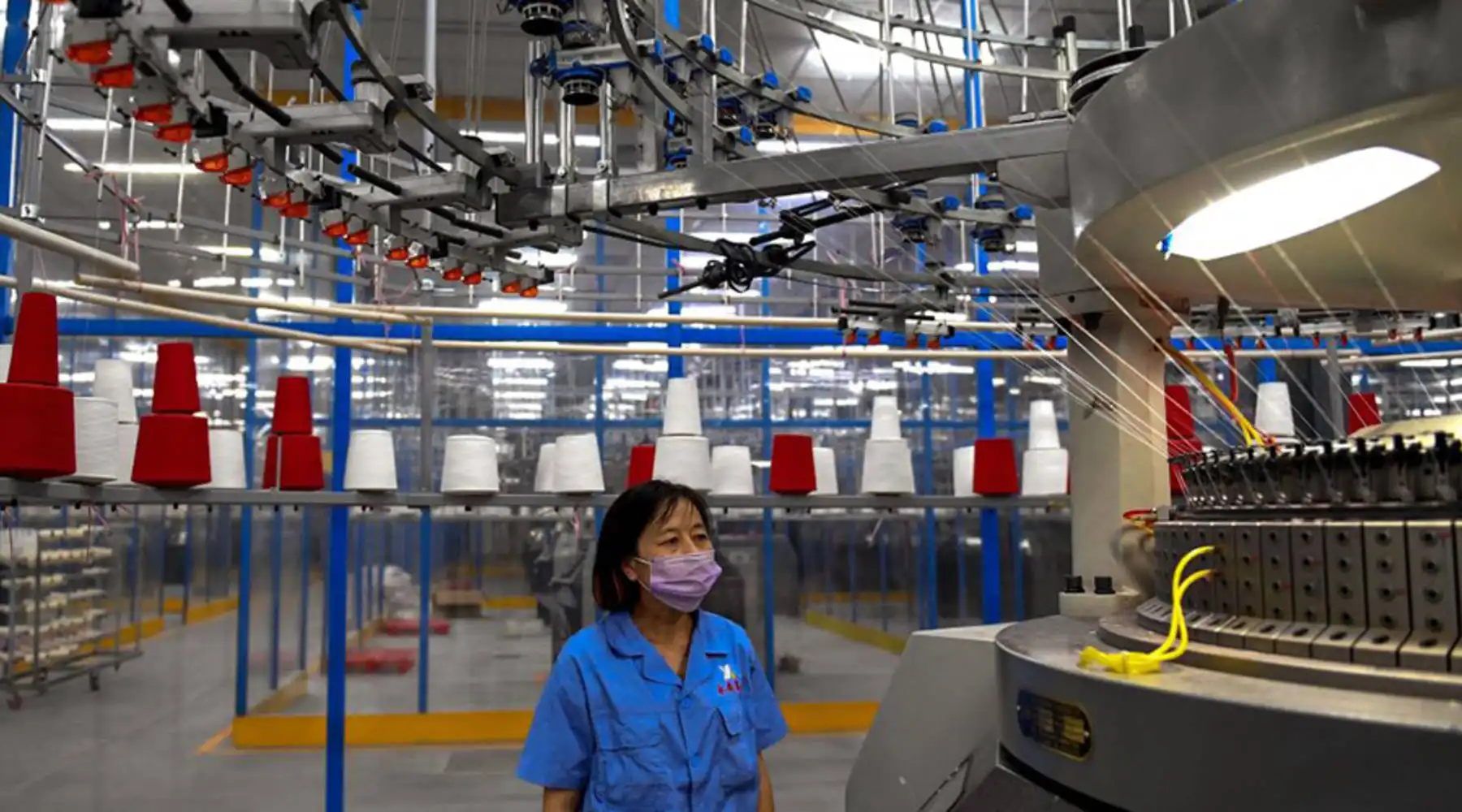
  • An employee monitors a circular weaving machine at a textile factory in Shangqiu in China's central Henan province in September.
    STR/AFP/Getty Images

    Automation is coming. And although it’s inevitably going to take jobs away, it’s also going to create millions of new jobs, make production more efficient and kickstart entire new industries. The countries that invest in automation early, and in the retraining that will help workers transition to new types of jobs, could really jump ahead economically. That’s partly why automation is a huge part of the Chinese government’s Made in China 2025 initiative. That’s the country’s plan to reduce its reliance on outside technology and create a tech economy that rivals the West. Automation is an especially big deal in China because there’s so much manufacturing there. It’s sometimes referred to as “the world’s factory.” Marketplace’s China correspondent Jennifer Pak joins host Molly Wood to talk about how big a deal the transition to automation might be for China. (10/04/18)

  • What does the new U.S.-Mexico-Canada trade agreement mean for the digital world?

    This week, the United States, Mexico and Canada made a tentative trade deal that will replace NAFTA, the North American Free Trade Agreement. And while NAFTA is better known for, say, avocados and cars, the United States-Mexico-Canada Agreement, as it’s known, is updated for the digital age. For example, it would protect internet companies like Facebook or Google from being sued over material that shows up on their services. It addresses how internet services and future 5G might work in all three countries. And it would make it easier for digital goods and data to cross borders. Molly talks about it with Victoria Espinel, who is on the federal Advisory Committee on Trade Policy and Negotiations and is CEO of the software industry trade group called BSA / The Software Alliance. (10/03/18)

Talk to us

You must complete the reCAPTCHA above to submit your message.
By submitting, you consent to receive information about our programs and offerings. The personally identifying information you provide will not be sold, shared, or used for purposes other than to communicate with you about Marketplace. You may opt-out at any time clicking the unsubscribe link at the bottom of any email communication.

About the show

Every weekday morning, Marketplace Tech demystifies the digital economy. The radio show and podcast explain how tech influences our lives in unexpected ways and provides context for listeners who care about the impact of tech, business and the digital world.

All Shows