Marketplace®
Every story is an economic story

Episodes 2091 - 2100 of 4493

  • Meet the fact-checkers trying to clean up Facebook
    Photo Illustration by Chris Jackson/Getty Images

    We’re a week away from midterm elections, and it’s time to talk about social media. After the 2016 elections, it became clear that a lot of divisive, misleading and flat-out false information was being shared via Facebook. A study earlier this year said Facebook was responsible for the spread of more false news than any other platform. And once the bad information was out there, fact-checking couldn’t do much to reverse its impact. After the 2016 election, Facebook partnered with a handful of news organizations to combat misinformation before it spread. Two years later, that still very much feels like an uphill battle. Angie Holan, the editor at PolitiFact — one of the outlets working with Facebook — told Molly Wood that official fact-checking partners get access to a special selection of potentially false information. (10/19/18)

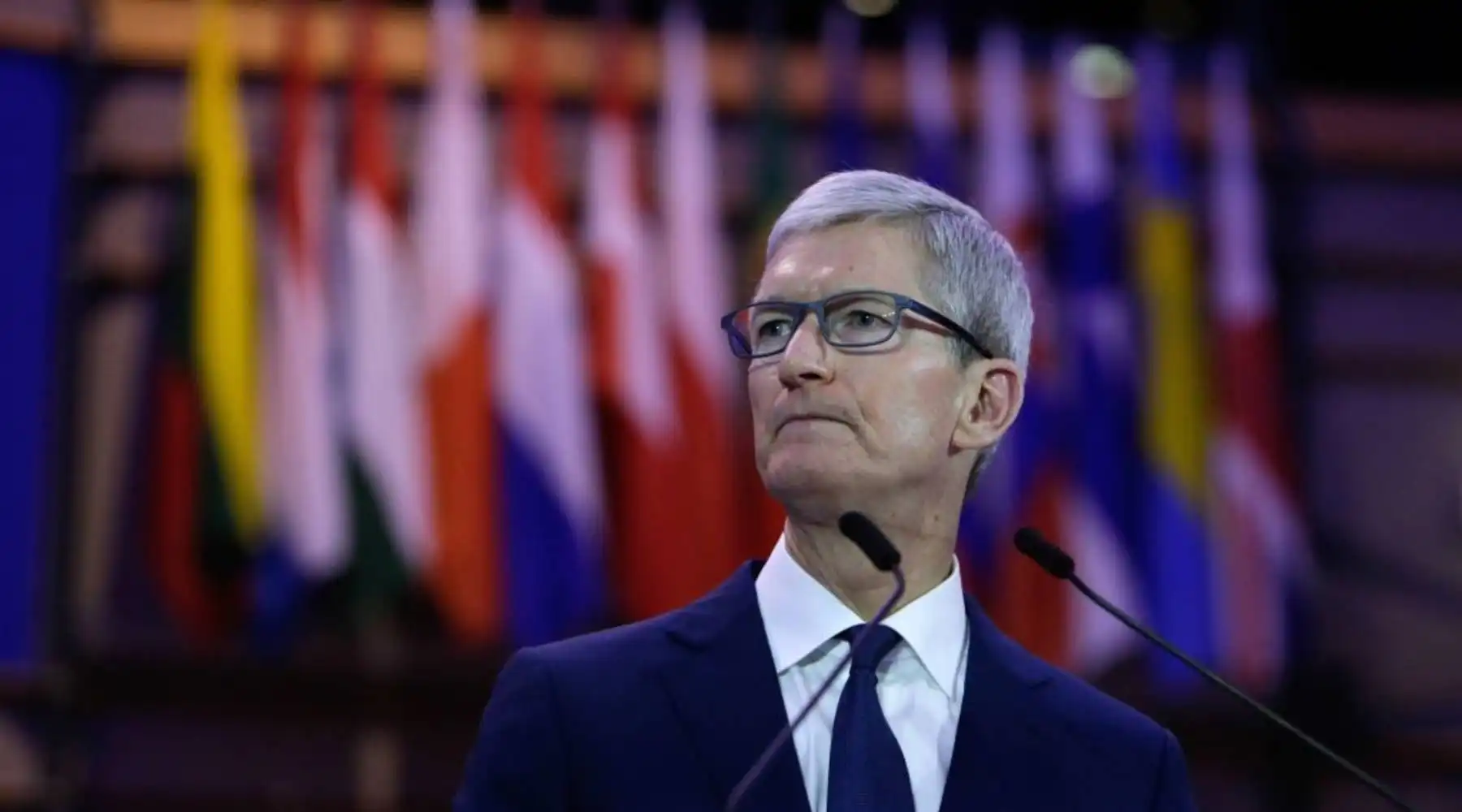
  • Tim Cook, CEO of Apple Inc talks at the Debating Ethics event at the European Parliament in Brussels on October 24, 2018. 
    ARIS OIKONOMOU/AFP/Getty Images

    This week in Brussels, Apple CEO Tim Cook lambasted what he calls the “data-industrial complex” created by the tech industry, calling for the United States to adopt comprehensive digital privacy regulations. Apple has stressed privacy as a selling point over the past couple of years, but this was a broadside at a couple of the other biggest tech firms in the world, namely Facebook and Google. It’s worth noting that it’s easy for Apple to tout privacy when the option it’s offering is a closed ecosystem where the company controls every aspect of the technology. We dig into this in Quality Assurance, the Friday segment where we take a deeper look at a big tech story. Molly talked with Tony Romm, a tech policy reporter at The Washington Post. (10/26/18)

  • What if the weakest link in election security is … confidence?
    Spencer Platt/Getty Images

    This week, we’ve been looking at election security. We talked about how voting machines are vulnerable to hacking, but an even easier target is voter registration databases. They’ve got the names, addresses and voting histories on all kinds of people. The Illinois’ voter registration database was hacked in 2016. The attack exposed the data of more than 70,000 voters, but stealing that information wasn’t necessarily the goal. Matt Dietrich, public information officer at the Illinois State Board of Elections, says the real goal was to hack away at the public’s confidence in the voting system. (10/25/18)

  • A long quest in Texas for a better voting machine
    JEFF KOWALSKY/AFP/Getty Images

    This week, we’re talking election security and technology. Today’s show is focused on old tech: paper. Remember the 2000 presidential election fiasco and the hanging chads, those tiny bits of paper that stuck to paper ballots? They confused vote counters so much the Supreme Court eventually had to decide the election. Well, in 2002, Congress passed the Help America Vote Act. It set new voting standards and gave election offices a bunch of money, mostly for new electronic voting machines. But within a few years, election security officials were asking for a good old-fashioned paper trail. Dana DeBeauvoir, who runs elections in Travis County, Texas, went on a yearslong quest to design her own electronic voting machine, complete with paper trail. (10/23/18)

  • Voters cast their ballots at voting machines in Las Vegas in 2016.
    Ethan Miller/Getty Images

    The midterm elections are here. Early voting is already happening in some places. We’re spending the rest of the week on election security and technology, starting with voting machines. Candice Hoke, founding co-director of the Center for Cybersecurity and Privacy Protection at the Cleveland-Marshall College of Law, believes insecure voting machines are the biggest security threat to the midterm elections. Hoke says that voting infrastructure should be regulated and funded like a public utility. (10/23/18)

Talk to us

You must complete the reCAPTCHA above to submit your message.
By submitting, you consent to receive information about our programs and offerings. The personally identifying information you provide will not be sold, shared, or used for purposes other than to communicate with you about Marketplace. You may opt-out at any time clicking the unsubscribe link at the bottom of any email communication.

About the show

Every weekday morning, Marketplace Tech demystifies the digital economy. The radio show and podcast explain how tech influences our lives in unexpected ways and provides context for listeners who care about the impact of tech, business and the digital world.

All Shows