


Biofuel crops stand to boost farmers’ revenue amid ever-rising input costs
Major agriculture and oil companies have partnerships to get new cash crops on many more acres by 2030, representing a new line of revenue for farmers who need it.
Record diesel prices could not have hit at a worse time for farmers in this economy: the fall harvest.
While diesel has come down from records last month, the cost for fertilizer, phosphates, and other essential inputs for corn and soy production keep growing.
It all has some growers looking for what else they might grow to bring in more revenue. As it turns out, some of those different crops are ones that can be turned into the very fuels that spiked in price this year.
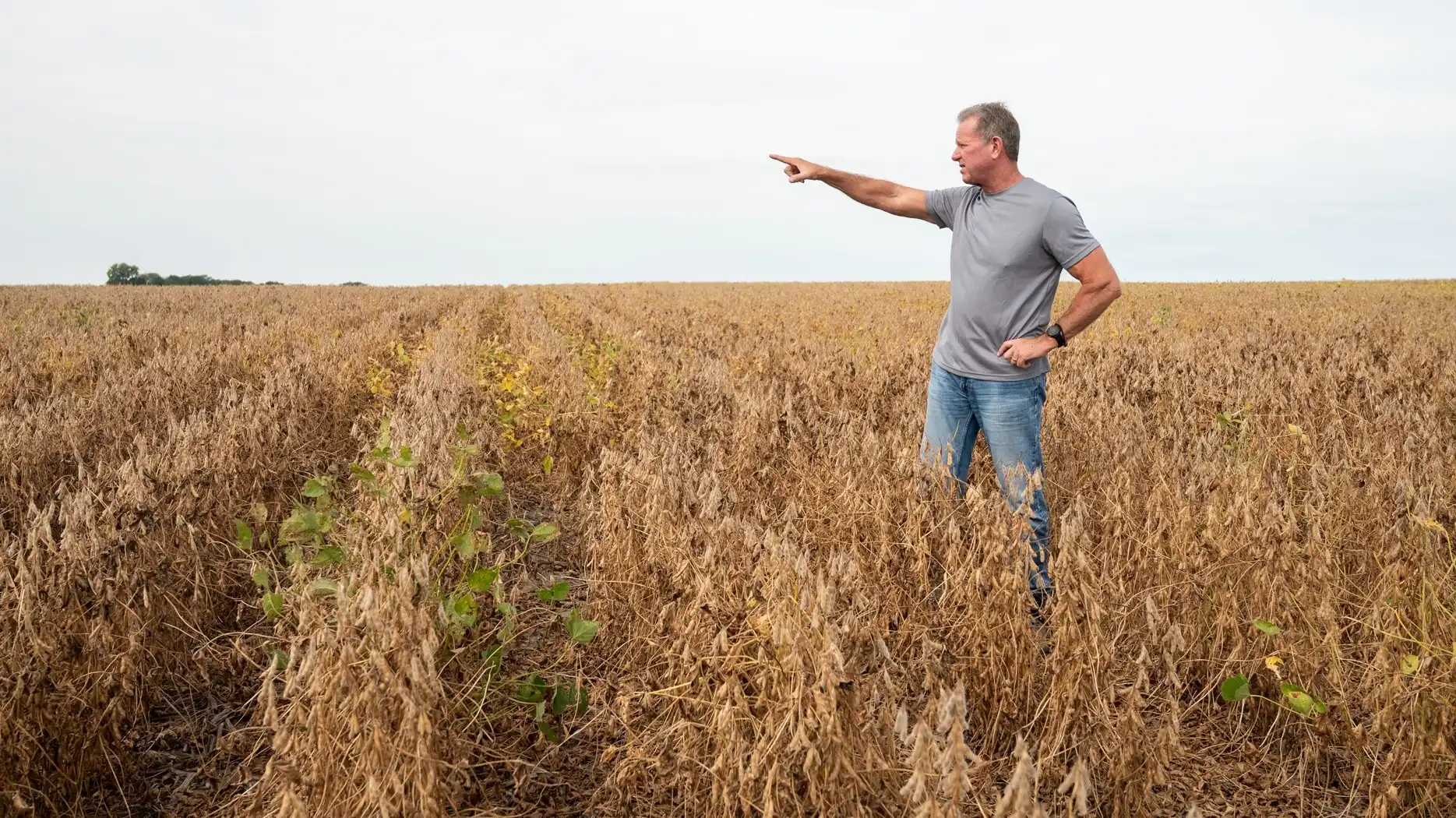
Early in the harvest season, Jim Hedges got signs that one of those new crops was taking root on some of the acreage he farms in central Illinois.
“This is CoverCress just starting to emerge. There’s a little guy, right there,” he said, pointing out a few cloisters of tiny green sprouts just poking through the leftovers of the wheat crop grown on this field earlier this year.
“I’m surprised,” he said. “Because [my farming partner] planted this and then it was about 100 degrees for about a week. We didn’t have that much rain.”
Hedges has good reason to be encouraged by these early signs, as he’s also the CEO of the company that developed the crop, which is also called CoverCress.

He explained the plant is a version of an unwanted weed that’s been gene-edited into something that’s grown over winter — outside the traditional growing season — and later turned into a biofuel.
“For 40 years as a farmer, I’ve been asking for a new market that has longevity and investment in it,” Hedges said.
And that looks like it finally might be happening, as major agricultural and oil companies are backing similar crops that can become biofuels.
Kara Isaak leads the global biofuels strategy for the ag giant Bayer, which projects demand for things like sustainable aviation fuel and biodiesel will reach 40 billion gallons by 2040.
“That’s given us the insights to say, ‘Let’s jump in and lets ensure agriculture can be part of the solution,” she said.
This year, Bayer announced separate agreements with a few big oil companies to get flowering plants like camelina and winter canola grown on more acres. There are also efforts to develop biofuels with the oil from mustard and sunflower crops.
Even with such partnerships, Rabobank agriculture analyst Samuel Taylor isn’t sure many farmers will quickly sign up for something they haven’t grown before.
Farmers sometimes feel a real or even just perceived hit to the yields of their corn and soy when they branch out, he said.
“So they are going to say, ‘Am I going to risk my true cash cow by changing this practice?’” Taylor said.
He added there have been situations where growers have tried a new crop, only to wind up with no place to sell it.
“One of the things that has been very difficult for adoption has been ensuring that you have the end market well established,” Taylor explained.
This looms large for CoverCress’ Hedges as he works to expand the footprint of his company’s crop far beyond the 15,000 acres it’s on this year. That’s a fraction of the more than 20 million acres dedicated to corn and soy in just Illinois.
Hedges said it helps that CoverCress is an off-season crop; and so does the yield guarantee his company offers potential growers that covers the cost of everything they put in to trying it out.
“So that if it doesn’t work, and they don’t harvest it, they’re whole,” Hedges said.
Hedges knows not every farmer will be ready to take this leap, but he’s betting that enough will be interested by the prospect of a new revenue source — one that could make all the recent increases to farm inputs a little easier to manage.


Latest Episodes
View All Shows 2 hours ago6:17
 4 hours ago27:11
 4 hours ago12:37
 16 hours ago25:22
 2 days ago12:18
 4 months ago24:33