


China's Evergrande had a spectacular rise. Its collapse is just as stunning.
Evergrande was the symbol of the excess of China’s property market. On Monday, its shares were delisted from Hong Kong’s stock exchange, leaving creditors in limbo.
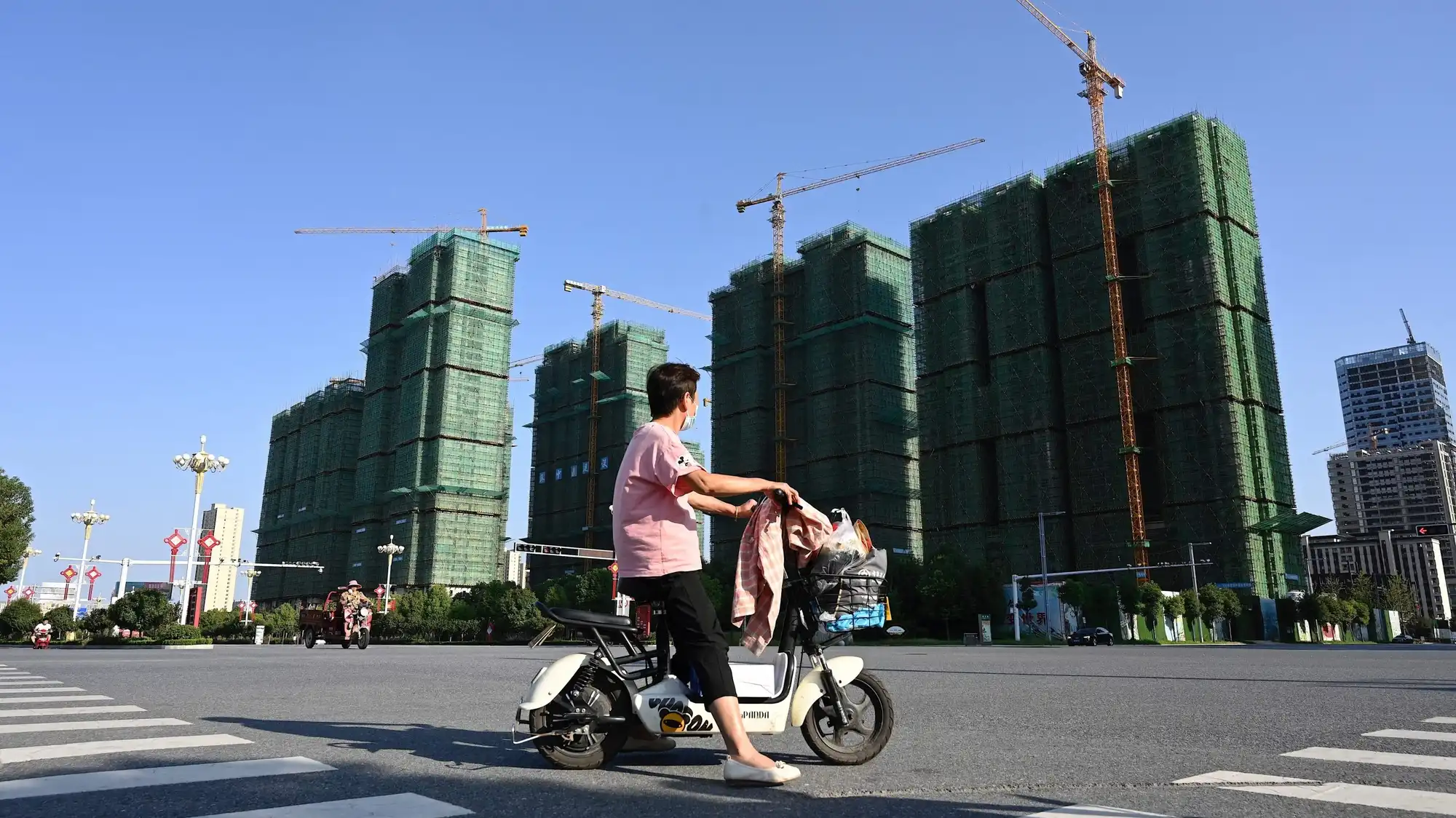
Evergrande’s delisting from the Hong Kong stock exchange on Aug. 25 marks another milestone in the spectacular fall of one of China’s top three property developers.
It has been nearly four years since Evergrande defaulted on its debt. The firm had liabilities worth over $300 billion and global investors worried about a Lehman Brothers-style collapse. Evergrande and the property sector, which was once a key driver of China’s economy, continues to be a drag on the country’s economic growth.
“The factors that made Evergrande successful also became the reasons it failed in the end. Evergrande had high debt, high leverage, and high turnover rate,” said finance writer Chen Qi. “This aggressive expansion mode needed constant cash flow, but once the cash stopped flowing in 2021, the dominoes fell, one after the other.”
Golden Era
Evergrande started in 1996, just as China’s demand for housing was starting to multiply. First, Chinese officials were encouraging people to move from the rural areas to urban centers. Secondly, China’s communist party was also shifting its policy in the cities from public housing to allowing residents to buy and own their properties for the first time.
“Evergrande was born in the golden era of China’s real estate market,” Chen said. “It seized the moment when China was urbanizing and had explosive demand for housing.”


However, Evergrande’s success was based on a vicious cycle.
“Evergrande kept expanding by using newly borrowed money to pay off old debts. The survival of the business hinged on housing prices rising forever and that there is always liquidity in the market,” Chen said.
The real estate giant also spent lavishly, investing in a soccer team, an electric vehicle firm, a water bottling company, and Fairyland theme parks to rival Disneyland.
Evergrande was not the only one using this business model.
“This is the whole sector looking for scale, growth, leveraging,” Deloitte’s Asia Pacific contingency planning and insolvency leader, Glen Ho, said.
At its peak, Ho said real estate accounted for 20% to 25% of China’s GDP. Few people questioned the business model because speculative homebuyers, investors, and overseas bondholders were all making money, he said.
Additionally, many ordinary Chinese households invest in property because there are fewer investment options for them in China. Marketplace interviewed a homebuyer who, at one point, held between 10 and 20 condo units, including from Evergrande.
Evergrande also offered double-digit interest rates on its wealth management products and overseas bonds.
“Being greedy, [investors] lost their independent, critical thinking,” Ho said.

In a delayed filing to Hong Kong’s stock exchange, Evergrande revealed its liabilities rose to 2.58 trillion yuan ($360 billion) at the end of 2021. Its debt fell slightly in 2022 to 2.44 trillion yuan ($340 billion).
“That works out to about 2% of China’s GDP,” Chen said.
Bubble burst
Beijing’s leaders, worried about the reckless borrowing, tightened lending controls with the “three red lines” policy in 2021.
At the same time, housing sales in tier three and tier four cities — where Evergrande primarily operated — slowed. The housing bubble popped. Suddenly, Evergrande could not pay its staff, suppliers, or creditors, which led to protests.
Last year, China’s securities regulator fined Evergrande for inflating its 2019 and 2020 revenues by about $80 billion and using this fraudulent data to issue bonds. The company’s founder, Xu Jiayin — also known by the Cantonese romanization of his name, Hui Ka Yan — was also fined and has not been seen in public since Reuters reported he had been detained in 2023 in the southern Chinese city of Shenzhen.
Other developers have also defaulted. According to real estate information and analytics firm China Index Holdings, 77 property developers have defaulted on their debts since 2020. Scores of construction projects of pre-sold homes were abandoned.
“There was a lot of panic in the market a couple of years ago because of the unfinished homes and plummeting home prices,” said Yan Yuejing with the real estate research institute E-House in Shanghai. “[Today], the housing market is still under pressure, but the problems have been contained.”
The Aftermath
A Lehman moment did not come to pass because mortgage defaults in China are “quite low,” according to Ho.
While some homeowners did join a mortgage boycott, many resumed payment once the condos were completed. Millions of units have been finished by local governments across the country, who were tasked to contain the fallout.
“As long as [people] have a job, [they] tend to pay the mortgage,” Ho said.
Chinese leader Xi Jinping has emphasized that condos are for living and not for speculation.
“China’s government is containing the frenzy in the real estate sector,” Chen said. “Thanks to government policies, the market is in a soft landing, and there has not been a big crisis because of Evergrande.”
Still, the impact of Evergrande and the property sector collapse continues to be felt. Property prices in China have not recovered.
“From its peak in 2021 till now, housing prices have dropped by 35%,” Yan said.
Many Chinese homeowners feel poorer and are not spending as much as before.
Retail sales, used as a proxy for consumption, grew in July at just 3.7%. This is slower than pre-pandemic levels of 7% to 8% and has a ripple effect on the Chinese and global economy.
Since Chinese consumption is sluggish domestically, even more companies are going abroad, which has caused trade tensions. The U.S. and Europe accuse Chinese firms of dumping their excess stock at below-market rates. China’s government rejects these allegations.
Liquidation
In January 2024, a Hong Kong court ordered Evergrande to liquidate, due to the firm’s massive debt. There is “no clear path to a viable, holistic restructuring of the [Evergrande] group,” according to a report by court-appointed liquidators Edward Middleton and Tiffany Wong of Alvarez & Marsal Asia.
“When Evergrande could sell 500 billion yuan ($70 billion) a year, it had some money to pay its debt. However, in the current property market, 50 billion yuan ($7 billion) in annual sales is considered good, making it hard for Evergrande to repay its debt,” Yan said.
Evergrande’s shares in Hong Kong were also suspended in 2024. At its peak, Evergrande shares were HK$31 ($4) apiece and fell by 99% to less than two cents a share before suspension. The delisting this week makes it official that Evergrande’s stocks are worthless.
“Ordinary stock investors … will be the biggest victims of this delisting,” Chen said.

Meanwhile, the liquidation of the company continues, and creditors both domestic and overseas are anxious. The process has proven to be complex, given that Evergrande has over 3,000 legal entities in multiple jurisdictions. The former real estate giant also had some 1,300 projects in more than 280 cities before its collapse.
“The scale is so big it could take 20 years [or longer] for Evergrande to unwind,” Ho said.
“Evergrande’s case serves as a reminder to all participants of the capital market that the expansion and contraction of a company’s market value can rise and fall at the same speed,” Chen said.
The golden era for property is “gone,” according to Ho.
Gone are the days when property prices seemingly only went up, he said. “Now, people probably believe that property [prices] could go down as well.”
Additional research by Charles Zhang.


Latest Episodes
View All Shows a day ago25:17
 2 days ago6:21
 2 days ago12:25
 3 days ago27:11
 5 days ago12:18
 4 months ago24:33