A memory chip crunch could raise the price of consumer electronics for a while. Plus: Corpus Christi’s port boom, movie ticket prices, and Powell’s final press conference as Fed chair.
"It turns out that people who go to the movies are a little bit like people who fly in airplanes,” said Ben Fritz at the Wall Street Journal. “It's this the same basic experience, but some people are willing to pay more for something extra.”
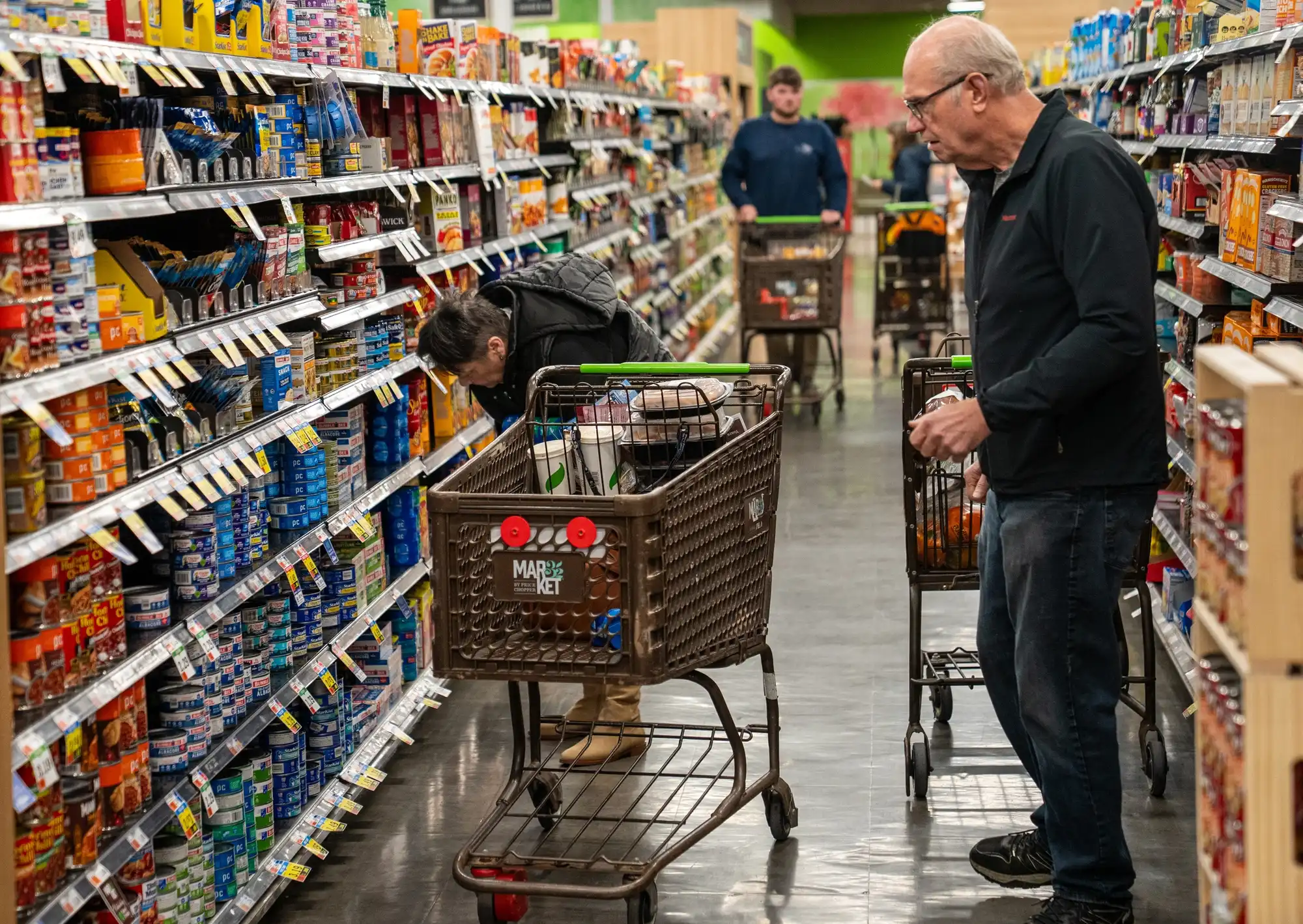
Following the COVID-19 pandemic, one of our readers observed that prices for the canned good rose in price or disappeared from store shelves altogether.
As conflict disrupts oil and gas flows through the Middle East, exports from the Port of Corpus Christi have reached new heights, driving jobs and investment along the Texas coast.
The demand for memory chips has skyrocketed with the rapid growth of AI infrastructure. The shortage poses a major challenge for the consumer electronics industry.
On National College Decision Day, one high school senior and his mom talk college finances and how the new student loan caps factored into his decision.
The U.S. is on track to lose more immigrants than it gains in 2026. That means fewer workers paying taxes, building homes, growing food, and caring for an aging population.
A lot of attention is paid to the headline unemployment rate. But the number of “underemployed” workers also offers clues about the health of the labor market.
Last year, more people left the U.S. than moved in — it’s the first time that’s happened in at least half a century. And that’ll have long-term effects.
Plus, Google lands an AI deal with the Pentagon, and Japan Airlines experiments with using robots help with baggage and cargo. Maria Curi, tech policy reporter at Axios, joins Marketplace’s Stephanie Hughes for this week’s “Tech Bytes: Week in Review.”
Two months into the disruption of oil flows through the Strait of Hormuz, a gap is opening between what financial markets expect oil to cost and what buyers are actually paying to get a physical barrel delivered today.
GDP rose at an annual rate of 2% from January to March, according to data out today from the Bureau of Economic Analysis. A big reason why: investment in AI.
Jeff Janukowicz, global lead and research vice president at IDC, explains what crucial material supply chains are being disrupted due to the Iran war and what effects it’s having on the consumer market and the AI sector.
“The Black unemployment rate has always exceeded other groups,” said CBPP Chief Economist Gbenga Ajilore. “But what's different is that there's a bigger jump, and this is more sustained, and it's more long running.”
Companies are issuing record amounts of corporate debt this year, even though the war pushed up yields. Analysts say that could continue, especially as tech companies finance AI projects.
A sweeping law that governs crop insurance, conservation programs, and nutrition assistance is up at one of the toughest moments for farmers in recent memory.
Kairos Power CEO Mike Laufer talks about the company’s first commercial nuclear facility, Hermes 2, being built in Oak Ridge, Tennessee, as well as its partnership with Google and the AI data center sector at large.
As other countries contemplate raising rates down the line, the new Trump-appointed Fed Chair may push for a cut. Plus: online influencer courses, concert insurance, and Big Tech earnings.
Rain threatened Bad Bunny’s sold out shows in Medellín, Colombia. Enter a very specific insurance policy and the installation of a weather station inside of the stadium.
New survey data out today from The Conference Board shows that while consumer confidence ticked up this month, it still sits below the long-term baseline. One reason: higher prices.
Meta, Google, Microsoft and Amazon report tomorrow. Apple reports on Thursday. These companies are so large that their earning reports can swing the stock market in either direction.
Several central banks are going to make decisions on interest rates this week, including the Federal Reserve. While most are likely to keep interest rates unchanged this week, Fed policy could start to diverge from other central banks in the coming months.
Idaho cut reimbursement rates for doctors and other providers who treat Medicaid patients, and pediatric practices are already selling off or taking steep pay cuts to survive. It could be a sign of things to come.
President Donald Trump has floated the idea of the government helping, or even buying, the struggling budget airline Spirit, reviving old questions about when, if ever, these bailouts are justified.
MIT’s Computer Science and Artificial Intelligence Lab has released a massive, public collection of proof-based math problems gathered from the International Mathematical Olympiad.
John and Andrew Dobson are the creators of the Federal Reserve Simulator, a video game where you play as chair of the central bank. “Marketplace” host Kai Ryssdal tried his hand at running the Fed.
Stablecoins offer services that are similar to what traditional bank accounts offer. That has some bankers worried that deposits could flow out of the banking system.
Inflation rose quickly during the early years of the pandemic, and many Americans are struggling with their finances. Even though we’re not in a recession, it feels that way for a majority of the country.
Atchan Tamaki, the founder of seafood processor ISF Trading, has seen Maine’s sea urchin industry shrink significantly in the 40 years he’s been in business.
For starters, Congress could crack down on the "backdoor," warrantless searches the government does, says Elizabeth Goitein with the Brennan Center for Justice.