Marketplace®
Every story is an economic story
  • Jan 26, 2019

    What it is like to be a female economist

    by Kai Ryssdal, Sean McHenry and Liz Sanchez
    Federal Reserve Chair Jerome Powell, left, and former chairs Janet Yellen and Ben Bernanke participate in a panel discussion at the American Economic Association conference on Jan. 4 in Atlanta.
    Jessica McGowan/Getty Images

    A Washington Post reporter talks about the "seemingly minor sexist moments" at the biggest gathering of economists in the U.S.

  • As President Donald Trump agreed to temporarily reopen the government Friday, mayors from all around the country were wrapping up a trip to Washington, D.C., to talk about what the shutdown has cost their communities. We’ll talk to some today, plus what government data we’ve been missing during the standoff. Then: What it’s like to be a female economist.

  • President Donald Trump speaks about the government shutdown on Jan. 25, 2019, from the Rose Garden of the White House in Washington, D.C.
    Alex Edelman/AFP/Getty Images

    Trump said he would sign legislation funding shuttered agencies until Feb. 15 and try again to persuade lawmakers to finance his long-sought wall.

  • Mayors and U.S. Representatives in Washington, D.C., wait to speak during a press conference calling on President Donald Trump and Congress to end the shutdown on Jan. 24, 2019.
    Andrew Caballero-Reynolds/AFP/Getty Images

    The experience has left local leaders re-examining their relationship with the government.

  • How big a fine is appropriate when a company earns scores of billions a year?

  • Roger Stone, longtime friend and confidant of President Donald Trump, was arrested Friday.
    Alex Wong/Getty Images

    The indictment accuses Stone of lying to Congress and tampering with witnesses.

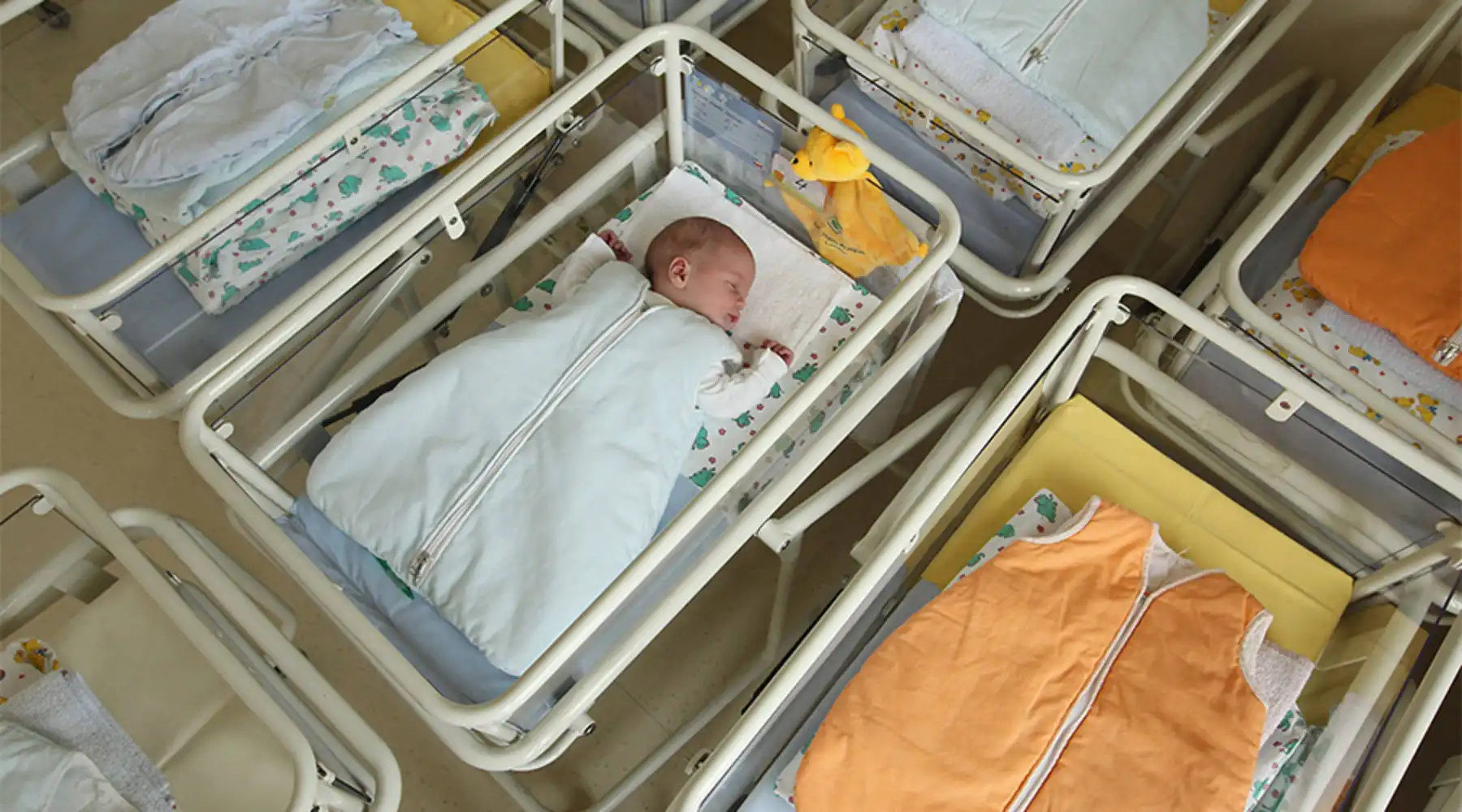
  • As part of our mini-series on fertility, we talk to a demographer about why fertility rates are declining in developing countries. 
    BassittART/Getty Images

    As part of our mini-series on fertility, we talk to a demographer about why fertility rates are declining in developing countries.

  • Jan 25, 2019

    There’s good news about the minimum wage

    by David Brancaccio and Host BBC Victoria Craig

    A potential global economic slowdown portends problems stateside. The Fed’s Open Market Committee meets next week to gauge the strength of the U.S. economy, but will they be able to “do the numbers” with a shutdown-driven dearth of data? Plus, a recent study — one of many — finds that raising the minimum wage does not mean fewer jobs.  Today’s show is sponsored by SignNow, Wasabi Hot Cloud Storage and Indeed.

  • Jan 25, 2019

    More than just a missed paycheck

    by David Brancaccio and Host BBC Victoria Craig

    On day 35 of the partial government shutdown, we take a look at the payments not being deducted from federal workers’, zero-dollar paychecks for things like health insurance premiums. Plus, fertility rates in the U.S. have gone down during last few years, and other developed countries are going through the same demographic shifts.  Today’s show is sponsored by SignNow, Wasabi Hot Cloud Storage and Indeed.

  • Jan 25, 2019

    The humanitarian impact of Venezuela’s political, economic crisis

    by David Brancaccio and Host BBC Victoria Craig

    From the BBC World Service… As Venezuela’s political rivals continue to battle for control, runaway inflation and a worsening economic situation are hurting millions of people – both those leaving the country and those who are still trying to live and work there. Then, with China and the U.S. still stuck in a stalemate on trade, we hear from the new boss at Goldman Sachs who says a swift resolution might not be in the cards. Plus, a look back at how product placement has become a booming business over the last several decades. Today’s show is sponsored by SignNow, Wasabi Hot Cloud Storage and Indeed.

  • Jan 25, 2019

    The problem with missing economic data

    by Marketplace Staff
    Because of the partial government shutdown, some agencies may not be able to release key economic reports on time.
    MicroStockHub/iStock/Getty Images Plus

    Because of the partial government shutdown, some agencies may not be able to release key economic reports on time.

  • An American’s quest to track down his digital data… in the UK
    Chris J Ratcliffe/Getty Images

    One man takes on a multiyear legal battle with Cambridge Analytica.

  • Many people are still active on Facebook, Twitter and Instagram despite digital privacy concerns. But even if you set out to truly understand all the information tech companies have about you, it’s close to impossible to get your hands on all of the data. Witness the plight of one American professor who’s waging a multiyear legal battle against political data firm Cambridge Analytica, trying to see what it collected, bought and sold about him. It’s a David and Goliath story, and in this case, David is David Carroll, a media design professor in New York. Marketplace’s Jed Kim talks about Carroll’s quest with Issie Lapowsky, a senior writer at Wired. Today’s show is sponsored by Pitney Bowes and Indeed.

  • Hedge fund billionaire Ken Griffin has completed the purchase of a four-story penthouse at 220 Central Park South in New York for $238 million — the most ever paid for a home in the United States. 
    Timothy A. Clary/AFP/Getty Images

    But the New York City condo deal is an outlier in a real estate market that's cooling.

  • As the partial government shutdown is about to enter its 35th day, here are a few facts about the hundreds of thousands of affected federal workers: The median income of a furloughed federal worker is about $67,000 a year, according to Sentier Research About 75 percent of those workers are working paycheck-to-paycheck, according to John Challenger […]

  • Rep. Alexandria Ocasio-Cortez said recently that modern monetary theory, or MMT, should “be a larger part of our conversation” when it comes to funding ambitious policies she’s proposed. On today’s show, we’ll explain how it works — it’s kind of like a kitchen sink. But first, we’ll take you inside the financial lives of furloughed federal government workers. Plus, more key moments in Trumponomics. 

  •  
Amid the ongoing government shutdown, the Washington, D.C. Metro says it’s losing $400,000 per day in revenue.
    Andrew Caballero-Reynolds/AFP/Getty Images

    While the D.C. Metro is losing revenue, public transit systems across the country aren't getting federal funding.

  • Condé Nast to put all of its magazines behind paywalls
    iStock / Getty Images Plus

    The magazine publisher is turning to subscriptions to stem losses.

  • Senate rejects rival Democratic, GOP plans for reopening government
    ANDREW CABALLERO-REYNOLDS/AFP/Getty Images

    The Democratic plan received one more vote than the Republican proposal.

  • Jan 24, 2019

    Ever heard of modern monetary theory?

    by Kai Ryssdal, Maria Hollenhorst and Rose Conlon
    U.S. Representative Alexandria Ocasio-Cortez says that Modern Monetary Theory should “be a larger part of our conversation."
    Mario Tama/Getty Images

    It’s a way of thinking about the economy. Picture a bathroom sink …

  • Federal employees holding empty plates stage a rally to call for a vote on the shutdown on Capitol Hill in Washington, D.C., on Jan. 23, 2019.
    JIM WATSON/AFP/Getty Images

    Let's try to navigate the longest government shutdown in history.

  • A "new" periodic table of elements based on how much of the element is left on Earth.
    European Chemical Society

    A new chart shows elements sorted by quantities left on earth rather than weight.

  • Philadelphia Flyers mascot Gritty drops into the arena before the game against the New York Rangers at Wells Fargo Center on Nov. 23, 2018 in Philadelphia, Pennsylvania.
    Drew Hallowell / Getty Images

    We take a look at what the “acid trip of a mascot” is worth.

  • Social worker Pam Harrison holds a sign protesting the government shutdown at the James V. Hansen Federal Building on January 10, 2019 in Ogden, Utah.
    Natalie Behring/Getty Images

    The potential loss of another paycheck adds another complication for federal workers who pay child support.

  • Kansas City's auto industry is booming thanks, in part, to the popularity of pickup trucks like the Ford F-150.
    JEFF KOWALSKY/AFP/Getty Images

    While layoffs in the auto industry have dominated headlines, there are places where the U.S. automotive industry is doing pretty well.

  • Jan 24, 2019

    A flailing auto industry? Not in Kansas (City) anymore

    by David Brancaccio and Host BBC Victoria Craig

    Commerce Secretary Wilbur Ross said Thursday that the U.S. and China were “miles and miles” from resolving their trade conflict, and the markets heard it loud and clear. The Milken Institute has released its annual list of best-performing cities, and No. 1 might surprise you. Plus, we travel to the Kansas City which is performing very well thanks to its booming auto industry.

  • Provo, Utah topped the Milken Institute's Best-Performing Cities list.
    DenisTangneyJr/iStock/Getty Images Plus

    The Milken Institute's annual ranking is out. What are these cities doing right?

  • Jan 24, 2019

    Flying blind through the shutdown

    by David Brancaccio and Host BBC Victoria Craig

    Venezuelan President Nicolás Maduro’s days might be numbered, but his potential ouster seems to have piqued investors’ interest as the oil-rich nation’s bonds spiked. As if the partial government shutdown hasn’t complicated the lives of federal workers enough, a second missed paycheck could make things even more difficult for those with child support payments. Plus, how has the shutdown hamstrung economists and investors who rely on government data? Today’s show is sponsored by SignNow, the United States Postal Service and Wasabi Hot Cloud Storage.

  • Larry Kudlow, director of the National Economic Council, arrives outside the White House to speak with reporters in December.
    Mandel Ngan/AFP/Getty Images

    The White House has estimated that the partial government shutdown will reduce economic growth in the U.S. by 0.13 percentage points for every week the government remains closed. Speaking on CNBC yesterday, Larry Kudlow, director of the National Economic Council, said those effects would be temporary. “We will get it all back,” he said, once […]

  • Jan 24, 2019

    What’s next for Venezuela amid political, economic unrest?

    by David Brancaccio and Host BBC Victoria Craig

    From the BBC World Service… It’s been a tumultuous 24 hours in Venezuela after the country’s opposition leader declared himself interim president and garnered support from the U.S. and a dozen other countries. So, what’s next for the economically-troubled nation? Then, French automaker Renault is ready to move forward as Carlos Ghosn is still held in Tokyo. Plus, remember the periodic table from your high school chemistry class? Well, it’s gotten a makeover, but this time, rather than being organized by weight, each element is listed according to how much is left on earth. Today’s show is sponsored by SignNow, the United States Postal Service and Wasabi Hot Cloud Storage.

  • A woman pushes her walker past tents housing the homeless in Los Angeles, California.
    Frederic J. Brown/AFP/Getty Images

    In Southern California, where homelessness is high, a new app gets better data.

  • Each year, the Department of Housing and Urban Development asks local governments to count the number of homeless people in their areas. The task on the ground falls to officials partnered with nonprofits and volunteers. The data is required if you want federal dollars to address homelessness. The count includes those staying in shelters and transitional housing, but in odd-numbered years, like this one, people also go out on the streets to count the homeless population sleeping on sidewalks and in cars. It’s a massive undertaking, especially in regions with high levels of homelessness, like Southern California. This year, some areas near Los Angeles are using an app to improve the quality of data they collect. It’s a big change from the pen and paper method still used by most. Marketplace’s Jed Kim talks with Jill Replogle, the Orange County reporter for Southern California Public Radio. The O.C. is one of the places using the new tech, and she joined the count and downloaded the app to see how it works. Today’s show is sponsored by the University of Florida Warrington College of Business and WellFrame.

  • That’s where the situation is heading in Venezuela. We’ll tell you what you need to know as President Nicolás Maduro is called to resign. Then, more from our series on President Trump’s signature economic moments. Plus, why the government shutdown is hitting harder than what GDP lets on. 

  • Jan 23, 2019

    Goodyear CEO on the automotive industry and trade

    by Kai Ryssdal and Daisy Palacios
    Goodyear CEO on the automotive industry and trade
    Ben Hethcoat/Marketplace

    How economic and political situations are impacting the international tire and auto market

  • Cold brew sales surged more than 500% from 2011 to 2016, according to the National Coffee Association.
    Renata Sago/Marketplace

    Across the United States, more people are getting their caffeine drinks ice-cold instead of steaming-hot.

  • Goodyear CEO Rich Kramer talks about changing the tire shopping experience
    Jared C. Tilton/Getty Images

    The century-old brand is trying to build tire literacy.

    Download
  • Jan 23, 2019

    What the jobs report doesn’t tell you

    by Sean McHenry
    The good numbers in the December jobs report don't tell the whole story.
    Spencer Platt/Getty Images

    Javier Cobo knows that people don't always re-enter the workforce by choice.

  • The partial government shutdown has school districts worried about their ability to feed students.
    ToddNiemann/Getty Images Plus

    The shutdown has school districts worried about their ability to feed students.

  • Jan 23, 2019

    When the ‘I’ in FBI is put on hold

    by David Brancaccio and Host BBC Victoria Craig

    Some FBI agents sound off on the partial government shutdown, saying they’re not able to do their jobs properly. We take a quick look at current market volatility. Global leaders are meeting at the World Economic Forum’s summit in Davos, Switzerland is this week, but how important is the gathering, really? Today’s show is sponsored by SignNow, Pitney Bowes, the United States Postal Service and Wasabi Hot Cloud Storage.

  • FBI Agents Association member Thomas O'Connor holds up an FBI report 'Voices From the Field' giving examples of how the government shutdown is undermining their work on drug and gang enforcement, security, and counter-terrorism, as he speaks during a press conference in Washington, DC, on January 22, 2019.
    JIM WATSON/AFP/Getty Images

    A new report looks into the long-term impact.

  • Jan 23, 2019

    There really is no such thing as a free lunch

    by David Brancaccio and Host BBC Victoria Craig

    Another victim of the government shutdown: kids who get free school lunches. Plus, as the World Economic Forum gets underway in Davos, Switzerland, we take a look at the summit’s theme this year, Globalization 4.0. Today’s show is sponsored by SignNow, Pitney Bowes, the United States Postal Service and Wasabi Hot Cloud Storage.

  • Jan 23, 2019

    Japan calls for cross-border data sharing rules at Davos

    by David Brancaccio and Host BBC Victoria Craig

    From the BBC World Service… Japanese Prime Minister Shinzo Abe is at Davos today calling for a framework for cross-border data sharing in an effort to spur global economic growth, but what needs to happen for more countries to come on board with the idea? Then, the first criminal trial of U.K. bank executives after the financial crisis begins today as four former Barclays employees face charges over its multi-billion dollar rescue. And, we go to school the Swedish way. Today’s show is sponsored by SignNow, Pitney Bowes, the United States Postal Service and Wasabi Hot Cloud Storage.

  • There’s tons of money in venture capital, as long as you’re a big company
    Andrew Caballero-Reynolds/AFP/Getty Images

    Do early-stage startups still have a chance at funding?

  • In 2018 venture capital firms invested $130 billion in private companies — an all-time high. Sounds like a thriving startup ecosystem, right? The movie industry similarly hit a new high in 2018… because ticket prices were way higher and people paid more to go to a few big blockbusters. A similar thing happened with venture capital: Firms invested a lot of money in a few big blockbuster companies, like $1.3 billion in Fortnite maker Epic Games, or they made big investments in so-called “unicorn” companies with billion-dollar valuations, such as Uber or Airbnb or Pinterest. How is this pattern changing the landscape for smaller startups? Molly Wood talks with Bobby Franklin, president and CEO of the National Venture Capital Association, about where all the money is going. Today’s show is sponsored by Pitney Bowes and WellFrame.  

  • Japanese Prime Minister Shinzo Abe delivers a speech during the World Economic Forum annual meeting, on Jan. 23, 2019 in Davos, eastern Switzerland.
    FABRICE COFFRINI/AFP/Getty Images

    Japan's PM says free-flowing data is key to future global economic growth.

  • Jan 23, 2019

    Restaurants feel the pinch as shutdown drags on

    by Janet Babin and Leila Goldstein
    Restaurants, which often operate on single digit margins, are feeling a decrease in business due to the government shutdown.
    Justin Sullivan/Getty Images

    … but some owners reach out to help furloughed federal workers.

  • Jan 23, 2019

    Trumponomics

    In the past two years, President Trump has changed the way we talk about business and economic life in this country. He views the economy through a transactional lens: there are always deals to be made or renegotiated. He’s the CEO of America, Inc., relying largely on his instincts and owning successes and stock market records. We’ve identified 10 moments that illuminate how the president thinks and what’s changed, and we’ll roll them out all week. Also on today’s show: businesses with discounts for federal workers, how China’s mobile payments business passed its GDP, and pass-throughs explained.

  • Jan 23, 2019

    Think before you major

    by Kai Ryssdal
    Students pull a mock 'ball & chain' representing the $1.4 trilling outstanding student debt at Washington University in St. Louis, Missouri, in 2016.
    PAUL J. RICHARDS/AFP/Getty Images

    The years of your life, the mountains of debt… more people wonder if higher ed pays off.

    Download
  • Companies still have to be careful about crafting messages in a highly politicized moment.

  • "We know there's a link between the economy and fertility," says Gretchen Livingston of the Pew Research Center. "But at the same time you know by many measures the economy has recovered and fertility has not."
    Sean Gallup/Getty Images

    Since the Great Recession hit in late 2007, fertility rates have been declining in the United States. A recent CDC study helps make the link between fertility and the economy.

  • Mobile payments made through third-party providers like Alipay bring China's total mobile payment transactions in 2016 to around $38 trillion.
    Johannes Eisele/AFP/Getty Images

    Some listeners balked when we reported $23 trillion in mobile payments there in 2016.

  • Jan 22, 2019

    Sometimes let your conscience be your guide

    by David Brancaccio and Host BBC Victoria Craig

    The IMF’s downgrade of global market growth spooks markets Tuesday. France fines Google $57 million over privacy. Plus, we look at the growing popularity of sustainable, responsible and impact investment. Today’s show is sponsored by SignNow, the Alliance for Lifetime Income, the United States Postal Service and Wasabi Hot Cloud Storage.

  • Jan 22, 2019

    Trillion-dollar babies

    by David Brancaccio and Host BBC Victoria Craig

    A recent dip in mortgage rates could cause an uptick in home sales. How will food stamp recipients fare if the shutdown continues? Plus, the fertility rate in the U.S. is declining. What does the drop mean for the greater economy? Today’s show is sponsored by SignNow, the Alliance for Lifetime Income, the United States Postal Service and Wasabi Hot Cloud Storage.

  • Jan 22, 2019

    Slowing growth, rising nationalism, but more cooperation between France and Germany?

    by David Brancaccio and Host BBC Victoria Craig

    From the BBC World Service… Zimbabwe’s president has returned home after cancelling his appearance at Davos. We’ll take you to Harare for the latest. Afterwards, with a backdrop of rising nationalism, slowing growth and less influence, the leaders of France and Germany sign a pledge for closer cooperation in a post-Brexit E.U. But is it more about symbolism than hard commitments? Then, after many world leaders have ditched Davos to focus on problems at home – Brazil’s newly-installed president Jair Bolsonaro will take the stage today. So, what is he hoping to accomplish, and will he catch criticism for not turning focus away from economic problems in his own country? Today’s show is sponsored by SignNow, the Alliance for Lifetime Income, the United States Postal Service and Wasabi Hot Cloud Storage.

  • "The cost of going out is substantially more expensive for most people than the cost of paying for another video streaming service," says Brian Wieser, senior analyst at Pivotal Research Group.
    Peter Macdiarmid/Getty Images

    Most services still seem cheaper than a night on the town.

  • In 2019, media giants Disney and Warner both plan to enter the streaming service fray, as if there weren’t a whole lot of on-demand content options already out there. Streaming has definitely disrupted the way we watch TV. What about the way we pay for it? With predictions of widespread cord cutting and the demise of cable television, are we actually seeing that? Marketplace’s Jed Kim talks with Brian Wieser, who focuses on media and advertising as a senior analyst at Pivotal Research Group. Today show is sponsored by the University of Florida Warrington College of Business and Triple Byte_JD.

  • Jan 22, 2019

    AT& T to resume advertising on YouTube

    by Erika Beras

    AT&T has announced it’s putting ads back on YouTube. A couple of years ago, the telecom giant pulled their ads off the platform because of concerns that its messages were running alongside videos containing hate speech or touting terrorism. AT&T says it’s satisfied that the Google-owned platform has improved screening of video content. So what’s […]

  • Healthy baked sweet potato burger with whole grain bun, guacamole, vegan mayonnaise and vegetables on a board. 
    Getty Images

    A vegan challenge is the latest hashtag to flood your Instagram feed.

  • As the partial federal shutdown continues with no visible end in sight, banks and creditors have offered the up-to-800,000 affected workers loans and payment deferments so they can keep up with their finances. At the same time, fraudulent agencies may be targeting these workers. Click the audio player above to hear the full story.

  • Jan 21, 2019

    IMF lowers global outlook again

    by Andy Uhler
    International Monetary Fund Managing Director Christine Lagarde speaks at the Plenary session during the IMF/World Bank Annual Meetings Oct.13, 2017. 
    Stephen Jaffe/IMF via Getty Images

    Christine Lagarde, chief of the International Monetary Fund, cautions that global growth is slowing down more than expected earlier. Click the audio player above to hear the full story.

  • Jan 21, 2019

    Day 1 at Davos

    Things weren’t looking exactly glass half-full today at the World Economic Forum, the annual meeting of economists, bankers and world leaders. During a news conference, IMF Managing Director Christine Lagarde said the global economy was growing “more slowly than expected.” We break down what that means in a larger context. Today also marks the 31st day of the partial government shutdown and no end appears to be in sight. Some furloughed workers, in trying to keep up with finances, are becoming the targets of scams. Then, we talk tech and whether or not 5G is here, or if it’s all just marketing. Also: what exactly it takes to be a park ranger.

  • Jan 21, 2019

    How to be a park ranger

    by Eliza Mills
    Andrew LaValle switched careers to spend more time outdoors.
    Andrew LaValle

    You don't have to major in environmental sciences.

  • Alpine skiers look out at the French Alps from the Brevent summit on Feb, 23, 2018 near Chamonix-Mont-Blanc, France.
    Sean Gallup/Getty Images

    Today, companies are using technology to make skiing down a cold mountain faster, more fun and more comfortable. That’s changing what used to be a pretty basic sport. There are now carbon fiber skis, USB-rechargeable heated jackets, and wearable apps that tell a person how well they are skiing. But is something lost with all […]

  • Millennials, like Baby Boomers, struggle with lifelong debt
    Getty Images

    A recent survey points out that one in 10 millennials thinks they will die in debt. Click the audio player above to hear the full story.

  • Jan 21, 2019

    Oxfam says tax cuts have benefited the rich

    by Mitchell Hartman

    Oxfam, the international anti-poverty organization, released a report Friday on how the world’s billionaires and poor people are doing economically. And the short answer is: the former are up while the latter are down. Oxfam crunched the income and wealth numbers based on data from Forbes’ annual billionaires list and Credit Suisse’s “Wealth Databook.” The […]

  • "We can have a much more seamless, actually transparent stock trading mechanism using blockchain," says Kristen Howell, a partner with the law firm Fox Rothschild who helps companies create initial coin offerings.
    Petras Malukas/AFP/Getty Images

    Future ICOs might start to look a lot more like old-fashioned stock

  • In 2018, ICOs, or initial coin offerings, were the hot new thing in startup fundraising. A company could raise money by selling you a little bit of value or equity in the form of a digital coin, similar to bitcoin but specific to that company. ICOs raised about $22 billion, or so we think. It’s hard to know because the practice has been unregulated. A lot of them turned out to be scams. The Securities and Exchange Commission started fining celebrities like Floyd Mayweather and DJ Khaled over sketchy paid promotions for ICOs. It got weird, and now it’s regulation time. That means that future ICOs and their digital coins might start to look a lot more like good old-fashioned stock, except traded on the blockchain, and that has big ramifications for Wall Street. Molly Wood talks with Kristen Howell, a partner with the law firm Fox Rothschild who helps companies create ICOs.  Today’s show is sponsored by Kronos, Mozilla/Firefox and Lenovo for Small Business. 

  • Jan 21, 2019

    China’s growth continues to slow

    by David Brancaccio and Host BBC Victoria Craig

    Millennials are already in a lot of debt. In fact, 10 percent of Americans ages 18-24 expect to die with debt. And, we look at how tech innovations are changing the ski industry, for better and worse. But first, last year China experienced the slowest pace of economic growth since 1990. That growth is expected to continue to slow this year. However, it’s not all bad news. Today’s show is sponsored by Alliance for Lifetime Income, LinkedIn, Wasabi Hot Cloud Storage and Indeed.

  • Jan 21, 2019

    Forget Meatless Mondays, it’s all about Veganuary

    by David Brancaccio and Host BBC Victoria Craig

    The fortunes of the world’s billionaires grew in 2018, while the wealth of the poorest half of the globe’s population declined, according to a new report. Plus, GDP numbers out this morning show that the global economy is slowing. And, Veganuary (or Vegan January) is a new trend persuading resolution-makers to forgo meat for the first month of the year. It has big brands hopping on the vegan bandwagon. Today’s show is sponsored by Alliance for Lifetime Income, LinkedIn, Wasabi Hot Cloud Storage and Indeed.  

  • Jan 21, 2019

    Zimbabwe’s president scraps Davos plans amid unrest over rising fuel prices

    by David Brancaccio and Host BBC Victoria Craig

    From the BBC World Service…Fresh figures show China’s economy registered its slowest growth pace since 1990 last year. So, what does three-straight quarters of sluggish growth in the world’s second biggest economy mean for the rest of the world? Then, Zimbabwe’s president is the latest world leader to scrap plans to attend Davos and instead focus on issues closer to home. We’ll take you to Zimbabwe where a fuel-price rise has sparked unrest. Afterwards, Veganuary is the latest hashtag to flood your Instagram but is the cost to adapt to new food trends worth it for big brands? Today’s show is sponsored by Alliance for Lifetime Income, LinkedIn, Wasabi Hot Cloud Storage and Indeed.