Marketplace®
Every story is an economic story
  • Jan 19, 2019

    Fed Gov. Lael Brainard on the longest shutdown in history

    by Kai Ryssdal and Sean McHenry
    "Every time that the economy gets to a shutdown or a debt limit, you really do sense that desire from Americans across the country for the government to function well, and to be predictable, and I think that's what we're seeing today. People want to go back to work. They want to get their paychecks. This is affecting communities all over the country," said member of the Federal Reserve Board of Governors Lael Brainard.
 
    Stuart Isett/Fortune

    The economy has been "pretty healthy," she says, but the shutdown is one of the downside risks the Fed is watching.

  • IRS releases final rules on deductions for "pass-through" businesses
    Win McNamee/Getty Images

    You won't find a lot of simple yes-and-no answers in the 247-page document.

  • You’ve probably heard of H-1B visas. Those are the ones lots of tech firms use to bring in highly skilled workers from countries like India. Lesser-known but still vital to the economy are visas like the H-2A. Those are temporary, seasonal visas handed out to the people who help grow and harvest our food. Then there […]

  • A Tesla vehicle at a dealership on January 03, 2019 in Miami, Florida.
    Joe Raedle/Getty Images

    But how will the innovative, and controversial, company deal with a backlog on deliveries while at the same time shrinking its workforce? Click the audio player above to hear the full story.

  • Albert Romero, 50, has filed for unemployment insurance while he waits to return to his job at the U.S. Department of Commerce in Boulder, Colorado.
    Amy Scott/Marketplace

    More apply for benefits as the partial government shutdown drags on.

  • Some financial institutions are offering interest-free loans and waiving late fees on mortgages and credit card payments for government workers who aren’t getting paid during the shutdown. That’s smart business because many of those workers will get their paychecks as soon as the government gets back to business. Click the audio player above to hear […]

  • A container ship from China Shipping Line is loaded at the main container port August 13, 2007 in Hamburg, Germany.
    Sean Gallup/Getty Images

    The United Nations agency regulating shipping wants ships to use cleaner fuel.

  • Workers prepare a container at the port in Qingdao, China's eastern Shandong province.
    STR/AFP/Getty Images

    Trade in services is outpacing goods, according to a new study.

  • Jan 18, 2019

    Super Bowl LIII and the shutdown

    by Mitchell Hartman
    View of Mercedes-Benz Stadium in Atlanta, Georgia, where Super Bowl LIII will take place.
    Brett Davis/Pool/Getty Images

    If the partial government shutdown continues, it could complicate plans in Atlanta to manage the influx of travelers and fans.

  • Jan 18, 2019

    Fourth down on the shutdown

    by David Brancaccio and Host BBC Victoria Craig

    Markets finally have something to trade on following fourth quarter earnings news. Is the new alliance between Ford and Volkswagen a sign of things to come for the greater automotive industry? And as the government shutdown creeps into different sectors of the economy, we look at its potential effect on the upcoming Super Bowl. Today’s show is sponsored by Indeed, SignNow and Wasabi Hot cloud Storage.

  • Jan 18, 2019

    Clearance insecurity

    by David Brancaccio and Host BBC Victoria Craig

    For some government workers, the shutdown might mean skipping bill payments and subsequent bad credit, and that could have implications on their security clearances. A fuel price hike has triggered deadly protests in Zimbabwe, prompting the government to cut off internet access. Plus, for all this talk about a trade war, the share of traded goods around the world looks like it’s shrinking. Today’s show is sponsored by Indeed, SignNow and Wasabi Hot cloud Storage.

  • During periods of economic uncertainty, many people look to what central bankers say as a forecast of what’s to come. In that spirit, we have Federal Reserve Gov. Lael Brainard on the show today to talk about the longest government shutdown in history. Then, why AT&T is pulling its ads from YouTube. Plus, as always, your recap of the week’s news from our analysts.

  • Jan 18, 2019

    Shutdown could affect security clearances

    by Nancy Marshall-Genzer
    Social worker Pam Harrison holds a sign protesting the government shutdown at the James V. Hansen Federal Building on January 10, 2019 in Ogden, Utah.
    Natalie Behring/Getty Images

    Skip a bill payment, get bad credit. Get bad credit, lose your security clearance.

  • Jan 18, 2019

    German business, politicians make emotional Brexit plea

    by David Brancaccio and Host BBC Victoria Craig

    From the BBC World Service… German business leaders and politicians published an emotional letter in one of the U.K.’s biggest daily newspapers, making an emotional plea for Britain to stay in the E.U. We’ll hear from the organizer about what she hopes the letter will actually accomplish. Then, Bentley blows out the candles on its 100th birthday cake today, but as ultra-luxury goods go out of style, is there a place for tricked-out cars anymore? Plus, members’ clubs are becoming increasingly popular, but what do these venues offer business people looking to network?

  • Companies like Uber that have filed for IPOs are stalled while the SEC lawyers and accountants who work on IPOs are shut down along with the government.
    Adam Berry/Getty Images

    Is the tech IPO resurgence at risk?

  • It’s been a big story that tech companies are staying private longer. And there are fewer and fewer tech IPOs. It seemed like the drought was lifting: Uber and Lyft have filed for initial public offerings, and there were rumors that Airbnb, Pinterest and Slack might finally pull the trigger. But three weeks into 2019 and the Securities and Exchange Commission isn’t picking up the phone. The SEC lawyers and accountants who work on IPOs are shut down along with the government. And if this shutdown goes on much longer, the big names might be fine, but it could chill the whole tech IPO resurgence. Molly Wood talks about it with Corrie Driebusch, a reporter who covers markets for The Wall Street Journal. Today’s show is sponsored by Triple Byte_JD and Amazon Web Services.

  • Jan 18, 2019

    New to Make Me Smart? Here’s where to start

    by Marketplace Staff
    Kimberly Adams and Kai Ryssdal on stage at Make Me Smart's live show in Seattle on June 9, 2023.
    Juan Pablo Chiquiza, KUOW

    Make Me Smart is back with our first new episode of 2024! We’re the Marketplace podcast where Kai Ryssdal and Kimberly Adams talk all things business, economy and culture with expert guests and, of course, all of you. Our motto is “None of us is as smart as all of us,” and we’d love you […]

  • Jan 18, 2019

    Could a meme be helping facial recognition software?

    by Kai Ryssdal and Bennett Purser
    The Marketplace logo in 2009 and 2019.
    Marketplace

    Why the 10-Year Challenge could be a goldmine of data.

  • Signet Jewelers, the company behind Kay Jewelers, Jared and Zales, is reporting weak holiday sales figures. Click the audio player above to hear the full story.

  • Microsoft is the latest tech giant to fund affordable housing projects in the white-hot real estate market where they are based. As part of a community building initiative in Seattle, Microsoft is pledging $475 million in low-interest loans to support housing construction projects over three years, with another $25 million marked for homelessness. There has […]

  • Jan 18, 2019

    Netflix, by the numbers

    by Danielle Chiriguayo
    Netflix, by the numbers
    JONATHAN NACKSTRAND/AFP/Getty Images

    A look at the streaming service and its insatiable appetite for original content.

  • The rap superstar took to Instagram yesterday to make sure her followers were paying attention to the government shutdown: “this s**t is really f**king serious, bro.” She’s right! We’ll start the show by looking at the newly “essential” employees President Donald Trump sent back to work, and whether other federal workers might file for unemployment. Then: The USDA is trying to bring Big Dairy back to school lunches. Plus, about that 10-Year Challenge.

  • "It's much harder for a teenager to be able to afford a car or pay for the costs of driving than was the case 20 years ago,” said Robert Foss, director of the Center for the Study of Young Drivers at the University of North Carolina.
    Carlos Alvarez/Getty Images

    As the cost of cars, insurance and drivers ed has climbed, the number of teen drivers has fallen.

  • A view of the U.S. Capitol in Washington, D.C.
    Mark Wilson/Getty Images

    There were about 4.1 million contractors working for the U.S. government in 2017.

  • Travelers are screened by Transportation Security Administration workers at a security check point at O'Hare Airport on June 2, 2015 in Chicago, Illinois.
    Scott Olson/Getty Images

    Thousands of government employees are furloughed during this government shutdown.

  • Jan 17, 2019

    Netflix has a looming challenge with licensing

    by Mitchell Hartman
    Net neutrality keeps the playing field level. For instance, Netflix can't pay to load faster than Hulu,
    JONATHAN NACKSTRAND/AFP/Getty Images

    Increasingly, content producers want to stream shows themselves rather than give them to Netflix.

  • Recruiting companies are removing race and gender from résumés to eliminate bias.
    John Moore/Getty Images

    Recruiting companies are removing race and gender from résumés to eliminate bias.

  • Jan 17, 2019

    Machine-learning the wrong things

    by David Brancaccio and Host BBC Victoria Craig

    The government shutdown triggers a dearth of data. Congress aims to ban the sale of components to Chinese tech firms Huawei and ZTE amid spying concerns, and the move could hurt Americans’ buying power. Netflix has maintained its streaming supremacy, but competitors are trying to dethrone it. We take a brief look at the legacy of late investment giant Jack Bogle. Plus, what happens when AI technology teaches machines to learn our biases? Today’s show is sponsored by SignNow, Wasabi Hot Cloud Storage and Indeed.

  • Jan 17, 2019

    The shutdown’s other immigration problem

    by David Brancaccio and Host BBC Victoria Craig

    Congress takes aim at some high-profile, Chinese tech companies over national security concerns. Financial institutions are catering to federal workers affected by the government shutdown. Plus, how the shutdown is affecting already backlogged immigration courts. Today’s show is sponsored by SignNow, Wasabi Hot Cloud Storage and Indeed.

  • Jan 17, 2019

    A warning on growing threats to global coffee production

    by David Brancaccio and Host BBC Victoria Craig

    From the BBC World Service… An update on the U.S.-China trade relations. Changing climate is threatening extinction for 60 percent of the world’s coffee species, new research shows. It’s not only a problem for your morning buzz, but also for nations like Ethiopia, whose economies depend on the multibillion-dollar coffee trade. Then, after three days of clashes between police and protesters in Zimbabwe, businesses have partially reopened, though public transport is thin, and a blackout is ongoing on social media. We’ll explain why the government doubled gas prices and how residents are dealing with the skyrocketing cost of living. Today’s show is sponsored by SignNow, Wasabi Hot Cloud Storage and Indeed.

  • Part of the problem with doorbell cameras is that their owners are filming a lot more territory than the terms of service say they should, says Laura Norén, director of research at Obsidian Security.
    Ethan Miller/Getty Images

    They might be recording a lot more than who's at the front door.

  • Internet-connected doorbells with cameras built in are becoming very popular. Amazon-owned Ring is the best-known product. Google also has the Nest Hello. But the phenomenon of doorbell video has privacy experts worried. There’s the potential for misuse and abuse of these home surveillance devices by people who are shaming each other or labeling people as suspicious. And the companies that make them may have access to video at a level customers don’t understand. Molly Wood talks with Laura Norén, director of research at Obsidian Security. She says part of the problem is that owners of video doorbells are filming a lot more territory than the terms of service say they should. Today’s show is sponsored by the University of Florida Warrington College of Business and Indeed.

  • Most of the bankrupt retailer's creditors want it liquidated, but not former CEO Eddie Lampert.

  • With the partial government shutdown hurtling toward the one-month mark, companies are starting to long for a little old-fashioned government bureaucracy. Because while it may slow things down, without it, it’s pretty hard to get anything done. Click the audio player above to hear the full story.

  • Prime Minister Theresa May addresses the media after her government defeated a vote of no confidence in the House of Commons on Jan. 16, 2019 in London, England. 
    Dan Kitwood/Getty Images

    The turmoil of Brexit continued today with a no-confidence vote attempting to oust Prime Minister Theresa May. She survived by a margin of 19 votes. But the Brexit storm is hardly contained. It remains an uneasy, potentially expensive complication at a time when the world may not be able to afford it. So at what […]

  • Jan 17, 2019

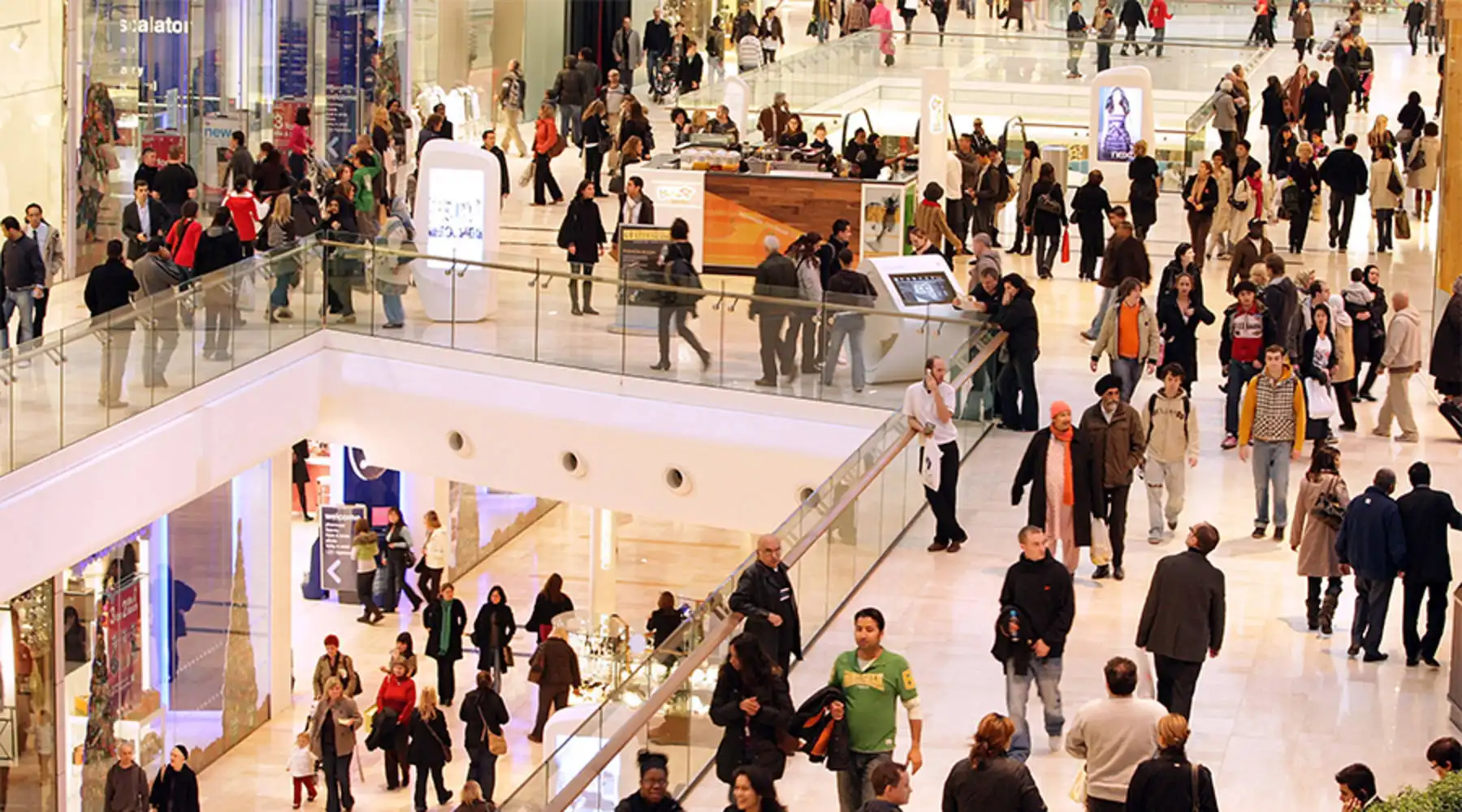
    A Montana mall gets another chance

    by Kai Ryssdal and Bennett Purser
    “If there's one thing that retailers do, it's that we adapt," said Butte Plaza Mall manager Alana Ferko. “If you don't adapt, you'll go the way of the dinosaur."
    Oli Scarff/Getty Images

    After years of watching department stores fall, a mall turns to the mixed-use concept.

  • Jan 16, 2019

    Regulate me!

    With no end in sight to the partial government shutdown, some businesses are starting to miss the regulation that shielded them from risk. Then: The fallout from yesterday’s failed Brexit vote may not be isolated to Britain. We’ll look at how uncertainty could ripple through the global economy. Plus: partially autonomous car features have the potential to save lives, but using them improperly could cause more accidents.

  • British Prime Minister Theresa May in 2017 signs the official letter to the European Council invoking Article 50 and the United Kingdom's intention to leave the EU.
    Christopher Furlong - WPA Pool/Getty Images

    The narrow victory comes a day after her European Union divorce deal was rejected.

  • Retired government contractor Janet Martin endured many government shutdowns during her career, and those experiences still affect how she lives her life.
    Robyn Edgar/Marketplace

    As a government contractor, Janet Martin weathered several shutdowns. But losing pay changed how she thinks about money.

  • Advanced driver assistance systems "are like magic," says Alex Epstein, director of transportation safety at National Safety Council. “The problem is people don’t know how to use them."
    McNew/Getty Images

    Drivers might be relying on their car's safety technology more than they should.

  • Jan 16, 2019

    Cheaters never prosper… except on Wall Street

    by David Brancaccio and Host BBC Victoria Craig

    British P.M. Theresa May’s Brexit plan went down in flames Tuesday, but the markets didn’t really seem to care. Ukrainian hackers made millions after breaking into the Securities Exchange Commission’s database. Plus, ahead of the World Economic Forum next week, a look at one of the world’s most pressing problems: trade tensions. And we take a quick look at Apple’s broken battery boon.

  • Small, medium business CEOs are losing a lot of confidence in the economy
    Vladans/Getty Images

    Executives' confidence in the economy has fallen to pre-election levels.

  • A concierge takes a call at Lutetia Hotel in Paris.
    Christophe Archambault/AFP/Getty Images

    From luxury hotels to your own everyday life and even apps, concierges are everywhere.

  • Jan 16, 2019

    A ‘lifestyle concierge’ is not your average bellhop

    by David Brancaccio and Host BBC Victoria Craig

    Prime Minister Theresa May’s Brexit plan gets rejected, so how does Britain move forward? Plus, we take a peek inside the world of lifestyle concierges, who cater to every whim of the wealthy and, every once in a while, the not-so-rich. Today’s show is sponsored by SignNow, Pitney Bowes and Wasabi Hot Cloud Storage.

  • Jan 16, 2019

    After a parliamentary defeat, what’s next for Brexit?

    by David Brancaccio and Host BBC Victoria Craig

    From the BBC World Service… Britain’s prime minister suffered a much bigger-than-expected defeat on her Brexit proposal last night, a plan that took two years to negotiate with the E.U. So, now what? We hit the streets to talk to workers in the U.K.’s financial hub about what it all means for investors and the future of the economy. Then, how do you plan for an event that’s been dubbed the world’s biggest gathering of people in one of the most impoverished cities? We’ll take you to the Kumbh Mela festival in India to chat about the potential economic boost and how the organizers are preparing. Today’s show is sponsored by SignNow, Pitney Bowes and Wasabi Hot Cloud Storage.

  • One analyst estimates that ads on Instagram will account for 70 percent of Facebook's new revenue by 2020.
    Justin Sullivan/Getty Images

    Stories are the hottest social media format — so what if they disappear in 24 hours?

  • In yesterday’s show we talked about how advertisers are not leaving Facebook. But lots of them are migrating from Facebook proper to another platform it owns: Instagram. One analyst estimates that ads on Instagram will account for 70 percent of Facebook’s new revenue by 2020. And the most exciting thing for the company is Stories, the little posts that expire after 24 hours. Instagram may have stolen the idea from Snapchat, but it’s working. There are even Stories on Facebook now. Mark Rabkin is vice president of ads and business platform at Facebook. In the second part of his conversation  with host Molly Wood, he says people are posting over a billion Stories a day, and advertisers better get on board. Today’s show is sponsored by Pitney Bowes and Indeed.

  • Jan 16, 2019

    Do it for the ‘gram

    by Kai Ryssdal
    Visitors take pictures of themselves at the Supercandy Pop-Up Museum in Cologne, western Germany.
    ROLF VENNENBERND/AFP/Getty Images

    And by “it” we mean “deleting Facebook.” Wait, what?

    Download
  • Netflix is raising its prices on all streaming plans in the United States for new and existing customers. The most popular streaming option will be about $13, up from $11. The last time we saw a price hike, CEO Reed Hastings said incremental increases are needed to cover massive investment in creating original content. “Price […]

  • A fund has offered $1.3 billion for Gannett, publisher of USA Today. Critics say beware.

  • Jan 16, 2019

    Bank earnings skid on edgy markets

    by Justin Ho

    JPMorgan Chase and Citigroup are reporting weaker than expected earnings this week. Market volatility may have contributed to this as clients shy away from trading, which is a big part of banks’ business these days. Click the audio player above to hear the full story.

  • U.K. lawmakers reject Brexit deal in 432-202 vote
    TOLGA AKMEN/AFP/Getty Images

    Uncertainty lies ahead of the planned British exit from the European Union on March 29.

  • This illustration picture taken on April 19, 2018 in Paris shows the tablet and smartphone app for the Apple Store.
    LIONEL BONAVENTURE/AFP/Getty Images

    App sales from Google Play and Apple’s App Store are estimated to be a part of a $101 billion industry. Both companies make a profit by charging developers a 15-30 percent fee every time a consumer purchases an app, a model that has sparked criticism from companies like Netflix, Amazon and Spotify. A group of consumers also […]

  • Jan 15, 2019

    Deal or no deal

    British Prime Minister Theresa May’s Brexit deal was shot down today. We’ll kick off our show with the latest and what’s next. Then, speaking of “no deal”: Under the partial government shutdown, some Trump advisers are seeing what a smaller government really looks like. Plus, why your Netflix is getting more expensive.

  • Jan 15, 2019

    Going cashless in Shanghai

    by Jennifer Pak
    A driver pays a highway toll using mobile payment method Alipay in Zhejiang province.
    STR/AFP/Getty Images

    Chinese mobile payment apps have surged in popularity. Could U.S. credit card companies compete?

  • Jan 15, 2019

    How the shutdown demonstrates small government

    by Kai Ryssdal, Sean McHenry and Liz Sanchez
    The U.S. Capitol is seen as people walk and ski along the National Mall on the 23rd day of a government shutdown during a winter storm Jan. 13, 2019 in Washington, DC.
    BRENDAN SMIALOWSKI/AFP/Getty Images

    The government shutdown is providing Trump advisers with a demonstration of what a leaner, cheaper and smaller government might look like, according to reporting in the Washington Post. “They feel that the shutdown has shown them something,” said the Washington Post’s Lisa Rein, told Marketplace host Kai Ryssdal. “Which is, look, we haven’t collapsed, vital […]

  • The partial government shutdown left some 800,000 federal employees without a paycheck last week, and a lot of military veterans are among that number. Nearly a third of workers in federal executive branch agencies are veterans, and according to the Office of Personnel Management, they’re heavily concentrated in law enforcement departments, meaning that many of […]

  • Cars are prepared for distribution at a Ford factory in Dagenham, England.
    Carl Court/Getty Images

    Last year, the Trump administration imposed new tariffs on roughly $280 billion worth of U.S. imports — everything from solar panels and washing machines, steel and aluminum, and about half of what we import from China. In response, Ford, Coca-Cola, Walmart and other large companies have warned about the impact of tariffs on their bottom […]

  • Looking at wealth management through a "gender lens"
    Getty Images

    Last year, investors put $2.4 billion into assets that promote gender equality.

  • Jan 15, 2019

    The scrimmage to endorse a rising NFL star

    by David Brancaccio and Host BBC Victoria Craig

    The U.K. parliament votes Tuesday on Prime Minister’s Brexit plan, and her prospects don’t look so good right now. French President Emmanuel Macron’s “grand debate” talks are being held around the country to address citizen concerns. Volkswagen and Ford join forces. Plus, why companies are trying to cash in on Kansas City Chiefs rookie QB Patrick Mahomes. Today’s show is sponsored by the University of Florida Warrington College of Business, Wasabi Hot Cloud Storage and Indeed.

  • Quarterback Patrick Mahomes #15 of the Kansas City Chiefs during player introductions prior to the game against the Oakland Raiders at Arrowhead Stadium on December 30, 2018 in Kansas City, Missouri. 
    Jamie Squire/Getty Images

    Kansas City Chiefs' quarterback, Patrick Mahomes' passes are getting him paid.

  • Jan 15, 2019

    A look at investing through the "gender lens"

    by David Brancaccio and Host BBC Victoria Craig

    The government shutdown, Brexit and tariffs — they’re all affecting trade. The candidate for new EPA chief will have to answer questions about his past as a coal lobbyist. Plus, how some financial firms are focusing on investing in companies led by women. Today’s show is sponsored by the University of Florida Warrington College of Business, Wasabi Hot Cloud Storage and Indeed.

  • Jan 15, 2019

    Businesses brace for vote on Theresa May’s Brexit plan

    by David Brancaccio and Host BBC Victoria Craig

    From the BBC World Service… It’s been two years since British voters decided to leave the European Union, and tonight, the U.K. parliament will vote on whether to accept Theresa May’s plan to exit the bloc. But with defeat a near certainty for the prime minister, what’s likely to happen next and how are businesses preparing? Then, town-hall style conversations are launching today in Paris in an effort by President Macron’s government to address the recent yellow vest protests, which erupted over high fuel taxes, but not everyone believes the government is really listening.

  • When it comes to user privacy, Facebook is trying to clean up its “data supply chain”: where the data comes from, who gets access to it and how it gets used.
    Denis Charlet/AFP/Getty Images

    The social media platform says it's trying to clean up its "data supply chain."

  • You, or people you know, might have quit Facebook over the last year or so. But you know who hasn’t left? Advertisers. Facebook is still the second-biggest digital ad platform in the world, just behind Google. And in 2018, a lot of us realized just how Facebook uses our posts, our connections, photos, location, the quizzes we take, to help advertisers target us. But there have been changes. The past year brought the Cambridge Analytica scandal, new privacy rules in Europe and days of getting yelled at by Congress. Now Facebook says it’s trying to clean up and streamline what it calls the “data supply chain”: where the data comes from, who gets access to it and how it gets used. Molly Wood talks about it with Mark Rabkin, vice president of ads and business platform at Facebook. Today’s show is sponsored by Indeed.

  • Acting EPA Administrator Andrew Wheeler testifies before the Senate Environment and Public Works Committee Aug. 1, 2018, in Washington, D.C.
    Win McNamee/Getty Images

    Andrew Wheeler is expected to face tough questions about his former role as a lobbyist for the fossil fuel industry.

  • Jan 15, 2019

    Caught in the trade war, navigating the shutdown

    by Kai Ryssdal and Bennett Purser
    Caught in the trade war, navigating the shutdown
    pxhere

    In June of last year, the Trump administration imposed the Section 232 tariffs, 10 percent on imported aluminum and 25 percent on imported steel. Many small businesses applied for exclusions, hoping to avoid the costly tariffs. It’s been a slow process for many applicants, made slower by the government shutdown. Todd Adams is president of […]

  • Protesters hold signs during a protest rally by government workers and concerned citizens against the government shutdown on Friday, Jan. 11, 2019 at Post Office Square near the Federal building, headquarters for the EPA and IRS in Boston. The rally was organized by The American Federation of Government Employees. New England has 516 EPA employees that is now down to a staff of 22.
    JOSEPH PREZIOSO/AFP/Getty Images

    We asked the experts.

  • When Spotify went public last spring, it scrapped the traditional IPO process and began directly trading existing shares.
    Bryan R. Smith/AFP/Getty Images

    Slack hopes it can repeat the success of Spotify's unusual public offering.

  • As the ripple effects of the government shutdown begin, the impact on the economy will not just be the lost productivity of government workers. Click the audio player above to hear the full story.

  • Thousands of teachers march in the rain through Los Angeles on Monday, on the first day of the first teachers strike in 30 years targeting the Los Angeles Unified School District.
    Frederic J. Brown/AFP/Getty Images

    California is unusual in that the bulk of education funding comes from the state budget

  • Amazon has no shortage of Prime Video viewers. But it’s launching a new, free streaming service on its IMDB subsidiary that’s entirely ad supported. Click the audio player above to hear the full story.

  • Under the new tax law, LLCs and S corporations pay taxes based on their owner’s personal income instead of the corporate tax rate.
    Tim Boyle/Getty Images

    Some companies are unsure whether a 20 percent income deduction applies to them.

  • Millions of workers don’t do 9 to 5. So where’s the child care?
    Erika Beras/Marketplace

    There's a growing need for round-the-clock child care centers.

  • Jan 14, 2019

    Unknown unknowns

    As of this weekend, we’re in unprecedented territory. It’s the longest partial government shutdown in history. We’ll spend some time on today’s show looking at how the effects of the shutdown could snowball over the coming days. Then: More than 30,000 are on strike today after negotiations fell out between the teachers union and Los Angeles Unified School District. A look at the economics behind America’s second-largest school district. Plus: Why taxes this year may be an even bigger headache than usual.

  • Jan 14, 2019

    Why the Chamber of Commerce is making a case for bipartisanship

    by Kai Ryssdal and Sean McHenry
    The U.S. Capitol is seen at dusk, Jan. 21, 2018 in Washington, DC.
    Drew Angerer/Getty Images

    The Chamber of Commerce wants lawmakers to end the shutdown. And to do it, they'll need to reach across the aisle.

  • Jan 14, 2019

    Not working 9 to 5

    by David Brancaccio and Host BBC Victoria Craig

    Recession fears shellac bank stocks, but good earnings reports could change the sentiment across the economy. Plus, a look at some people’s taxing, non-traditional work schedules. Today’s show is sponsored by SignNow, Pitney Bowes and Wasabi Hot Cloud Storage.

  • Cars are lined up at the Cobo Center in Detroit Michigan January 13, 2019 as preparations are under way for the North American International Auto Show.
    TIMOTHY A. CLARY/AFP/Getty Images

    Big-name auto companies will skip the North American International Auto Show as they reconsider their promotion strategies.

  • Jan 14, 2019

    The government shutdown’s data reach

    by David Brancaccio and Host BBC Victoria Craig

    China starts feeling the burn of the trade war with the U.S. How does the government collect data during a shutdown? And some major auto makers have chosen to skip the 30th annual North American International Auto Show in Detroit Monday. Today’s show is sponsored by SignNow and Pitney Bowes.

  • Jan 14, 2019

    Taking stock of Turkey’s economy after new Trump threat

    by David Brancaccio and Host BBC Victoria Craig

    From the BBC World Service… President Trump has threatened to “devastate” Turkey’s economy if it attacks Kurdish forces after a U.S. troop withdrawal from Syria. So, how seriously should Turkey treat the American president’s comments, and what exactly does it all mean? Then, fresh data show a new bite to the ongoing trade dispute between the U.S. and China. Afterwards, look at any major city  around the world and they all have one thing in common: A shortage of affordable housing. Now, disruptors in the north of England are taking charge. Today’s show is sponsored by SignNow and Pitney Bowes.

  • Jan 14, 2019

    5G is here! Well, it’s almost here

    by Molly Wood
    Visitors walk past a 5G logo during the Mobile World Congress in Barcelona, Spain.
    Josep Lago/AFP/Getty Images

    Well… OK, it'll be here any day now.

  • Jan 14, 2019

    5G is here! Well, it’s almost here

    by Molly Wood

    If you ask the major U.S. telecom companies, they’ll tell you the next generation of mobile wireless technology, 5G, has arrived. But things are a little messy right now. Carriers still might mean different things when they say “5G.” There aren’t any 5G phones that operate on 5G mobile networks. And when there are, how much is the service going to cost? The big carriers are plowing ahead because they’ll make a ton of money with business opportunities far beyond just our talk, text and data plans. Molly Wood talks about the promise of 5G with Nicki Palmer, chief network officer at Verizon. Today’s show is sponsored by Pitney Bowes and Indeed.