Marketplace®
Every story is an economic story
  • U.S. beef exporters worry about losing competitiveness in Japan
    Koichi Kamoshida/Getty Images

    The U.S. is beginning trade talks with Japan, but it's lagging behind European and Asian Pacific countries that already have new trade deals in place.

  • In its push for global dominance, Amazon bet big on India as a major growth market. But the company wasn’t counting on the country’s tough new e-commerce rules. With the retail market saturated at home, Amazon, Walmart and other corporations must find emerging markets to grow. So why is India limiting Amazon’s services? And how will […]

  • The January jobs report was the fourth report where average hourly earnings topped 3 percent compared to a year earlier. But do four months of solid gains make a difference to wages across the board?

  • Stan Humphries, Zillow chief analytics officer, and Jordan Meyer, of Raleigh, North Carolina, celebrate Meyer's team’s $1 million win of Zillow Prize, Zillow’s competition to improve the accuracy of the Zestimate.
    Courtesy of Zillow

    Jordan Meyer and his teammates won $1 million for improving the Zillow Zestimate algorithm.

  • The Trump administration is retooling the lottery for H-1B visas.

  • This morning’s jobs report showed that wages have grown for six straight months. On today’s show, we look at the economic forces at work. Then: Amazon is trying to move into new markets like India. But can its competitive pricing model scale internationally? Plus, what’s a “Zestimate” anyway? 

  • Feb 1, 2019

    The colas went down to Georgia

    by David Brancaccio and Host BBC Victoria Craig

    The January jobs numbers are out, and they show a strong but tightening job market. Big oil earnings beat forecasts, encouraging investors. And as thousands descend on Atlanta for Sunday’s Big Game, a war is waging between Super Bowl sponsor Pepsi and hometown mainstay Coca-Cola. How much do those tickets go for, anyway? Today’s show is sponsored by the Alliance for Lifetime Income and Wasabi Hot Cloud Storage.

  • A man takes a picture along the lakefront as temperatures hovered around -20 degrees on January 30, 2019 in Chicago, Illinois.
    Scott Olson/Getty Images

    The extreme cold that gripped a large part of the country this week is beginning to let up, but not without leaving some damage in its wake.

  • Feb 1, 2019

    A turnaround for oil companies?

    by Scott Tong

    Some investors are optimistic that Big Oil has been able to ride out the plummeting prices of late last year.

  • The Super Bowl is being held in Atlanta this year, which is the hometown of Coca Cola, but Pepsi is an official sponsor of the game.
    George Frey/Getty Images

    Pepsi is on Coke's home turf.

  • Feb 1, 2019

    Cutting out the med middleman

    by David Brancaccio and Host BBC Victoria Craig

    What will the jobs numbers tell us about a tumultuous January? The White House is trying to lower drug prices for consumers by curbing the influence of pharmacy benefit managers. The polar vortex continues to wreak havoc on infrastructure across the Midwest. Plus, politics in Super Bowl ads? Not this year. Today’s show is sponsored by the Alliance for Lifetime Income and Wasabi Hot Cloud Storage.    

  • Feb 1, 2019

    Japan, EU toast new free trade arrangement

    by David Brancaccio and Host BBC Victoria Craig

    From the BBC World Service… As the U.S. and China struggle on trade talks, Japan and the E.U. are cheering a new trade arrangement between them that starts today. It creates one of the world’s biggest free trade areas covering nearly a third of global economic activity. Then, ahead of elections in India, the government unveils its new budget. Afterwards, drones have been the subject of much controversy in recent months — remember the one that grounded flights at London’s Heathrow airport? But, in Africa, the flying technology presents huge potential for business and economic development. Today’s show is sponsored by the Alliance for Lifetime Income and Wasabi Hot Cloud Storage.

  • The Apple logo is seen onstage prior to an event at the Steve Jobs Theater on September 12, 2018 in Cupertino, California.
    Justin Sullivan/Getty Images

    If you re-read the first few chapters of The Innovator’s Dilemma and you insert "Apple" every time Clayton Christensen mentions "a company," a certain picture emerges.

  • Facebook seems to be doing everything wrong, but it’s working for them…
    Loic Venance/AFP/Getty Images

    Do people just not care about privacy after all?

  • Facebook seems to be doing everything wrong, but it’s working for them…
    LOIC VENANCE/AFP/Getty Images

    A busy week in Facebook news: One report said it was paying people to use a research app that sucked up basically all the activities on their phone. That got Facebook in huge trouble with Apple. Meanwhile, two senators were demanding answers about kids buying things on Facebook without their parents’ knowledge. Then, on Wednesday, the company reported its earnings and… they were fantastic. The number of users everywhere, including in the U.S., was up, along with increased ad revenue. A tech reporter for The New York Times, Mike Isaac covers all of these stories. Molly Wood asks him if it’s possible people just actually don’t care about their privacy after all. Today’s show is sponsored by Triple Byte_JD and Evident.

  • Feb 1, 2019

    How much a Super Bowl ticket will cost you — and how it’s changed

    by Danielle Chiriguayo and Rose Conlon
    Julian Edelman of the New England Patriots celebrates as he scores a 3 yard touchdown in the fourth quarter against Seattle Seahawks during Super Bowl XLIX on February 1, 2015 in Glendale, Arizona.
    Kevin C. Cox/Getty Images

    Spoilers: It costs more than you think.

  • AAA recently found cars with advanced safety features commonly cost twice as much to repair as other vehicles.
    Ben Bradford/Marketplace

    Increasingly popular advanced safety features can create surprising costs for consumers.

  • Feb 1, 2019

    The trade war impacts everything from Apple to apples

    by Kai Ryssdal, Sean McHenry and Liz Sanchez
    The trade war impacts everything from Apple to apples
    Sean Gallup/Getty Images

    How the U.S.-China trade war is affecting agribusiness and the rest of the global economy.

  • Foxconn says building TV screens in Wisconsin doesn't make sense. But R&D and advanced manufacturing do.

  • Feb 1, 2019

    Apples to apples

    The impacts of the trade war with China are widespread. Today we’ll zoom in on agriculture, and a family farm in Washington that’s feeling it. Plus, the latest on Foxconn, which now says it’s backing away from building TVs in Wisconsin in favor of advanced manufacturing. Plus, after living through the government shutdown, discouraged federal workers might be seeking out other employment opportunities.

  • Jan 31, 2019

    How has social media changed your life?

    by Marketplace Staff
    The MySpace social networking homepage in 2007.
    Nicholas Kamm/AFP/Getty Images

    Did you find friends? Crowdsource ideas? Build a business? Let us know.

  • Rehearsal of the Strawberry Thieves Choir.
    Mimisse Beard

    Amid political turmoil, some are reviving the tradition of sung protests.

  • Rancher Richard Guerra stands in a hallway in his McAllen, Texas home on Wednesday, Jan. 30, 2019.  Guerra supports a border wall as a way to help prevent fever tick-carrying animals from crossing into Texas from Mexico.
    Filipa Rodrigues/Marketplace

    “For us it’s more from an agriculture point of view. It’s not about politics.”

  • A sign outside the Smithsonian American History Museum in Washington, D.C. on Jan. 27.
    BRENDAN SMIALOWSKI/AFP/Getty Images

    We hear from two workers on how it's affected their lives and finances.

  • Amazon's cloud computing dominance has been slipping in recent years.
    JuSun/iStock/Getty Images Plus

    Amazon's cloud computing dominance has been slipping in recent years.

  • Jan 31, 2019

    ‘Furloughed’ or ‘unemployed’?

    by David Brancaccio and Host BBC Victoria Craig

    The January jobs numbers are due Friday morning. How will they reflect all those federal workers who were told to stay home during the partial government shutdown? What does the Fed easing on raising interest rates mean moving forward? Plus, we hear from one federal contract worker who talks about how she is dealing with not getting the shutdown back-pay afforded to others. Today’s show is sponsored by the University of Florida Warrington College of Business, Wasabi Hot Cloud Storage and Indeed.

  • Jan 31, 2019

    ‘Crosscurrent’ affair

    by David Brancaccio and Host BBC Victoria Craig

    The Fed goes back on its plans to keep raising interest rates, deciding to instead be “patient” with markets. Amazon is king when it comes to cloud computing, but competitors are nipping at their heels. Plus, we hear from one federal contract worker who talks about how she is dealing with not getting the shutdown back-pay afforded to others. Today’s show is sponsored by the University of Florida Warrington College of Business, Wasabi Hot Cloud Storage and Indeed.

  • Recruiting companies are removing race and gender from résumés to eliminate bias.
    John Moore/Getty Images

    The U.S. Bureau of Labor Statistics will release its January jobs report on Friday.

  • Jan 31, 2019

    How a European payments channel to Iran to circumvent sanctions could work

    by David Brancaccio and Host BBC Victoria Craig

    From the BBC World Service… The European Union’s three biggest member states have reportedly set up a payment channel to allow business transactions with Iran and circumvent U.S. sanctions. What will it mean for relations between the U.S. and Europe? Then, India’s unemployment rate is at a 40-year high, and it comes ahead of elections in just a few months. Plus, today marks just two months until the U.K. leaves the E.U., but as politicians struggle with finalizing an exit deal, British carmakers say they’re on “red alert” as investment in the industry has dropped nearly 80 percent over the last three years. Today’s show is sponsored by the University of Florida Warrington College of Business, Wasabi Hot Cloud Storage and Indeed.

  • "If cybersecurity is one of the principal challenges that will define the remainder of the 21st century, then let's have a Manhattan Project to make sure we've got that security," says former FCC Chairman Tom Wheeler.
    Photo by David Ramos/Getty Images

    And what role should the Federal Communications Commission have?

  • The United States and several other countries have made it clear that they don’t want hardware from Chinese telecom giant Huawei to be part of future fifth-generation wireless networks. They’re worried that Huawei could install back doors in a 5G network that could let the Chinese government, companies or hackers spy on information crossing that network. But no matter who is building a 5G network, there will be cybersecurity threats. So who’s in charge of making sure that protection against hacking, spying or other cyberthreats is built in from the ground up? Molly Wood talks with Tom Wheeler, former chairman of the Federal Communications Commission from 2013 to 2017. He’s now a visiting fellow at the Brookings Institution. He says the government should be in charge. Today’s show is sponsored by Pitney Bowes and Indeed.

  • Privacy and technology reporter Kashmir Hill tried to cut herself off from big tech companies Google, Amazon, Microsoft, Apple and Facebook.
    Courtesy of Myra Iqbal

    "You basically can't use the internet without interacting with them," Gizmodo reporter Kashmir Hill says.

  • Jan 31, 2019

    What if U.S.-China trade talks fail?

    by Scott Tong

    Chinese and American trade negotiators meet in Washington Wednesday and Thursday to achieve an amicable end to the two countries’ current trade tensions. It won’t be easy. Sure, the United States might lower tariffs in exchange for China taking more of U.S. fossil fuels and soybeans. But the talks could still fail. The Trump administration […]

  • Jan 31, 2019

    5 things to know about GDP

    by Janet Nguyen
    5 things to know about GDP
    Kevin Hagen/Getty Images

    Here's what those numbers reveal — and don't reveal — about the U.S. economy.

  • Facebook has been paying teens for data. What could this mean for calls to regulate the company?
    Mladen Antonov/AFP/Getty Images

    … and for its credibility.

  • We can say “Super Bowl” as much as we want. Super Bowl, Super Bowl, S U P E R  B O W L. But if you’re an Atlanta-area business or an advertiser hoping to capitalize on the game, you have to get creative because the NFL has that trademark locked down. But first, we bring you the latest from the Federal Reserve, which announced Wednesday it’s not hiking rates any time soon. Plus, could you quit Google or Amazon for a week? (No, you couldn’t.)

  • An exterior view of the Mercedes-Benz Stadium, where Super Bowl LIII will take place, is seen on Jan. 27, 2019 in Atlanta, Georgia.
    Justin Heiman/ Getty

    The NFL owns dozens of trademarks and isn’t afraid to go after anyone using them.

  • Sandra Bernal helps run her parents’ restaurant,  El Meson de San Agustin, in Laredo, Texas. She’s behind the restaurant’s counter on Tuesday, Jan. 29, 2018.
    Filipa Rodrigues for Marketplace

    "We are so, like, one, that you can’t tell one city from the other."

  • Nationally, the rate of black homeownership is less than 42 percent, compared to a rate of about 73 percent among white households.
    Cameron Spencer/Getty Images

    The National Association of Real Estate Brokers, a black trade group, is on a mission to add 2 million new black homeowners nationally in five years.

  • A woman uses her smartphone while walking past advertising outside a Huawei store in Beijing on Jan. 29, 2019.
    WANG ZHAO/AFP/Getty Images

    It's about national security, fraud and rogue employees.

  • Apple beats analysts' estimates while Facebook and Microsoft are expected to have strong quarters.
    Drew Angerer/Getty Images

    Apple beats analysts' estimates while Facebook, Microsoft expected to have strong quarters. But government regulation may drag down future earnings.

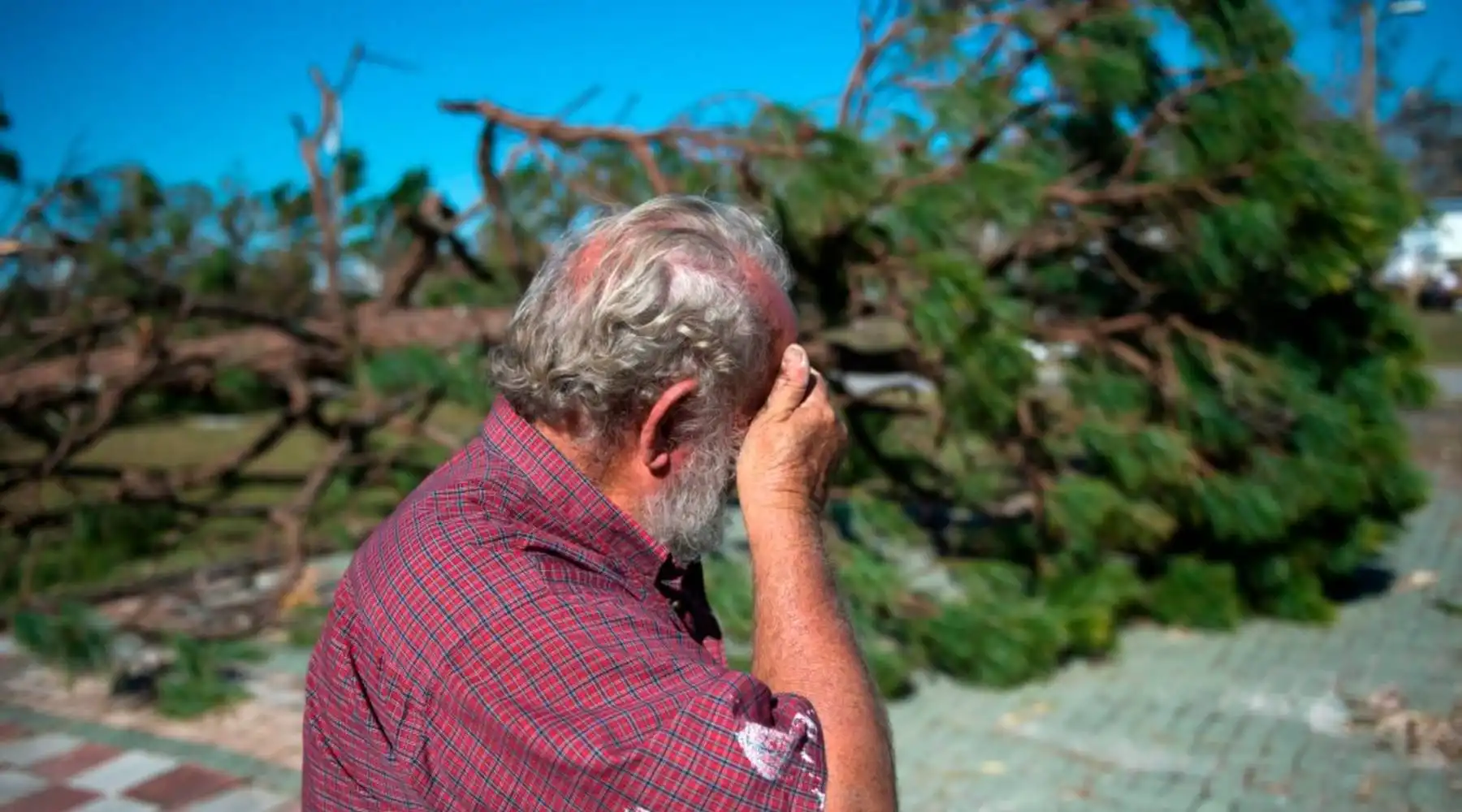
  • Donnie Young reacts after seeing one of his houses in Port St. Joe beach, Florida, on October 13, 2018, three days after Hurricane Michael hit the area.
    ANDREW CABALLERO-REYNOLDS/AFP/Getty Images

    Larger insurance providers have been cutting back on Floridians' property insurance coverage.

  • Jan 30, 2019

    Cloud of insurance fears hangs over The Sunshine State

    by David Brancaccio and Host BBC Victoria Craig

    Aircraft maker Boeing tops $100 billion in sales for the first time, a sign the global economy is doing pretty well. Congress hears from those hurt by high drug prices. Plus, homeowners in hurricane-prone Florida are finding fewer options to protect themselves as insurance companies cut back on coverage for natural disasters. And — surprise — Facebook is again in hot water over privacy concerns. Today show is sponsored by Pitney Bowes, the University of Florida College of Business and Wasabi Hot Cloud Storage.

  • Jan 30, 2019

    Wanted: Elder transportation solutions

    by Mitchell Hartman
    Across the country there is a patchwork of programs to help seniors get to doctor appointments, pharmacies, grocery stores and other places they need to go.
    Andreas Rentz/Getty Images

    With 600,000 people over the age of 70 quitting driving every year, demand for transportation to get elders to medical appointments, stores and the like will grow.

  • Jan 30, 2019

    The heat is on

    by David Brancaccio and Host BBC Victoria Craig

    How will the polar vortex and subsequent heating costs affect Midwesterners’ pocketbooks? Apple is facing the reality that people in China and India are not too keen on spending $1,000 for an iPhone. Plus, we take a look at how elder care agencies are dealing with getting clients to where they need to be. Today show is sponsored by Pitney Bowes, the University of Florida College of Business and Wasabi Hot Cloud Storage.

  • Jan 30, 2019

    Detained motor tycoon cites ‘deception’ by rivals

    by David Brancaccio and Host BBC Victoria Craig

    From the BBC World Service… In his first media interview since being detained by Tokyo authorities, automotive tycoon Carlos Ghosn says he was the target of deception and conspiracy from rivals in Japan who took note of his power at Nissan. Brazil’s fatal mine and dam collapses of late have led to the shutting down of 10 major sites built by the same company, but what of the people who rely on mining for their living? And we look at the woes of the auto industry in China amidst the U.S.-China trade war. Today show is sponsored by Pitney Bowes, the University of Florida College of Business and Wasabi Hot Cloud Storage.  

  • Apple released its earnings Tuesday afternoon, and although it met its lowered expectations, revenue from iPhones was down 15 percent over the same quarter last year, and the future trend is still down. For years, Apple’s smartphone strategy has been to make premium devices with a premium price tag. The starting price is basically $1,000 for a new flagship iPhone. But those prices are hard to swallow in China and India, markets Apple is depending on to grow its global market share. Even here in the United States, consumers aren’t upgrading their phones as much as they used to. Molly Wood talks with Julie Ask, principal analyst at Forrester Research, about whether Apple can keep commanding such high prices. Today’s show is sponsored by Kronos, the University of Florida Warrington College of Business and Lenovo for Small Business.

  • iPhones at an Apple store in Milan.
    Piero Cruciatti/AFP/Getty Images

    And that's especially true in China and India.

  • Jan 30, 2019

    Can we shut down the shutdowns?

    by Kai Ryssdal
    Storm clouds fill the sky over the U.S. Capitol Building, June 13, 2013 in Washington, DC.
    Mark Wilson/Getty Images

    How did closing the government became a political weapon in the first place?

    Download
  • Jan 30, 2019

    Apple scrambles to fix FaceTime bug

    by Mitchell Hartman
    Apple scrambles to fix FaceTime bug
    Roslan Rahman/AFP/Getty Images

    A bug in Apple’s FaceTime, news of which filled social media channels and tech news sites this week, could have allowed a caller to listen to the audio from an iPhone she or he is calling, even before the person at the other end of the line had accepted or rejected the call. Apple is […]

  • Howard Schultz, the former Starbucks CEO, has been dominating the 2020 presidential chatter for a few days now. And while the spotlight’s focused on whether Schultz will run as an independent candidate, it’s also casting a big shadow on his former company. In an email, Starbucks’ current CEO Kevin Johnson told employees the company doesn’t […]

  • Jan 30, 2019

    Refunds are looking slimmer this tax season

    by Marielle Segarra
    Refunds are looking slimmer this tax season
    Joe Raedle/Getty Images

    Here's what you told us.

  • We’ve got big tech drama at home and abroad topping today’s show: We’ll get you caught up on the new charges against Huawei and an alarming iPhone bug. Plus, the latest on Brexit. Then: Former Starbucks CEO Howard Schultz might be running for president in 2020, but can the brand insulate itself from politics?

  • Rookie farmers in California are turning to nonprofit groups to boost their business savvy
    YASSER AL-ZAYYAT / Getty Images

    “Beginning” farmers operate a quarter of U.S. farms, according to the USDA.

  • Government agencies responsible for payroll worked over the weekend to start issuing missed paychecks.

  • Jan 30, 2019

    Will AI help humanity? Americans aren’t sure, study finds

    by Kai Ryssdal, Bennett Purser and Sean McHenry
    Will AI help humanity? Americans aren’t sure, study finds
    Jeff J Mitchell/Getty Images

    "There is a lot of skepticism" about artificial intelligence, Vox reporter says.

  • Some experts consider Apple a bellwether for the stock market.
    Drew Angerer/Getty Images

    They might reveal how the broader economy is performing.

  • People wait for a press conference after the Federal Open Market Committee meeting in Washington, D.C., in 2017.
    Andrew Caballero-Reynolds/AFP/Getty Images

    The Fed presents a united front when it makes decisions, but not everyone on the Federal Open Market Committee has a say on interest rates.

  • Jan 29, 2019

    How immigration could help a shrinking American labor force

    by Sabri Ben-Achour and Marketplace Staff
    Immigrants stand for the national anthem before becoming American citizens. Chris Farrell says that datasets often underestimate the positive impact immigrants have on the economy.
    John Moore/Getty Images

    Young, productive workers "are the new scarce resource," one expert says.

  • Jan 29, 2019

    Is immigration the key to dealing with a shrinking workforce?

    by David Brancaccio and Host BBC Victoria Craig

    How could imposing sanctions on Venezuela affect you at the gas pump? After two missed paychecks, federal workers hope payroll gets into gear to give them their due by the end of the week. Plus, in the last part of our mini-series on fertility’s impact on the economy, we take a look at how immigration  could help a shrinking American workforce. Today’s show is sponsored by SignNow, Wasabi Hot Cloud Storage, WellFrame  and the Alliance for Lifetime Income.

  • People driving across the border from Nuevo Laredo, Mexico are greeted by a massive outlet mall, Outlet Shoppes at Laredo in Laredo, Texas, that sells everything from sneakers and T-shirts to kitchenware and iPhones, shown here on Monday, Jan. 28, 2019.
    Filipa Rodrigues for Marketplace

    Here on the Texas-Mexico border, most people don’t think about the boundary as much more than an inconvenient passport check.

  • Jan 29, 2019

    Congress to examine drug price hikes

    by Erika Beras
    Congress to examine drug price hikes
    jorgeantonio/iStock/Getty Images Plus

    Prescription drug prices have been rising over the past few years.

  • Jan 29, 2019

    Dismembering a robot as tradecraft

    by David Brancaccio and Host BBC Victoria Craig

    The U.S. has charged Chinese tech giant Huawei with stealing trade secrets, in once instance, allegedly by absconding with the arm of a robot named “Tappy.” The cost of prescription drugs has been rising in recent years, and Congress is holding a hearing  on the issue Tuesday. Plus, choirs of protests in Britain, literally. Today’s show is sponsored by SignNow, Wasabi Hot Cloud Storage, WellFrame  and the Alliance for Lifetime Income.

  • Jan 29, 2019

    Venezuela Pushes Against Fresh US Sanctions

    by David Brancaccio and Host BBC Victoria Craig

    From the BBC World Service… Venezuela responds to fresh U.S. oil sanctions, the last punishment it needs while its economic woes deepen. Chinese telecom giant Huawei calls the U.S. accusations against it “immoral.” We decipher the war of words and trade between the two giants. And how corrupt do people think the U.S. is? Transparency International tells us the definitive ranking of corruption perception. Today’s show is sponsored by SignNow, Wasabi Hot Cloud Storage, WellFrame  and the Alliance for Lifetime Income.

  • One of the major challenges of using renewable energy like wind or solar is that there’s overproduction. The sun shines and the wind blows mostly during the day but then drops off at night — when people tend to use the most power. Batteries can help smooth out those peaks and valleys, but cost has limited wider adoption. Now battery storage is maturing as an industry. So what does that mean for regular people? Marketplace’s Jed Kim talks with Ravi Manghani, director of energy storage at energy consulting firm Wood Mackenzie, who says the tech is getting to houses through transmission lines, maybe even yours. Today’s show is sponsored by Pitney Bowes and WellFrame.

  • "We're talking about about 80-85 percent cost reduction over the past decade for battery storage [of renewable energy]," said Ravi Manghani, director of energy storage at energy consulting firm Wood Mackenzie.
    Andreas Rentz/Getty Images

    Battery storage is getting to houses through electrical lines, maybe even yours.

  • Congressional Budget Office Director Keith Hall testifies before the Senate Budget Committee on Jan. 24, 2018, in Washington, D.C.
    Win McNamee/Getty Images

    "We think we'll be down about $3 billion of GDP," CBO Director Keith Hall says.

  • The government shutdown may be over, for now, but agencies that gather economic data could take a while to get caught up. We’ll look at the effects and talk with Congressional Budget Office Director Keith Hall. Plus, the state of the iPhone in China and a conversation with “Wonder Woman” and “I Am the Night” director Patty Jenkins. 

  • Jan 29, 2019

    Patty Jenkins is an entertainment boss

    by Kai Ryssdal, Sean McHenry and Liz Sanchez
    Patty Jenkins attends the "I Am the Night" premiere at Metrograph on Jan. 22, 2019, in New York City.
    Mike Coppola/Getty Images

    A look inside the creative mind of the entertainment industry's highest-grossing female director.

  • The U.S. Internal Revenue Service building is seen on the first work day for furloughed federal workers following a 35-day partial government shutdown in Washington, D.C., Jan. 28, 2019.
    SAUL LOEB/AFP/Getty Images

    The IRS started processing taxes on Monday, the first full work day for IRS workers after a temporary measure halted the government shutdown.

  • An Apple store in Shanghai offers customers a discount on the new iPhone XR model if they trade in an older iPhone model.
    Jennifer Pak/Marketplace

    Apple prices can be an issue, but many Chinese still consider the devices prestigious.

  • New tax season, new rules but same amount of refund?
    DNY59/iStock/Getty Images Plus

    New tax season, new rules but same amount of refund?

  • Blank Social Security checks are run through a printer at a U.S. Treasury printing facility.
    William Thomas Cain/Getty Images

    How much? About $13 billion in 2016.

  • Blank Social Security checks are run through a printer at the U.S. Treasury printing facility Philadelphia, Pennsylvania.
    William Thomas Cain/ Getty Images

    Undocumented immigrants contributed an estimated $13 billion into Social Security funds in 2016.

  • Jan 28, 2019

    How will shutdown affect Fed decision-making?

    by Mitchell Hartman
    Federal Reserve Chairman Jerome Powell and the other members of the agency's Open Market Committee meet Tuesday for the first time this year.
    Win McNamee/Getty Images

    Fed Chairman Jerome Powell and the other members of the agency's Open Market Committee meet Tuesday for the first time this year.

  • Jan 28, 2019

    The data dearth stood still

    by David Brancaccio and Host BBC Victoria Craig

    For all the talk of an impending recession, forecasters seem split on when it’ll actually hit. Economists are scrambling to make up for the data held up during the partial government shutdown. A Brazilian mining company’s billions in assets are frozen following a deadly dam break over the weekend, but it’s not the first time the firm’s operations have been put under scrutiny. Plus, we take a look back at that one time Starbucks’ CEO Howard Schultz told Marketplace’s David Brancaccio he was not considering running for elected office. Today’s show is sponsored by SignNow, Pitney Bowes and Wasabi Hot Cloud Storage.

  • The Guggenheim is now open seven days a week year-round.
    Stan Honda/AFP/Getty Images

    They have more than just industry trends to keep an eye on.

  • Jan 28, 2019

    Don’t count on that tax return just yet

    by David Brancaccio and Host BBC Victoria Craig

    The partial government shutdown is over, but we’re still dealing with the fallout, and that probably means your tax return won’t arrive as soon as you’d hoped. Can all this be prevented from happening again by banning shutdowns? Plus, museums are trying to compete with the likes of Netflix by opening seven days a week. Today’s show is sponsored by SignNow, Pitney Bowes and Wasabi Hot Cloud Storage.

  • Jan 28, 2019

    Is China’s new ‘Silk Road’ project helpful or harmful?

    by David Brancaccio and Host BBC Victoria Craig

    From the BBC World Service: China is six years into a trillion-dollar plan known as the One Belt One Road initiative.

  • "If I choose to use one of these platforms and I'm giving it useful information about myself, then our research suggests that, in principle, I'm also giving it useful information about my friends," said Jim Bagrow, a professor at the University of Vermont who led a study about Twitter privacy.
    Leon Neal/Getty Images

    A new study shows your friends' posts can indicate what you're likely to say on social media.

  • Social media was invented to keep up with friends, but if you’re fed up with data leaks and privacy concerns, you might decide to quit. It turns out social media may not even need you to know you, because your friends and their posts are pretty good indicators of who you are. In a new study, scientists took to Twitter and found people who interacted regularly. By analyzing the tweets of just eight or nine of a user’s friends, they could predict the kinds of things the original user would post. Marketplace’s Jed Kim talks with Jim Bagrow, a professor at the University of Vermont who led the study. Today’s show is sponsored by the University of Florida Warrington College of Business and Triple Byte.