Marketplace®
Every story is an economic story

Marketplace

Marketplace Business News Podcast
Kai Ryssdal
Latest Episode

08/25/2017: Five weeks to shutdown

Aug 25, 2017

Episodes 2431 - 2440 of 5795

  • 08/24/2017: How tariffs helped along the Great Depression

    The four-letter word of global trade (so to speak) is “tariff.” There are times when tariffs seem like they’d be a good thing, usually when people with power feel like the economy’s not working for them. But if you bring up tariffs in polite conversation with a bunch of economists, they’re gonna go right to the Smoot-Hawley Act of 1930. Perhaps the most infamous of American tariffs, it’s credited by some with deepening the Great Depression. We’ll talk about it as we continue our series on globalization, “Trade-off.” Plus, we’ll bring you the latest on the White House, Congress and the possibility of a government shutdown. Then: Taylor Swift is putting out a new single tonight, ahead of a new album in November, and you know we found the business angles.

  • U.S. President Donald Trump gestures to the crowd as he speaks to supporters at the Phoenix Convention Center during a rally on August 22, 2017 in Phoenix, Arizona.
    Ralph Freso/Getty Images

    President Trump has given three speeches in as many days this week: About Afghanistan on Monday, to the American Legion today, with a Phoenix campaign rally in between. That one was the most free-form, the most off-script and the most economic, so we’ll start the show there today, with some of what the president said and the level of economic sense it makes (or didn’t make). Then: College students are headed back to school or arriving on campus for the first time in the coming weeks. More of them than ever are likely going to need some kind of mental health service. We’ll check in on how colleges are beefing up their counseling services in response to increasing demand. Plus: Google and Walmart ink a deal in the fight against Amazon.

  • White nationalist Richard Spencer (center) and his supporters clash with Virginia State Police in Emancipation Park after the "Unite the Right" rally was declared an unlawful gathering in Charlottesville, Virginia.
    Chip Somodevilla/Getty Images

    The CEO of an important but semiobscure technology company sent an all-staff email last week. Before Charlottesville, that wouldn’t be news, but this note was a little different: “I woke up this morning in a bad mood and decided to kick them off the Internet. … It was a decision I could make because I’m the CEO of a major Internet infrastructure company.” The “them” in this case is The Daily Stormer, a white supremacist site. “Having made that decision,” Matthew Prince continued, “we now need to talk about why it is so dangerous.” Today, we called up Prince to do just that. Then: If chart performance and YouTube streams are any indication, and most would say they are, “Despacito” by Puerto Rican stars Luis Fonsi and Daddy Yankee is the song of the summer. But will its success spill over into tourism dollars for the beleaguered territory? Finally: Oregon becomes the first state add an extra tax on bikes.

  • US troops from the 2nd Platoon, Charlie Company, 2-87, 3BCT under Afghanistan's International Security Assistance Force.
    ROMEO GACAD/AFP/Getty Images

    You can look at the costs of increasing the number of American troops in Afghanistan in a couple of ways, right? There are lives, of course, the most basic measure. The easiest way is probably in dollars and cents, billions of them. Trump makes his first prime-time address as president tonight, talking about how America will move forward in a war that’s been going on since 2001. There’s a stability question here, too: Despite, or maybe because of, 16 years of American and allied involvement, the Afghan economy is still in trouble. Then: The president is settling back into the White House and Congress is getting back to work, but over the recess, the media balance has shifted. Steve Bannon walked out of the White House and back into his website Breitbart. We’ll talk about what that means amid a busy fall at the capital. Plus, just as the U.S. started to catch up on credit card security, scammers have moved on to a new target: your phone.

  • A gazebo in Greendale, Wisconsin.
    Courtesy of Jason Reblando

    Steve Bannon has joined the list of recent White House departures, and with that, the prospect of a trade war with China got a little less likely. And that’s good, because in spite of all the real economic competition between the world’s two largest economies, they need each other. To that end: Beijing put out some new rules on overseas investments today, specifically limits on certain kinds of foreign acquisitions by Chinese companies. We’ll talk about what that means. Then: During the Great Depression, the government started an experiment. It designed and built entire towns that were federally planned and subsidized. They were called Greenbelt Towns, and three of them got made before politics and economics got in the way. We’ll talk with photographer Jason Reblando, who explores the Greenbelt in his new book “New Deal Utopias.” Plus, as always, we’ll cover a busy week in business and economic news during the Weekly Wrap.

  • 08/17/2017: America needs more than jobs to fix race relations

    If you’ve been paying attention to some of President Trump’s recent public remarks, you might’ve noticed something (besides all that). He often leads with the economy, the stock market or his economic agenda and how great it’s gonna be. In his extraordinary press conference on Tuesday, he even pointed to jobs as a way to fix race relations. That argument seemed a bit tidy, so we called up an expert to check the facts. That presser was supposed to be about infrastructure, by the way. The president has hyped a big spending package on roads, bridges, transit and the like for a while now. Today, we traveled back to Erie, Pennsylvania, for our series “The Big Promise” to see how infrastructure, public transit in particular, affects real people. Plus, we’ll start off the show by asking: Are we at economic war with China?

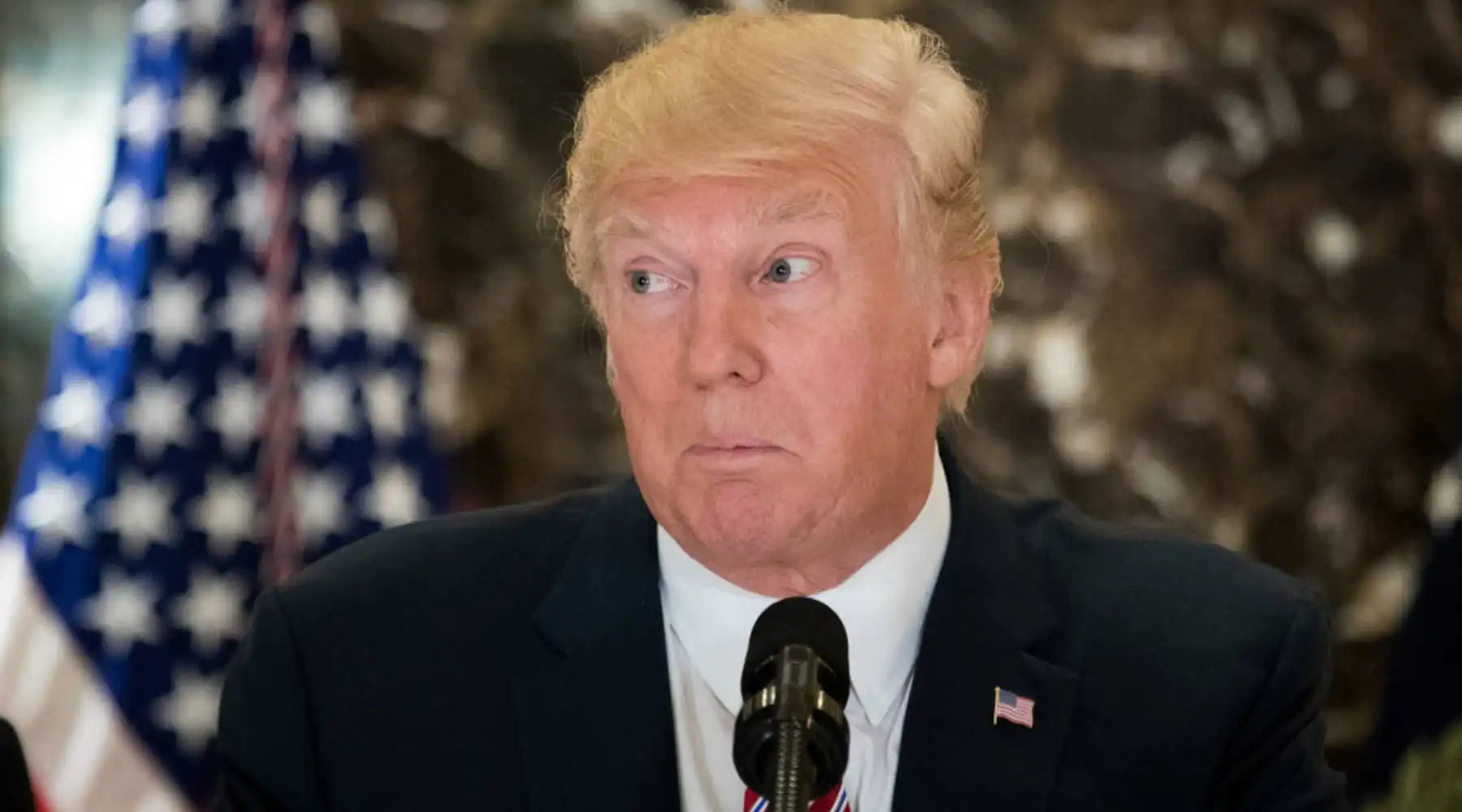
  • President Trump fields questions from reporters about his comments on the violence in Charlottesville, Virginia, yesterday at Trump Tower in New York City. With him, from left, are Director of the National Economic Council Gary Cohn, Treasury Secretary Steve Mnuchin and Transportation Secretary Elaine Chao.
    Drew Angerer/Getty Images

    CEOs of some of the biggest companies in America have been saying for the past two days they simply had to stay on two White House councils. But after Trump’s comments yesterday, more and more of them changed their minds and said a seat at the table wasn’t worth it. Finally, President Trump announced via Twitter that he’d be disbanding the councils anyway, thank you very much. We’ll talk about what changed the dynamic between the executive in D.C. and all the rest of them. Then: We told you yesterday about the time BMW took a chance on building a huge factory stateside. Today we’ll look at what happened and talk to the families enjoying the spoils of globalization in our series Trade Off. Finally: We check in with cultural critic Wesley Morris about what people want to watch in these troubled times.

  • US President Donald Trump speaks following a meeting on infrastructure at Trump Tower, August 15, 2017 in New York City. 
    Drew Angerer/Getty Images

    An infrastructure announcement turned into an off-the-rails press conference this afternoon as President Trump blasted the four (now five) CEOs who have left his manufacturing council. We’ll correct the record on some of his criticisms and then zoom out to the bigger question: If you’re a CEO tapped for one of these White House advisory roles, why do you stay? Then: Trump has nominated people to fill just 106 of 577 key Senate-confirmed jobs in his administration. NASA and the National Oceanic and Atmospheric Administration are both lacking permanent leadership. We’ll try to figure out what’s at stake for the scientific community without — or with — someone in charge. Plus: Your pumpkin pie is a lie, and we’ll tell you why.

  • President Donald Trump meets with Kenneth C. Frazier, Chairman and CEO of Merck & Co. (L) and other representatives from PhRMA, the Pharmaceutical Research and Manufacturers of America, in the Roosevelt Room of the White House on January 31, 2017 in Washington, D.C.
    Ron Sachs - Pool/Getty Images

    Seeing how we’ve started this program more than once with a tweet from the chief executive, we’ll start today with a tweet from a chief executive. Pharmaceutical CEO Kenneth Frazier was a member of President Trump’s Manufacturing Council until this morning. He announced his resignation on Twitter, citing Trump’s belated response to the events in Charlottesville, Virginia, last weekend. Trump responded with two searing tweets Monday about drug prices. Frazier and the dozens of other CEO advisers to the president are once again facing scrutiny over their response to a national issue with Trump at the center. Then: One small fishing town in Maine is trying something new to help the next generation gain valuable work skills: a new charter school focused on the idea of work-based learning, designed to put students into the community and expose them to different kinds of jobs in their state. Plus: James Patterson has a new book out, and the villain is very familiar…

Talk to us

You must complete the reCAPTCHA above to submit your message.
By submitting, you consent to receive information about our programs and offerings. The personally identifying information you provide will not be sold, shared, or used for purposes other than to communicate with you about Marketplace. You may opt-out at any time clicking the unsubscribe link at the bottom of any email communication.

About the show

Hosted by Kai Ryssdal, our leading business news radio program and podcast is about providing context on the economic news of the day. Through stories, conversations and newsworthy developments, we help listeners understand the economic world around them. Marketplace makes sense of the economy for everyone, no econ degree or finance background required. Marketplace doesn’t just report on the numbers, we take it deeper, adding context to what’s happening in the stock market and how macroeconomic policy can affect you and your business. Monday through Friday, our team speaks with a wide range of industry professionals — from small business owners to Fortune 500 CEOs, Marketplace breaks down complex topics related to business and the economy without industry jargon and over-complicated explanations.

Kai Ryssdal has led the program since 2005 and has hosted the program from China, the Middle East and dozens of cities across the United States. As a leading public media voice, Kai has been a trusted broadcaster for two decades and received an Emmy for investigative journalism on a PBS FRONTLINE documentary about money in politics called “Big Sky, Big Money.” He has appeared often on CNN, CNBC and CBS news. His written work has been featured in The New York Times and The Atlantic.

Produced and distributed by American Public Media (APM) our popular business news podcasts are available worldwide on Apple Podcasts, Spotify, and RSS Feeds and any place else where you get your podcasts.

All Shows

Marketplace