Marketplace®
Every story is an economic story

Marketplace

Marketplace Business News Podcast
Kai Ryssdal
Latest Episode

03/29/2018: Data, data everywhere and no one stopped to think

Mar 29, 2018

Episodes 2271 - 2280 of 5795

  • Hannibal Industries is the largest manufacturer of steel pallet racks in the United States.
    Ben Hethcoat/Marketplace

    The South Korea trade deal we were talking about has finally gone through, and there’s a lot in there: cars, currency manipulation and steel. South Korea gets out from under the steel tariffs that went into effect last Friday in return for limiting how much it sends here. The “here” in this case happens to be just 6 miles from Marketplace headquarters in Los Angeles. We went to Hannibal Industries, where 300 employees use imported steel to manufacture pallet racks you see at places like Costco. They’re used to some instability, but new tariffs could be a “worst-case scenario” for their business. Then: The latest on Facebook’s privacy fiasco. Plus: What’s that thing we’re always saying? Listen to the bond markets.

  • It goes something like this: “Politicians use economics the way a drunk uses a lamppost: for support, not illumination.” It’s what Princeton economist Alan Blinder is exploring in his new book: Why can’t economists and lawmakers seem to understand each other? First though: The Department of Commerce says it’s going to ask people about their citizenship in 2020. Several states are suing, and critics say it could keep some folks from talking to census takers. Today we’ll look at the potential consequences of undercounting. Plus: Mark Zuckerberg said he’d testify before Congress about the Cambridge Analyitica scandal, but he doesn’t plan to talk to the United Kingdom Parliament. We’ll look at the European perspective on Facebook’s latest controversy.

  • 03/26/2018: We took this personality test so you don’t have to
    DANIEL LEAL-OLIVAS/AFP/Getty Images

    Cambridge Analytica allegedly leveraged a personality test taken by 270,000 people to scrape data from 50 million Facebook users in its effort to influence elections. The quiz was based on a popular test used for modeling what’s called the “Big 5” personality traits. We had Kai Ryssdal take the personality test and talk to cybersecurity researcher Stephen Cobb about how these tests can be used as a message-targeting tool. Also on today’s show: South Korea has become the first nation to be permanently exempted from the steel and aluminum tariffs. But it has also accepted quotas reducing the quantity of steel it sends to the U.S. Lastly, we take a look at “opportunity zones,” programs in the new tax law that are trying to bring private investment to low-income communities. Such programs have proven ineffective for nearly 40 years, so why try again?

  • An employee counts money at a branch of Industrial and Commercial Bank of China Limited.
    ChinaFotoPress/Getty Images

    After threatening to veto it this morning, President Donald Trump signed a $1.3 trillion plan to fund the government through September. Where did it leave DACA? Nowhere. The spending bill doesn’t include a permanent solution for people brought into the country illegally when they were children. We follow up with a few young undocumented immigrants who remain in limbo. Also on today’s show: tariffs. Trump’s decision to impose tariffs on more than $50 billion worth of Chinese imports has brought a swift and firm response from China. But there’s also been talk of possible trade compromises. And steel and aluminum tariffs go into effect today, except for European Union nations. They are temporarily exempted, but that doesn’t mean there won’t be tariffs in the future. We also run through the week’s news with Rachel Abrams of the New York Times and Catherine Rampell of the Washington Post.

  • Signs for company Cambridge Analytica in the lobby of the building in which they are based on March 21, 2018 in London, England.
    Chris J Ratcliffe/Getty Images

    Early last year, before Cambridge Analytica was making headlines for their use of Facebook data, Parsons School of Design Associate Professor David Carroll filed a legal claim in the United Kingdom against the company. He used a British data protection law to request the data that Cambridge Analytica had gathered on him. Though he received some data from the company about a month later, he says it was incomplete. Now, Carroll is suing Cambridge Analytica; we ask him why. Also on today’s show: We talk to television writer, producer and director Nell Scovell about her new book “Just the Funny Parts” and about giving women a seat at the table in Hollywood.  Plus, our last installment of Kai’s interview with Ben Bernanke, Hank Paulson and Tim Geithner.  You can catch the full interview in a bonus episode by subscribing to this podcast!

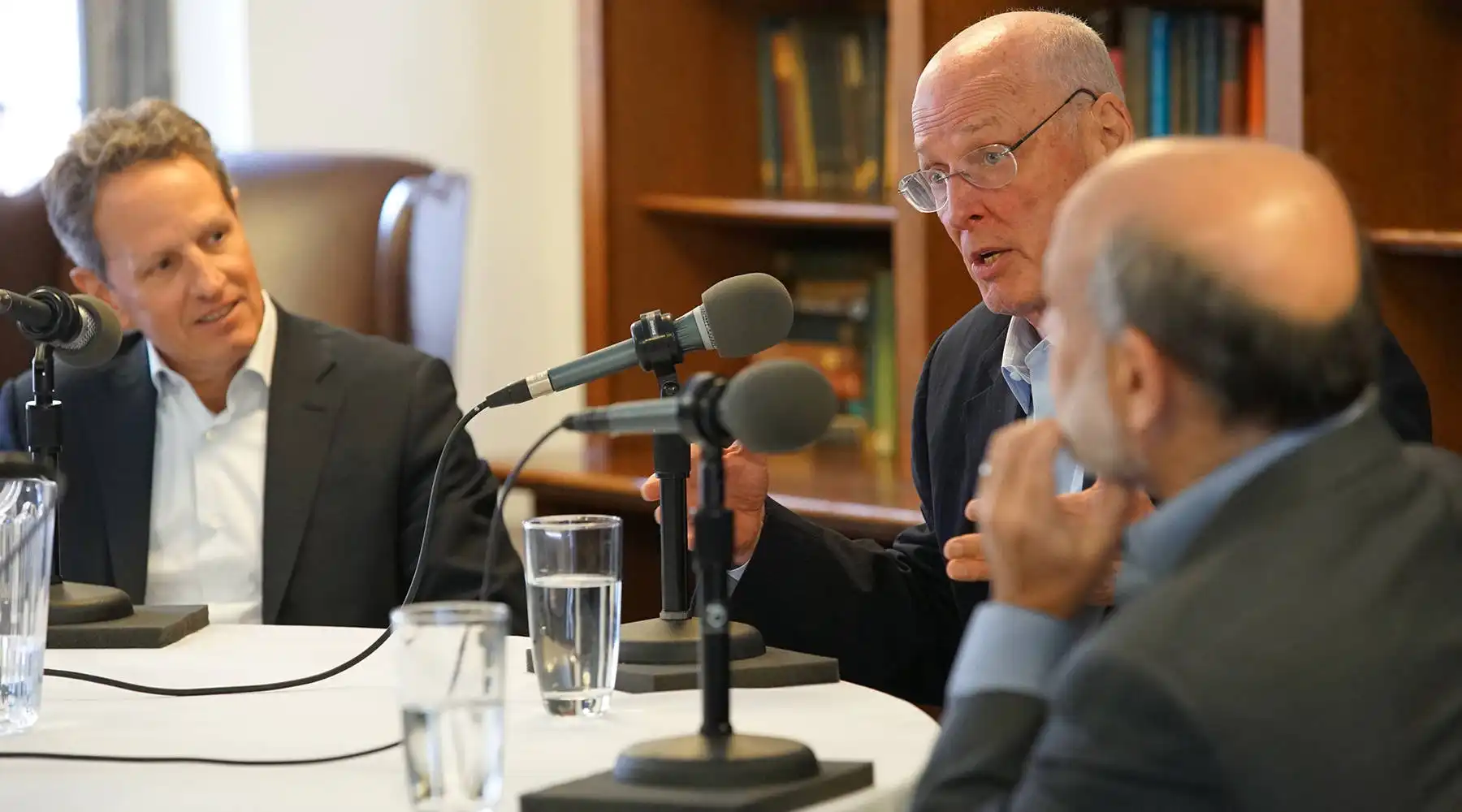
  • Former Treasury Secretary Henry Paulson, former president of the New York Federal Reserve and former Treasury Secretary Timothy Geithner, and former Federal Reserve Chair Ben Bernanke.
    Ben Hethcoat for Marketplace

    Your regular episode of Marketplace is coming later today, but for now we have something special. It’s an interview a decade in the making: Treasury Secretary Hank Paulson, Federal Reserve Chair Ben Bernanke, and President of the New York Fed Tim Geithner, who later served as Treasury Secretary under President Obama. In 2008, they worked together to coordinate an unprecedented response to the financial crisis, often racing to do so against the clock and public opinion. For the first time they’ve been together in public since crisis, Bernanke, Paulson and Geithner sat down with us to discuss Bear Stearns, the government takeovers of Fannie Mae and Freddie Mac, Lehman weekend and the fear they felt as they struggled to stop the financial crisis spreading from Wall Street to Main Street. They talked about their biggest regrets and why they wished they’d done a better job explaining their actions to the American people. Then, they looked ahead to talk about our ability to fight the next financial crisis and why a functioning Congress is so important to solve crises before they start. This interview is part of Marketplace’s coverage of the ten-year anniversary of the financial crisis called Divided Decade, a year-long project exploring what happened, why it matters now and how the aftermath will continue to have an impact on Americans’ economic future.

    Download
  • Jerome Powell arrives to takes the oath of office as he is sworn-in as the new Chairman of the Federal Reserve (FED) at the Federal Reserve Building in Washington, D.C., Feb. 5, 2018.
    SAUL LOEB/AFP/Getty Images

    The new guy on the monetary policy block had his first press conference today. His first rate hike, too. Jay Powell’s been in the big chair at the Federal Reserve six or seven weeks by now. Job No. 1 today was to not upset the economic apple cart. He didn’t, and the economic news helped. That’s where we’ll start today. Then: Facebook. First we’ll get an update from Marketplace Tech’s Molly Wood about the latest turn in the site’s data privacy controversy, and then we’ll look at what the rest of us can do about it. Delete our accounts? Not so fast. Plus, more of our conversation with the first responders to the economic crisis.

  • Tim Geithner, Hank Paulson and Ben Bernanke
    Ben Hethcoat/Marketplace

    In the first part of our conversation with Ben Bernanke, Hank Paulson and Tim Geithner yesterday, we talked about how Bear Stearns was saved, at first, by the Fed and JPMorgan. That was 10 years ago this month. Today we’ll pick up with another bank that wasn’t so lucky: Lehman Brothers. We’ll also talk about the politics of managing a crisis like the one we faced in 2008 and why, at least according to Geithner, these three men “saved the economy but lost the country.” Then: The head of the World Trade Organization said recently that if it weren’t for the WTO, a trade war would already have begun. We’ll unpack that a bit. Plus, the latest on Facebook’s misused data.

  • 03/19/2018: Ben, Hank and Tim
    Ben Hethcoat/Marketplace

    That is, former Fed Chair Ben Bernanke, former Treasury Secretary Henry Paulson and Timothy Geithner, former president of the New York Federal Reserve and former Treasury secretary. We sat down with all three of them at Yale University last week to talk about what they saw 10 years ago as the economy collapsed, and what worries them now. We’ll bring you bits of that conversation throughout today’s show, with even more in the coming days. Then: Facebook shares dropped 6.77 percent on the big news from this weekend that Cambridge Analytica hoovered up data on 50 million Facebook users and used it to aim messages favoring Donald Trump. As lawmakers call for testimony and regulation, we’ll look at how this could affect Facebook’s business model. Plus: The latest on tariffs. 

Talk to us

You must complete the reCAPTCHA above to submit your message.
By submitting, you consent to receive information about our programs and offerings. The personally identifying information you provide will not be sold, shared, or used for purposes other than to communicate with you about Marketplace. You may opt-out at any time clicking the unsubscribe link at the bottom of any email communication.

About the show

Hosted by Kai Ryssdal, our leading business news radio program and podcast is about providing context on the economic news of the day. Through stories, conversations and newsworthy developments, we help listeners understand the economic world around them. Marketplace makes sense of the economy for everyone, no econ degree or finance background required. Marketplace doesn’t just report on the numbers, we take it deeper, adding context to what’s happening in the stock market and how macroeconomic policy can affect you and your business. Monday through Friday, our team speaks with a wide range of industry professionals — from small business owners to Fortune 500 CEOs, Marketplace breaks down complex topics related to business and the economy without industry jargon and over-complicated explanations.

Kai Ryssdal has led the program since 2005 and has hosted the program from China, the Middle East and dozens of cities across the United States. As a leading public media voice, Kai has been a trusted broadcaster for two decades and received an Emmy for investigative journalism on a PBS FRONTLINE documentary about money in politics called “Big Sky, Big Money.” He has appeared often on CNN, CNBC and CBS news. His written work has been featured in The New York Times and The Atlantic.

Produced and distributed by American Public Media (APM) our popular business news podcasts are available worldwide on Apple Podcasts, Spotify, and RSS Feeds and any place else where you get your podcasts.

All Shows

Marketplace