Marketplace®
Every story is an economic story

Episodes 2291 - 2300 of 4493

  • 02/05/2018: Why fewer tech companies are going public
    Chris Hondros/Getty Images

    Market volatility aside, why does a company decide to go public?  Is it just to repay investors, or is it about scaling the product, or is it about having a big branding event? Marketplace Tech host Molly Wood talks with venture capitalist Annie Lamont about why tech companies decide to go public, and why fewer are taking the leap. 

  • Amazon CEO Jeff Bezos at a press conference in Santa Monica, California.
    David McNew/Getty Images

    This week, Amazon, Berkshire Hathaway, and JP Morgan decided they want to get into the health care business, forming a nonprofit that could provide insurance for their employees. This made us wonder: why does Amazon, which began as a retailer, think it can solve the problems of health care? And what is not in the scope of its ambition?  In our regular segment, Quality Assurance, where we take a second look at a news story of the week, Marketplace Tech host Molly Wood talks about it with Alexander Nazaryan, Senior Writer for Newsweek.

  • Todd Gurley #30 of the Los Angeles Rams rushes against the San Francisco 49ers during their NFL game at Levi's Stadium on Monday in Santa Clara, California.
    Ezra Shaw/Getty Images

    We’re looking at the media streaming landscape for live events. Why is it possible to watch television on some devices but not all? Why can some of us watch NFL games while out in the world, but not all of us? Because, hey, you might happen to be in the yarn aisle at a Michael’s and want to stream an NFL game. That happened to Marketplace Tech host Molly Wood. She talks with Joan Solsman, a senior reporter at CNET, about why she couldn’t. 

  • A 5G sign is shown on screen during a keynote address by Qualcomm Inc. CEO Steve Mollenkopf at CES 2017 in Las Vegas.
    Ethan Miller/Getty Images

    The next generation of wireless infrastructure is known as 5G. And it could have implications for not just how fast our phones get data, but also for driverless car infrastructure, and our ability to communicate in virtual reality. How close are we to having the 5G infrastructure in place, and what are the hold ups? Marketplace Tech host Molly Wood talks with Sundeep Rangan, director of the research center NYU WIRELESS, and a professor of electrical engineering.

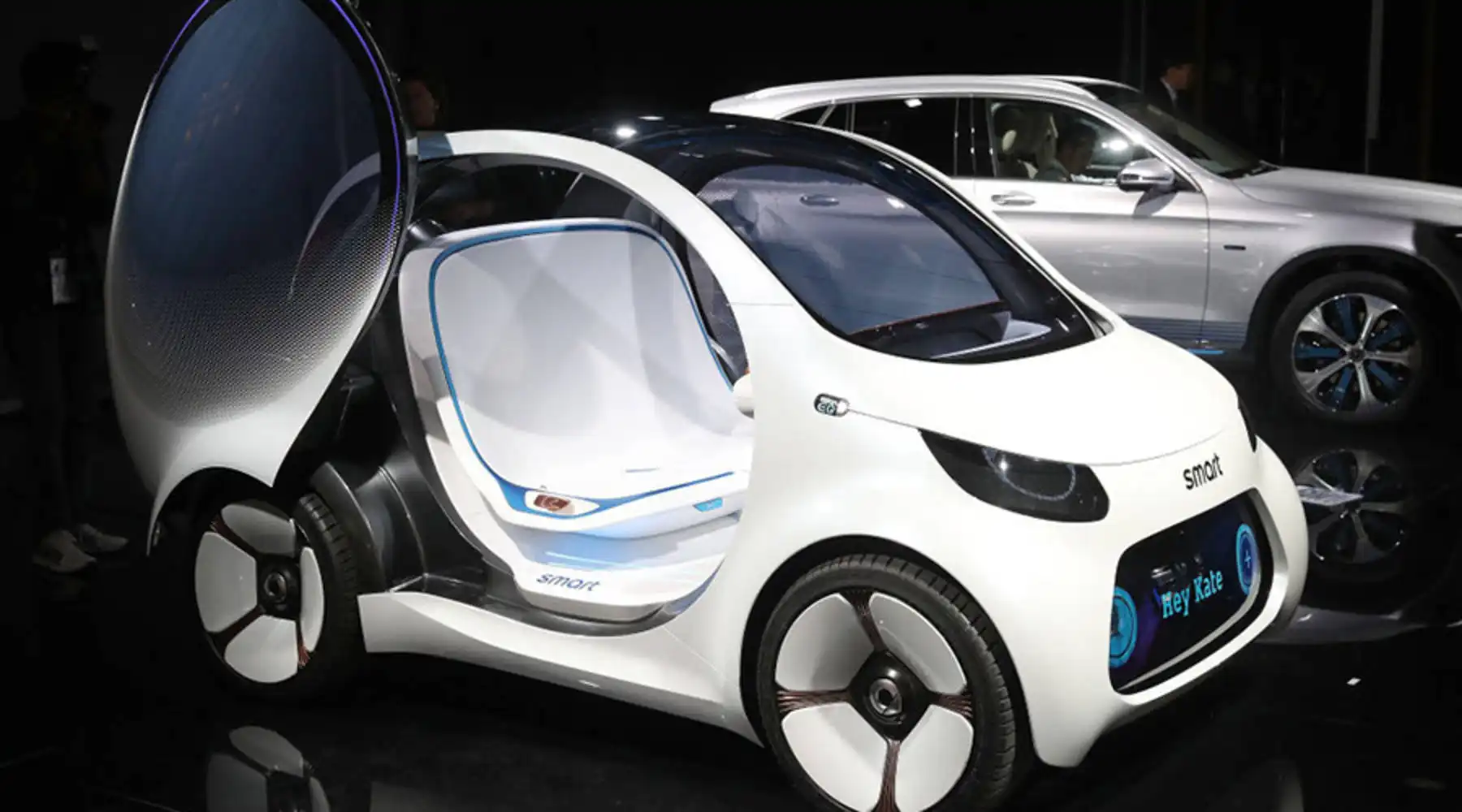
  • A Smart Vision EQ Fortwo autonomous electric concept car stands on display at the 2017 Frankfurt Auto Show on Sept. 12, 2017 in Frankfurt am Main, Germany.
    Sean Gallup/Getty Images

    Jury selection starts tomorrow in the Uber and Waymo case. (Reminder: Waymo is the child company of Alphabet; the little sister company of Google.) That’s the lawsuit over whether a former Waymo engineer stole self-driving car technology from Google and then took it to Uber.  Marketplace Tech host Molly Wood talks with Stanford law professor Mark Lemley, who says that lawsuits like this cost money, time — and can make companies more cautious. 

  • 01/29/2018: Can a doctor’s visit work just as well through a video screen?
    Joe Raedle/Getty Images

    Wait times in ERs are often extremely high, partly because so many people use the emergency room as their regular doctor’s office. At New York-Presbyterian hospital in Manhattan, at least 30 percent of ER visitors are there for nonurgent medical issues, like a rash or cold. For those less serious cases, the hospital is offering patients a chance to see a doctor via telescreen. It’s an effort to reduce wait times and save money.  

  • 01/26/2018: Can the crowd be trusted to find trustworthy news?
    JUSTIN TALLIS/AFP/Getty Images

    Facebook is asking its users what news sources they consider trustworthy. They’re asking two questions: Do you know this website, and how much do you trust it? On Marketplace Tech, our the two questions are: Will that yield useful information, and isn’t the crowd part of the problem? Molly Wood talks about it with Sarah Frier, a tech reporter for Bloomberg.

  • YouTuber Logan Paul in his now infamous video.
    Youtube

    People have been posting increasingly controversial videos to YouTube. YouTube star Logan Paul posted a video showing the body of a suicide victim. Other videos show teenagers eating detergent-filled Tide Pods. In the wake of these incidents, YouTube has changed the way it shares revenue with creators. But does the money involved with YouTube just provide incentive for crazier stunts? Marketplace Tech host Molly Wood talks with Sarah Roberts, a professor of information science at UCLA. 

  • Shoppers scan the Amazon Go app on their mobile devices as the enter the store Monday in Seattle. Amazon opened the cashier-less store to the public after more than a year in beta.
    Stephen Brashear/Getty Images

    Amazon just opened its first automated convenience store with no lines and no checkouts. The company uses computer vision and sensors to monitor what people are taking. But in order to avoid the lines, people are giving up their ability to shop without constantly being monitored. Marketplace Tech host Molly Wood talks about it with Joe Turow, the author of the book “The Aisles Have Eyes.” 

Talk to us

You must complete the reCAPTCHA above to submit your message.
By submitting, you consent to receive information about our programs and offerings. The personally identifying information you provide will not be sold, shared, or used for purposes other than to communicate with you about Marketplace. You may opt-out at any time clicking the unsubscribe link at the bottom of any email communication.

About the show

Every weekday morning, Marketplace Tech demystifies the digital economy. The radio show and podcast explain how tech influences our lives in unexpected ways and provides context for listeners who care about the impact of tech, business and the digital world.

All Shows