Marketplace®
Every story is an economic story

Episodes 6651 - 6660 of 10000

  • 03/15/2018: What happens when a bad employee joins a new team
    Matthew Wiebe/Visual Hunt

    (U.S. Edition) President Trump has tapped CNBC commentator Larry Kudlow as the new head the National Economic Council. Let’s take a look at what Kudlow might bring to the job as the top economic adviser. Afterwards, we’ll look at Unilever’s decision to cut ties with London and base its headquarters solely in the Netherlands, and then talk to one finance expert about what happens when a bad employee enters the workforce.

  • Russian President Vladimir Putin
    Sean Gallup/Getty Images

    (Global Edition) From the BBC World Service. .. The U.K. announced actions against Russia over the poisoning of a former double agent — will the Kremlin’s response include economic measures? We hear from Evghenia Sleptsova, a senior economist for Central and Eastern Europe with Oxford Economics. Also: Singapore tops the list of the world’s most expensive cities to live in, but how far will your money go in the U.S. and Europe? Nikita Sisaudia crunched the numbers for the Economist Intelligence Unit and tells us more. Plus: more women around the world are earning a wage, but in India, that trend seems to be reversing. The BBC’s Rahul Tandon in Kolkata has been finding out why.

  • Chinese worker moves aluminum pipes at the Qinghai Guoxin Aluminium Industry Incorporated Company workshop in Xining of Qinghai Province, China.
    Feng Li/Getty Images

    (Markets Edition) Many economists are talking about the dangers of Trump’s steel and aluminum tariffs, but his announcement hasn’t really been rattling the markets. What gives? Susan Schmidt, senior vice president and portfolio manager at Westwood Holdings Group, joined us to explain why they aren’t panicking. Afterwards, we’ll look at tensions in Alabama over a state law that makes it illegal for anyone to move or alter a monument that’s 40 years or older without special approval. Critics of the law say that it’s protecting Confederate memorials.

  • A Bear Stearns employee enters company headquarters.
    Emmanuel Dunand/AFP/Getty Images

    (U.S. Edition) When it comes to health care, the U.S. spends a whopping $3 trillion. And the reason for that may not be us going to the doctor’s office too often. We’ll look at a new article from the Journal of the American Medical Association that shows what may really be the cause. Afterwards, we’ll look at South Dakota’s push to get out-of-state online retailers to collect sales taxes. Then we’ll talk to New York Times reporter Kate Kelly about the culture at Bear Stearns — the investment bank that failed during the financial crisis — and the types of people who worked there.

  • 03/14/2018: U.K. considers fresh Russia sanctions
    Alexander Aksakov/Getty Images

    (Global Edition) From the BBC World Service … British Prime Minister, Theresa May is expected to announce measures against Russia on Wednesday. The country failed to meet her midnight deadline to explain how a nerve agent was used to poison a former spy, living in the U.K. The Kremlin has strongly denied any involvement — we look at what might happen next. Also in this edition: tributes are being paid to Professor Stephen Hawking, the British scientist who explained the workings of the universe to millions, who has died aged 76. Plus: The BBC’s Cindy Sui explores how Taiwan transformed itself from “garbage island” into a top global recycler.

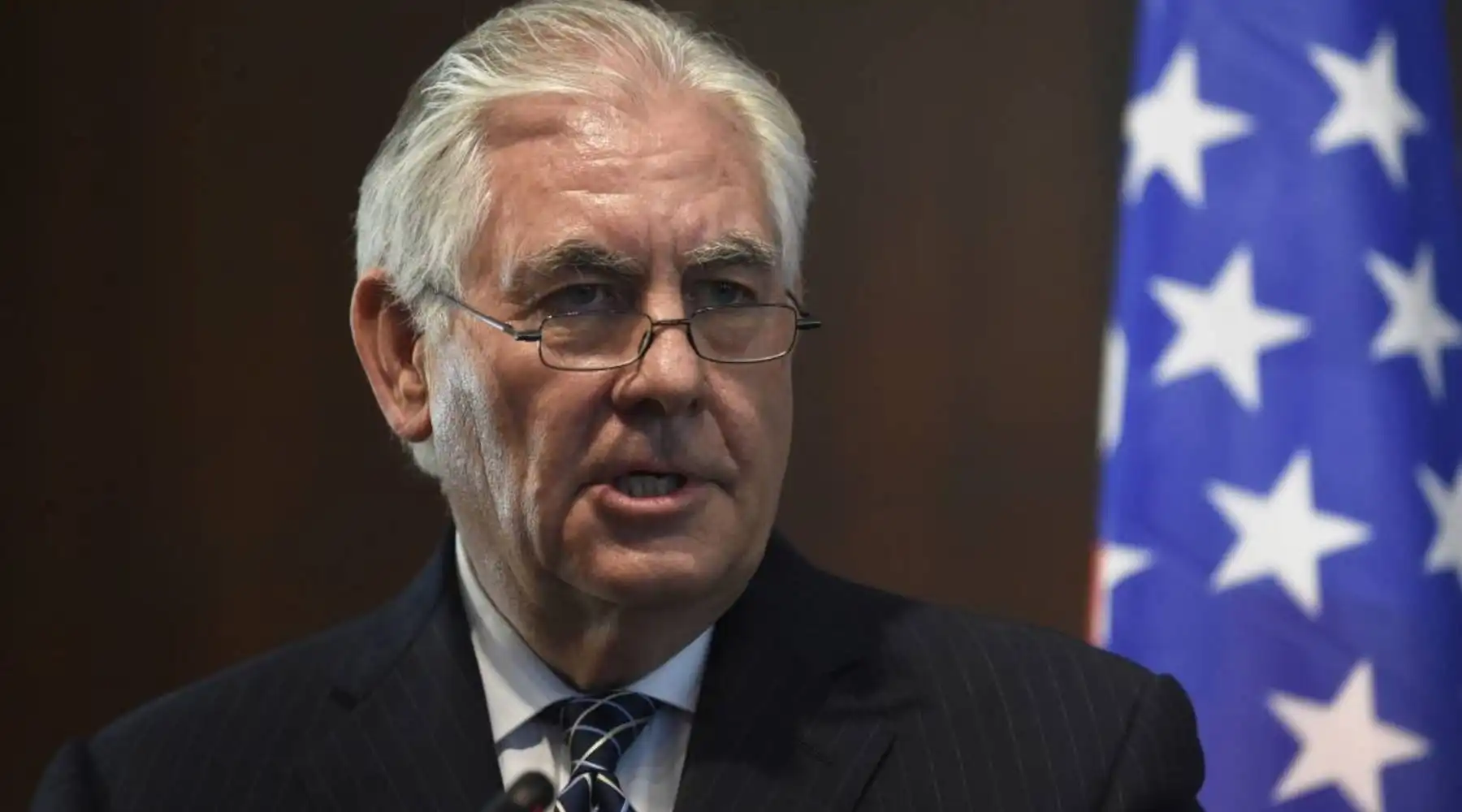
  • U.S. Secretary of State Rex Tillerson holds a press conference with Nigeria's foreign minister in Abuja on Monday.
    PIUS UTOMI EKPEI/AFP/Getty Images

    (Markets Edition) President Trump has ousted Secretary of State Rex Tillerson, replacing him with CEO director Mike Pompeo. We’ll talk to expert Ian Bremmer, president of a political risk consultancy called the Eurasia Group, about the differences between the two and what this shake-up could mean for foreign policy. Afterwards, we’ll look at key stock indicators are doing, and then discuss the Trump administration’s efforts to thwart Broadcom’s hostile takeover of Qualcomm. 

  •  Sheila Bair.
    Chip Somodevilla/Getty Images

    (U.S. Edition) Broadcom — a Singapore-based chipmaker — tried to buy its American-based competitor Qualcomm in a hostile takeover, but the Trump administration announced it blocked the deal yesterday. On today’s show, we’ll look at some of the reasons why the U.S. would want to block this deal. Afterwards, we’ll talk with Sheila Bair — former chair of the Federal Deposit Insurance Corporation — about the government’s role during the financial crisis and whether they overstepped their bounds.

  • 

This photo illustration shows North Korean currency purchased at a Chinese border town, in Beijing on Mar. 6, 2013.
    MARK RALSTON/AFP/Getty Images

    (Global Edition) From the BBC World Service … A leaked draft of a United Nations report claims two Singapore companies have violated sanctions against North Korea. Could the practice be more widespread across Asia than previously thought? We hear more from the BBC’s Karishma Vaswani in Singapore. Plus: Sweden is known for its spirit of humility — a concept called “Jantelagen” — but could this deterring outside investors? The BBC’s Maddy Savage hears from startups that want to shout about their country’s strengths.

  • Travelers are expected to spend about $12 billion over the holiday weekend.
    Scott Olson/Getty Images

    (Markets Edition) One potential consequence of Trump’s planned trade tariffs: America’s infrastructure. We’ll look how pricier steel could mean pricier projects. Afterwards, we’ll hear from Rick Lockett as part of our “Divided Decade” series on how he struggled to find work, after graduating law school, in the midst of the financial crisis. 

Talk to us

You must complete the reCAPTCHA above to submit your message.
By submitting, you consent to receive information about our programs and offerings. The personally identifying information you provide will not be sold, shared, or used for purposes other than to communicate with you about Marketplace. You may opt-out at any time clicking the unsubscribe link at the bottom of any email communication.

About the show

Get up to speed on the news each morning with our daily radio show and podcast, “Marketplace Morning Report,” hosted by Kimberly Adams. We give you the economy without the anxiety, in the amount of time it takes to brew a cup of coffee. Start your day with us, on air or by downloading our podcast, for context and perspective on the economic news that matters to you.

The Marketplace team brings you key news updates and economic happenings in real time throughout the morning. Catch “Marketplace Morning Report” live every Monday through Friday to get the latest news on the markets, money, jobs, and innovation.

“Marketplace Morning Report” daily news podcasts are also available worldwide on platforms, including Apple Podcasts, Spotify, RSS Feeds, and any other place where you get your podcasts.

All Shows

Marketplace Morning Report