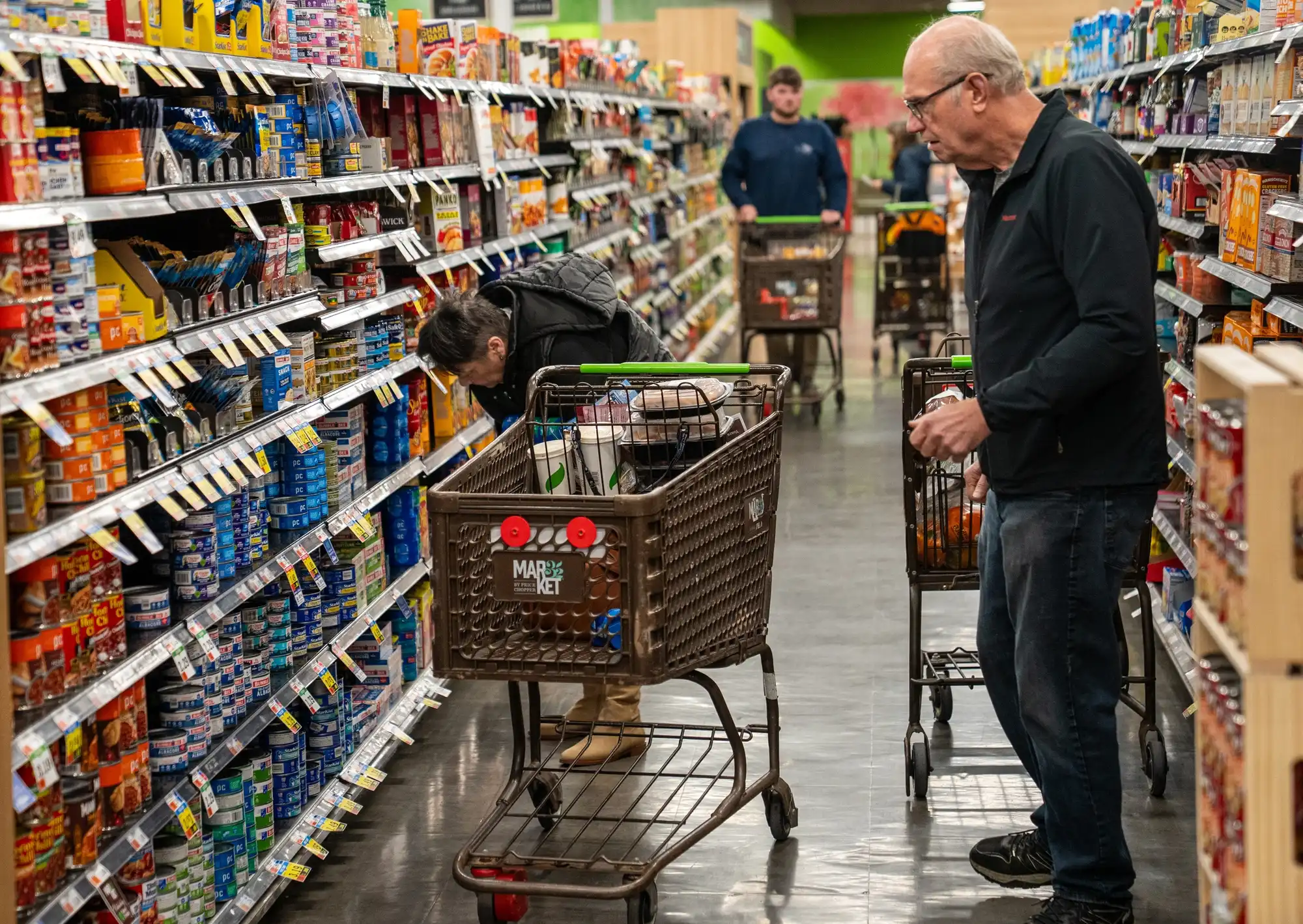
Following the COVID-19 pandemic, one of our readers observed that prices for the canned good rose in price or disappeared from store shelves altogether.
The U.S. is on track to lose more immigrants than it gains in 2026. That means fewer workers paying taxes, building homes, growing food, and caring for an aging population.
A lot of attention is paid to the headline unemployment rate. But the number of “underemployed” workers also offers clues about the health of the labor market.
GDP rose at an annual rate of 2% from January to March, according to data out today from the Bureau of Economic Analysis. A big reason why: investment in AI.
Companies are issuing record amounts of corporate debt this year, even though the war pushed up yields. Analysts say that could continue, especially as tech companies finance AI projects.
A sweeping law that governs crop insurance, conservation programs, and nutrition assistance is up at one of the toughest moments for farmers in recent memory.
New survey data out today from The Conference Board shows that while consumer confidence ticked up this month, it still sits below the long-term baseline. One reason: higher prices.
Several central banks are going to make decisions on interest rates this week, including the Federal Reserve. While most are likely to keep interest rates unchanged this week, Fed policy could start to diverge from other central banks in the coming months.
President Donald Trump has floated the idea of the government helping, or even buying, the struggling budget airline Spirit, reviving old questions about when, if ever, these bailouts are justified.