Marketplace®
Every story is an economic story

David Brancaccio

"Future Effects" Senior Correspondent

David Brancaccio is Marketplace’s “future effects” senior correspondent. In this role, David aims to explore how short-term thinking can impact our personal finances, innovation, government policy, and more.

David worked as the host and senior editor of “Marketplace Morning Report” from 2013 to 2026, where he focused on the regulation of financial markets, the role of technology in labor markets, the history of innovation, digital privacy, sustainability, social enterprises, and financial vulnerability in older adults. David freelanced for Marketplace in 1989 before becoming the program’s European correspondent based in London in 1990.

David hosted the evening program from 1993-2003, then anchored the award-winning public television news program “Now” on PBS after a period co-hosting with journalist Bill Moyers. David has co-produced and appeared in several documentaries, including “Fixing the Future,” about alternative approaches to the economy, and “On Thin Ice,” about climate change and water security, with mountaineer Conrad Anker. David is the author of “Squandering Aimlessly,” a book about personal values and money. He enjoys moderating public policy discussions, including at the Aspen Ideas Festival, Chicago Ideas Week, and the Camden Conference in Maine.

David is from Waterville, Maine, and has degrees from Wesleyan and Stanford universities. Honors include the Peabody, Alfred I. duPont-Columbia University, Emmy, and Walter Cronkite awards. He is married to Mary Brancaccio, a poet and educator. They have three offspring, all adults. He likes making beer and building (and launching) pretty big rockets. Among his heroes are Edward R. Murrow and Wolfman Jack.

Latest from David Brancaccio

  • Australian Prime Minister Scott Morrison has overseen some of the tightest COVID-19 restrictions in the world.
    Rohan Thomson/Getty Images

    From the BBC World Service: Australian Prime Minister Scott Morrison announced plans to relax some of the world’s strictest COVID-19 measures in November as the country looks to kickstart its economy. It all hinges on vaccination. Plus, how financial support from the German government and European Investment Bank has been crucial to Curevac’s development of a potential COVID-19 vaccine.

    Read MoreDownload
  • Enron employees leave the company's Houston headquarters after being laid off in 2001.
    James Nielsen/Getty Images

    Also today: Diane Swonk is our guest for today’s talk about the markets, particularly growing uncertainty in the economic outlook as unemployment claims rise for the third consecutive week.

    Read MoreDownload
  • Enron employees leave the company's Houston headquarters after being laid off in 2001.
    James Nielsen/Getty Images

    “To get the full return of the stock market, you have to invest in all the stocks available, not just your own,” says The Wall Street Journal’s Jason Zweig.

    Read More
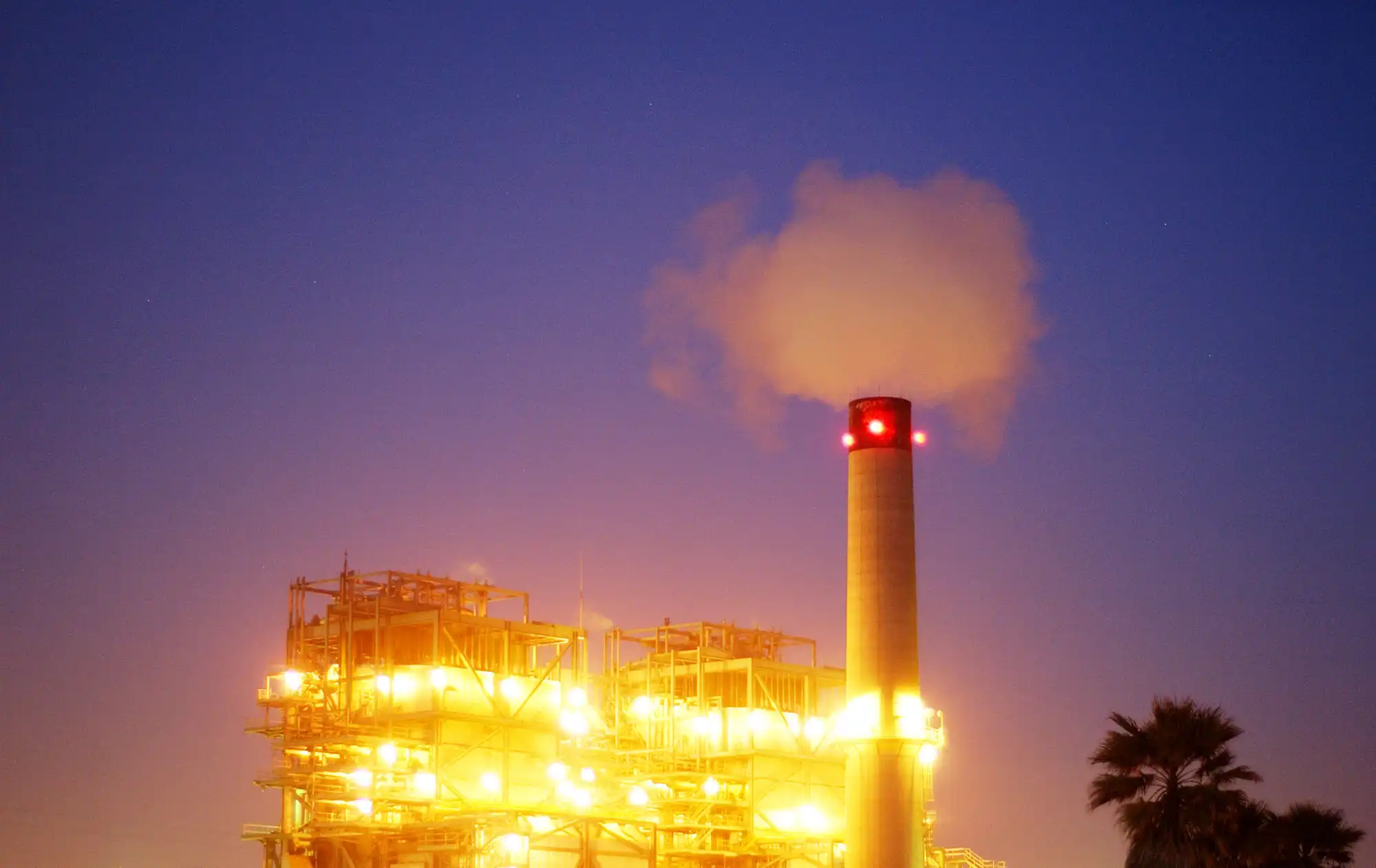
  • 405188 02: The AES Corp. Huntington Beach power plant produces energy for southern California May 9, 2002 in Newport Beach, CA. A hearing will be held by a Senate panel May 15 to look into charges of price manipulation in the U.S. West power market by bankrupt Enron Corp. and other energy firms during the California energy the crisis. The investigation follows the release of critical documents by the Federal Energy Regulatory Commission (FERC) earlier this week. (Photo by David McNew/Getty Images)

    Also today: Fed chief Jerome Powell said The Fed is facing tension trying to balance dealing with high inflation and encouraging job growth. The FAA is hoping new software will reduce the time planes hang out on the runway, which would then help cut down greenhouse gas emissions. 

    Read MoreDownload
  • Curevac's boss told the BBC he's not giving up on delivering an effective COVID-19 vaccine.
    Thomas Kienzle/AFP via Getty Images

    From the BBC World Service: While CureVac’s first generation COVID-19 vaccine fell short in efficacy, its boss says they’re not giving up and that a partnership with GlaxoSmithKline will help. We sat down with CEO Franz Haas at the firm’s headquarters in Tübingen, Germany. Plus, Britain’s furlough scheme ends today. It subsidized pay for more than 11 million people in sectors largely shut down by lockdowns. But is the U.K. economy strong enough to stand on its own two feet?

    Read MoreDownload
  • 20 years later, echoes of Enron’s energy deregulation in California, Texas
    David McNew/Getty Images

    In California, energy companies gamed the markets and ushered in large-scale blackouts in 2000-2001, incidents that have Enron’s fingerprints all over them.

    Read MoreDownload
  • Pivoting to online during the pandemic has opened up different paths for businesses to flourish.
    Getty Images

    Businesses have had to adapt to being fully online, and that has opened of a variety of opportunities.

    Read MoreDownload
  • Mastercard plans to swap the swipe payment process for the chip and touchless tap.
    Bryan R. Smith/AFP via Getty Images

    Also today: Susan Schmidt joins us to discuss the possible effects of the news coming out of Washington on the markets. We then talk about how businesses have “pivoted” to the world of online during the pandemic, and how some entrepreneurs have used that as a chance to innovate. 

    Read MoreDownload
  • U.S. Treasury Secretary Janet Yellen
    Alex Wong/Getty Images

    Also today: China correspondent Jennifer Pak joins us to discuss the power cuts there, which have hit millions of homes and factories and can affect what we can eventually buy over here. Also, a new study shows how the pandemic has hindered global efforts to provide and grow access to electricity. 

    Read MoreDownload
  • Fumio Kishida, former foreign minister, poses for a photo following a press conference after being elected as the new leader of the ruling Liberal Democratic Party (LDP), at the LDP headquarters in Tokyo on September 29, 2021. (Photo by Du Xiaoyi / POOL / AFP) (Photo by DU XIAOYI/POOL/AFP via Getty Images)
    Du Xiaoyi / AFP

    From the BBC World Service: Japan’s ruling Liberal Democratic Party has selected former foreign minister Fumio Kishida as its new leader. He’s now almost certain to become Japan’s next prime minister within days, so what is the likely economic impact? A new study suggests that billions of dollars of China’s lending around the world is concealed from the country’s balance sheet. And there are indications that climate change is likely to have a more severe impact on low-income countries than high-income ones.

    Read MoreDownload
David Brancaccio