Marketplace®
Every story is an economic story
  • Americans continue to spend on drugs at an increasing rate. 
    Tim Boyle/Getty Images

    But that's a big "if."

  • Nov 10, 2018

    Another victim of the trade war: lobsters from Maine

    by Kai Ryssdal and Bennett Purser
    Maine has a lobster surplus.
    Justin Sullivan/Getty Images

    Tariffs always come with a catch.

  • Nov 10, 2018

    When businesses pay more, so do we

    by Amy Scott

    Wholesale prices made their biggest jump in six years in October.

  • It’s been a long week. Let’s take five minutes just to recap. We’ll talk midterms, the Federal Reserve and more with the Wall Street Journal’s Kate Davidson and Politico Managing Editor Sudeep Reddy for the Weekly Wrap. Then, we’ll get into tariffs, or more specifically, how to be exempt from paying tariffs. Since last March, the Commerce Department has been inundated with nearly 50,000 applications from steel and aluminum companies asking to be excluded from the tariffs — 10 times the amount it initially expected. So how does the Commerce Department choose who gets exempted? We dig into it. Plus, with tariffs there’s always a catch, and the lobster industry is feeling it. We talk to Bloomberg’s Shawn Donnan about how Maine lobsters got caught in the trade war crossfire. 

  • A worker prepares to lift a roll of steel with a crane at a shipyard in Nantong in China's eastern Jiangsu province in May.
    AFP/Getty Images

    Data suggests industry objections weigh heavily in decisions.

  • A homeless man for over 30 years, who lives inside his car, repairs a bicycle on Sept. 23, 2015 in Hollywood. 
    Kevork Djansezian/Getty Images

    In some parts of the country, like Central Florida, senior citizens make up about 10 percent of the homeless population.

  • President Donald Trump announces the final approval of the XL Pipeline following a meeting with the National Economic Council in the Oval Office of the White House on March 24, 2017.  
    MANDEL NGAN/AFP/Getty Images

    A U.S. court wants to know: Is the Keystone XL pipeline still viable with Canadian oil selling at much lower prices than a few years ago?

  • Congressional Democrats and President Trump agree on one thing, and maybe only one thing: lowering prescription drug prices. With control of Congress split, what are the chances of a bipartisan solution? We’ll look into it. But first: the cost of doing business just got higher. We’ll look at the forces at play (namely, inflation) and when those hire prices might be passed on to you, the consumer. Plus: As we look for more sources of alternative energy to combat climate change, where does nuclear fit in? Today’s show is sponsored by Forex, American Express and Paypal.

  • The midterm elections could have a big impact on the tech industry. That’s because the backlash against Big Tech is one of the only issues out there that is pretty bipartisan. And on top of that, a couple of newly elected legislators have specifically made tech part of their agenda, be it net neutrality, privacy regulations, or even whether platforms are suppressing political voices. We dig into this in Quality Assurance, the segment where we take a deeper look at a big tech story. Issie Lapowsky, a senior writer for Wired covering politics and national affairs, tells Marketplace Tech’s Molly Wood that both sides of the aisle have been considering ways to regulate Big Tech in recent years. (11/09/18)

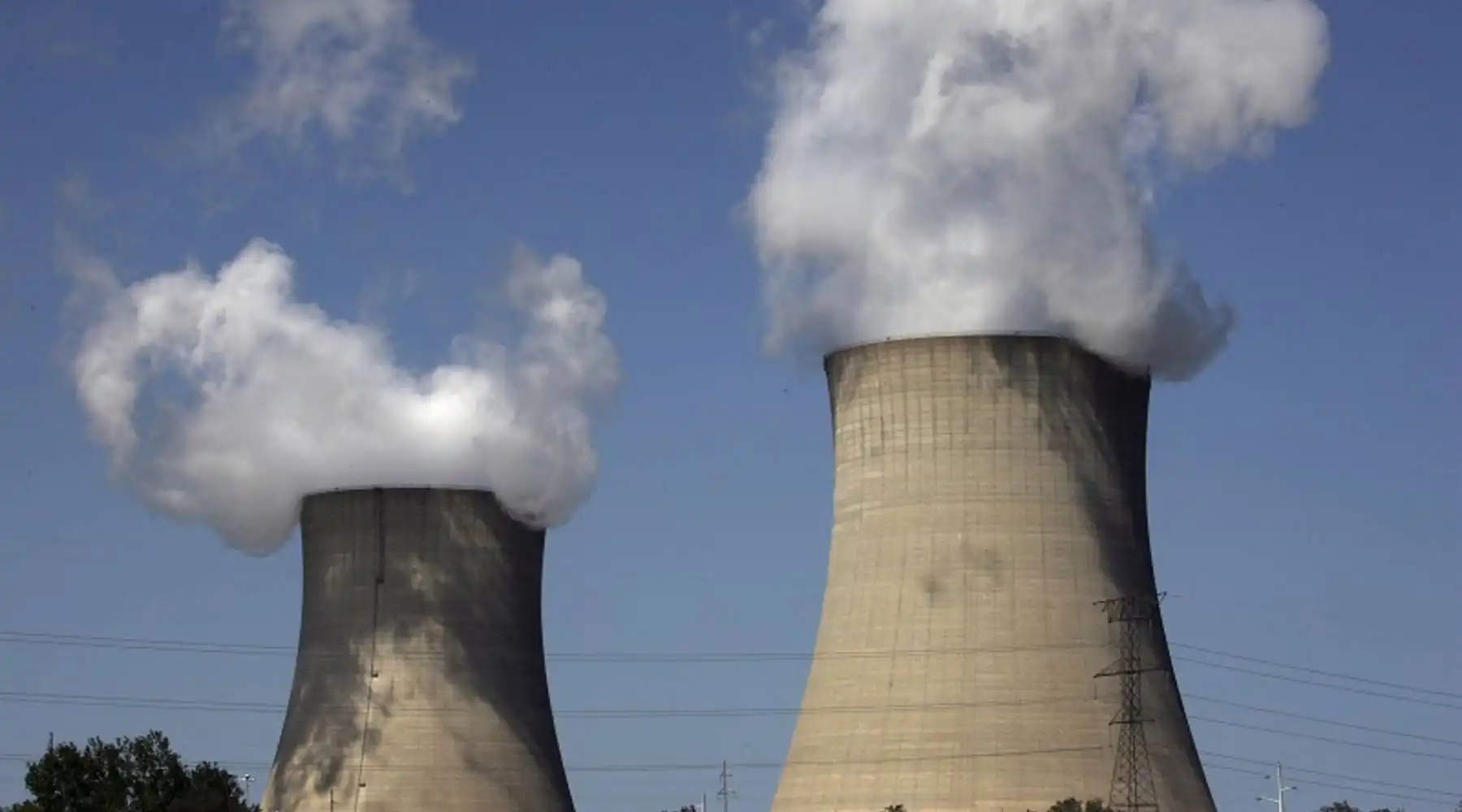
  • The Exelon Byron Nuclear Generating Stations run at full capacity in 2007 in Byron, Illinois.
    Jeff Haynes/AFP/Getty Images

    MIT Energy Initiative's study finds surprising reasons behind the high cost of building nuclear power plants.

  • Nov 9, 2018

    New York culture faces a tech worker influx

    by Leila Goldstein and Justin Ho
    Google's New York office in lower Manhattan on March 5, 2018 in New York City. 
    Spencer Platt/Getty Images

    Google reportedly eyeing an expansion of its downtown Manhattan operation

  • A federal judge in Montana has blocked the Keystone XL Pipeline, a controversial project that would deliver oil from Canada to the Gulf Coast. Then: China holds a massive trade fair to open up to the world. And the E.U. balks at Italy’s definition of debt. Today’s show is sponsored by Forex, American Express and Paypal.

  • Tennessee Republican Marsha Blackburn, who won a Senate seat in Tuesday's election, has ties to the telecom industry. 
    Photo by Alex Wong/Getty Images

    Congress is changing. And so is its attitude toward tech.

  • A picture taken on March 12, 2017, shows an Iranian tanker and a South Korean (R) tanker docking at the platform of the oil facility in the Khark Island, on the shore of the Gulf.
    ATTA KENARE/AFP/Getty Images

    We talked to one of a handful of companies monitoring oil tankers with satellite imagery.

  •  People stand in front of a 'debt clock' screen displaying the Italy's public debt at the Rome's Termini central station on February 15, 2018.
    FILIPPO MONTEFORTE/AFP/Getty Images

    But what's Europe's definition based on, anyway?

  • (Global Edition) From the BBC World Service… U.S. crude oil prices have fallen 20 percent from their recent high, and the global benchmark isn’t far behind. So, what’s weighing on global prices? Then: Greece’s merchant shipping fleet, one of the world’s biggest by tonnage, is likely to feel the pain of sanctions on Iran’s oil. Plus, just more than half of the world’s population is estimated to be without Internet access, and the so-called digital divide is at the top of the agenda at a global web summit in Portugal. Today’s show is sponsored by Forex and American Express.(11/09/2018)

  • House Minority Leader Nancy Pelosi holds a news conference following the 2018 midterm elections at the Capitol Building on Nov. 7, 2018 in Washington, DC.
    Zach Gibson/Getty Images

    Decisions on who will lead the parties and the committees will be made soon.

  • Nov 9, 2018

    Ford jumps into scooter wars with purchase of Spin

    by Meghan McCarty Carino
    A user rides a Spin scooter in San Francisco.
    Justin Sullivan/Getty Images

    The automaker will compete with rideshare giants Uber and Lyft and early innovators Bird and Lime

  • Different methods of calculating consumer inflation have different ways of accounting for the movement of home prices.
    Stephen Brashear/Getty Images for Redfin

    The Federal Reserve has been raising short-term interest rates, but long-term borrowing costs have been rising, too. Freddie Mac said Thursday the average rate on a 30-year fixed-rate mortgage rose to 4.94 percent, a nearly seven-year high. Those higher costs are taking a bite out of demand. For example, mortgage applications fell to a four-year […]

  • Some things might change with the American economy because of the midterms, but we can always count on the good ol’ Federal Reserve. The Fed has been meeting this week to discuss interest rates and the state of the economy. While interest rates held steady this month, an increase is anticipated in December. But what about housing interest rates? The average rate on a 30-year mortgage hit 4.94 percent this week, a near seven-year high. Now, the housing market is cooling off — new data is showing a further decline in mortgage applications. We talk to experts about what that means for the economy. Also, the deficit hawks are about to get louder. Talk of the federal deficit was rather quiet during the midterm elections, but with Democrats as the majority of the House, we’re going to hear a lot more about it. Plus: a check-in on Big Scooter. Yes, we said it. Big Scooter. It’s a multibillion-dollar industry. 

  • Anti-fracking protester Julie Daniels standing outside the fracking site in Little Plumpton, Lancashire.
    Mimisse Beard

    Drilling company contends with protests as minor earthquakes trigger delays.

  • Nov 8, 2018

    Paying lip service to the deficit

    by Nancy Marshall-Genzer
    “Washington needs to find a way to spend less,” Mitch McConnell said in 2011, back when the Kentucky Republican was Senate minority leader. Above, he addresses the Value Voters Summit in Washington, D.C., in September. 
    Photo by Chip Somodevilla/Getty Images

    Politicians have been pretty quiet lately about the $800 billion budget deficit. That's about to change.

  • (U.S. edition) Arkansas and Missouri passed minimum wage hikes on Tuesday, but when it comes to a federal minimum wage hike, some experts told us not to hold our breath. And eight years after some elected officials railed against Medicaid expansion under the Affordable Care Act, those same people are embracing the program. Plus, how ATM makers are adapting as payments go digital. Today’s show is sponsored by Forex, The Michigan Economic Development Corporation and Paypal.

  • Think of a music video you love to watch over and over on YouTube, or the hilarious meme you shared last. Proposed digital copyright laws in Europe and other countries kind of want to make those a little less common, and they have their roots in a 20-year-old American copyright law called the Digital Millennium Copyright Act. Cory Doctorow is a writer and activist with the Electronic Frontier Foundation. He and the EFF have been talking about and litigating over the unintended consequences of the DMCA for almost 20 years now. We explore what some of those unintended consequences are.

  • (Markets edition) When you’re listing a house or shopping for one, there are a few key figures to know: The square footage, number of bathrooms… but what about “Instagramable moments”? In hot real estate markets, marketing professionals are commanding big fees for making properties stand out on social media. We’ll talk with one. Then: The Fed’s efforts and opening up, and what you need to know about a new Trump administration rule letting some employers opt out of covering birth control. Today’s show is sponsored by Forex, The Michigan Economic Development Corporation and Paypal.

  • A beachfront "Instapenthouse."
    Anna Scott

    The latest Instagram "influencers": Houses.

  • People walk past an ATM machine logo near Penn Station on January 8, 2018 in New York.
    BRYAN R. SMITH/AFP/Getty Images

    How will ATM makers manage in a world where digital transactions are becoming more popular and cash is optional?

  • Protestors carry signs as they demonstrate against proposed cuts to Medical and Medicare outside San Francisco city hall on Sept. 21, 2011.
    Justin Sullivan/Getty Images

    Since its inception, the Affordable Care Act has faced fierce Republican efforts to dismantle it. But on Tuesday three of the country’s most conservative states voted to adopt a key provision of the ACA. In Utah, Nebraska and Idaho, voters approved ballot measures to expand Medicaid health care coverage to hundreds of thousands of lower-income […]

  • Protesters rally against Labor nominee Andrew Puzder outside of a Hardee's restaurant on February 13, 2017 in St Louis, Missouri.
    Jeff Curry/Getty Images

    Arkansas and Missouri voted to raise their minimum wages on Tuesday. Is the federal government next?

  • Demonstrators picket the U.S. embassy for the freedom of Russian computer programmer Dmitry Sklyarov Aug. 8, 2001 near the U.S. embassy in Moscow.
    Getty Images

    Critics say the law is too broad, and that's had unintended consequences.

  • (Global Edition) From the BBC World Service… Electric car maker Tesla has named an Australian businesswoman as its new chair, replacing Elon Musk. We’ll find out who she is and why she’s been chosen for the role. In Britain, the push for cleaner energy has taken a knock as Japanese conglomerate, Toshiba, pulls out of plans to build a nuclear plant in the country. And how do we know how much oil Iran is exporting under sanctions? We speak to the founder of a company that tracks oil tankers. This show is sponsored by Forex. Correction (Nov. 8, 2018): A previous audio version of this newscast incorrectly described sexual orientation and gender identity. We apologize for the error.  The audio has been corrected.  

  • “The thing that fascinates me still about hospitals is that you have the whole continuum of life going on inside of the four walls of a hospital,” says Bernard Tyson, Kaiser Permanente CEO.
    Ben Hethcoat/Marketplace

    "You're going to continue to see the health care industry evolve," Bernard Tyson says.

  • On today’s show we’ll look at the big-picture economic affects of the election results. New House, same deficit, so what can Democrats change? We talk to senior reporter Kimberly Adams about how the budget deficit will play out with the new Democratic majority. Voters in Idaho, Utah and Nebraska approved Medicaid expansion, meaning nearly 300,000 Americans could get coverage. A look at the future of Medicaid funding in these traditionally red states. And, in nonelection news, Puerto Rico has been approved for a $4 billion deal to assist its debt crisis. Plus, the latest installment of Corner Office. This time, we talk to Kaiser Permanente CEO Bernard Tyson about the challenges of the health care industry.

  • Democrats won the House. Republicans secured their hold on the Senate. And there was another winner in Tuesday’s elections: Medicaid. States had the choice under the Affordable Care Act to expand it. Some did, but some conservative states chose not to. Voters in Idaho, Nebraska and Utah elected to expand Medicaid. Voters also elected Medicaid […]

  • For Puerto Ricans, a first step toward debt relief
    Filipa Rodrigues/Marketplace

    A U.S. judge approved a deal to address some of Puerto Rico's massive debt.

  • A worker handles steel cables at a factory in Nantong in China's eastern Jiangsu province in July. 
    AFP/Getty Images

    Ronnie Smith at McMahon Steel is not convinced the people evaluating his requests were prepared to do so.

  • A panoramic aerial view of Midtown Manhattan, New York City.
    ferrantraite/Getty Images

    Two parts of the same city could have very different life expectancy rates.

  • Jeff Sessions
    Zach Gibson/Getty Images

    Sessions told the president in a one-page letter that he was submitting his resignation “at your request.”

  • “The thing that fascinates me still about hospitals is that you have the whole continuum of life going on inside of the four walls of a hospital,” says Bernard Tyson, Kaiser Permanente CEO.
    Ben Hethcoat/Marketplace

    The politics, ZIP codes and technology that affect your health care.

    Download
  • A now hiring sign is posted on the window of a business on June 1, 2018 in San Francisco, California.
    Justin Sullivan/Getty Images

    The results are in, and now American businesses of all stripes are trying to sort out what the midterms mean. With Democrats now the majority in the House and Republican gains in the Senate, how might divided government impact different parts of the U.S. economy? Rhetorically, both parties speak in favor of new investment in […]

  • Health care tops voter concerns in the midterm election
    PHILIPPE HUGUEN/AFP/GettyImages

    Major issues for voters in the 2018 election were health care, immigration and the economy.

  • Senators Joe Manchin and Susan Collins lead a group of bipartisan Senators as they speak to reporters after the Senate passed a procedural vote for a continuing resolution to fund the federal government, Capitol Hill, January 22, 2018 in Washington, DC. 
    Drew Angerer/Getty Images

    Economics experts from the last two administrations share their thoughts on bipartisanship

  • Email can be a vulnerable way to communicate, especially if you’re sending around valuable information because you’re a politician or a journalist or an activist. High-profile email users are targets for hackers, trying to get them to click the wrong link and give up their passwords. Google offers a version of Gmail with extra security — you need a physical USB key to log in. Anyone can use it, but Google markets it to high-profile users. Mark Risher, head of Google’s Account Security team and a creator of its Advanced Protection Program, talked to Molly Wood about it. 

  • The sun begins to rise behind the Capitol a day after Americans voted in the midterm elections, on Nov. 7, 2018 in Washington, D.C. Democrats have won control of the House of Representatives while the Senate remains in Republican control.
    Mark Wilson/Getty Images

    Democrats took the House, Republicans gained in the Senate. What now for trade?

  • Nov 7, 2018

    The midterms were about the economy, too

    by Kimberly Adams
    The midterms were about the economy, too
    PAUL J. RICHARDS/AFP/Getty Images

    The strong economy may not have been the most popular talking point for politicians, but for voters it still mattered plenty.

  • (Markets edition) With the Democrats gaining control of the House of Representatives, the next two years promise to be even more contentious than usual. What does the prospect of further political gridlock mean for U.S. economic policy? We’ll also talk about the future of the Affordable Care Act under a split Congress and how businesses might fare with these big changes. Today’s show is sponsored by Forex, Navy Federal Credit Union and Paypal.

  • A picture taken in Paris on May 16, 2018 shows the logo of the social network Facebook on a broken screen of a mobile phone.
    Joel Saget/AFP/Getty Images

    Facebook and Google have pledged themselves to a pact formed by Tim Berners-Lee, the creator of the World Wide Web. The “Contract for the Web” asks internet companies to fight fake news and uphold principles that protect privacy as a human right and promote access for all people. The tech firms say they aspire to […]

  • (U.S. edition) Yesterday’s midterm elections saw a record turnout, but the healthy economy and ongoing trade war largely took a backseat. We’ll talk about what drove voters to the polls, then look ahead to fiscal policy in the short term under a divided congress (hint: gridlock, lots of gridlock). Plus: World Wide Web inventor Tim Berners-Lee’s new project. Today’s show is sponsored by Forex and Navy Federal Credit Union.

  • Google offers email with extra security for journalists, politicians, activists … and you?
    Kimihiro Hoshino/AFP/Getty Images

    What difference could it make for people with valuable info in their inbox?

  • (Global Edition) From the BBC World Service… With the book closed on US midterm elections, we’ll run through the latest numbers and take you to Madagascar where voters are heading to the polls today in one of the world’s most expensive presidential elections per voter.  Then, to India where the Hindu festival of Diwali starts today. But celebrations are dampened somewhat after the country’s supreme court passed its first ever national restriction on fireworks that have caused air pollution levels to spike. We’ll take you there and hear how revellers and business owners are dealing with the changes. (11/07/2018)

  • Fog surrounds the U.S. Capitol building on November 6, 2018 in Washington, DC.  (Photo by Mark Wilson/Getty Images)

    Roughly 6 in 10 voters described the national economy as excellent or good.

  • Nov 7, 2018

    What’s in those Amazon HQ2 bids? It’s not entirely clear

    by Renata Sago and Leila Goldstein
    What’s in those Amazon HQ2 bids? It’s not entirely clear
    David Ryder/Getty Images

    Chambers of commerce and public-private partnerships have led the way on bids with limited disclosure requirements.

  • Nov 7, 2018

    Lots of soybeans with no place to go

    by Andy Uhler
    Soybeans are loaded onto a truck before delivery to a grain elevator in June in Dwight, Illinois. 
    Photo by Scott Olson/Getty Images

    A Chinese tariff on the U.S. crop has shut down a critical market.

  • The sale is part of the conglomerate's efforts to trim its portfolio.

  • Verizon has announced some major internal shuffling: It will create three new operating groups, one each for consumers, business customers and media offerings. The restructure reflects a race between internet providers to offer faster speeds.

  • Arizona voters wait in line to cast their ballot at a polling place during the midterm elections on November 6, 2018 in Phoenix, Arizona. Arizonans are deciding on a U.S. Senate seat between Republican Martha McSally and Democrat Kyrsten Sinema, among other local races. 
    Ralph Freso/Getty Images

    Voting is a crucial part of democracy, but it can be a drain for businesses.

  • Purina offers canned dog food at different price points. Alpo costs 85 cents a can at a Kansas City grocery store, while the company’s premium product, Beyond, is $1.85.
    Peggy Lowe/KCUR

    Americans spent nearly $70 billion on their pets last year — roughly half on food alone.

  • A roadway is flooded by remnants of Hurricane Matthew on Oct. 11, 2016 in Fair Bluff, North Carolina. The town was devastated again by Hurricane Florence in 2018. 

    The Atlantic hurricane season officially has a few more weeks to go, but already this year has been deadly and destructive. The mainland U.S. took a hit from Hurricane Michael in October and Hurricane Florence the month before. Florence devastated many parts of North Carolina, including areas far from the coast. For many small communities, […]

  • A voter walks into a polling station on Nov. 6 in Charleston, West Virginia.
    Patrick Smith/Getty Images

    By the time this episode is out, midterm results will be rolling in. So let’s take a pause before that wave hits to ask: How are you doing?

    Download
  • Chinese tech company Foxconn planned to bring a lot of new manufacturing jobs to the people of Wisconsin, until those plans changed. Turns out there aren’t a lot of engineers for hire in Wisconsin. Now Foxconn is asking engineers in China to raise their hands and come on over to Wisconsin. We talk to the Wall Street Journal’s Shayndi Raice about Foxconn’s labor troubles. Also on today’s show: Americans spend billions of dollars on their pets every year, with a large portion of that spent on food, and companies are taking note. Plus, in our latest installment of #HowWeChanged, we hear the story of a Wells Fargo loan officer who became a whistleblower in a case alleging the bank unfairly targeted African-Americans with subprime loans. 

  • (U.S. edition) Farmers in the southeast were riding out tough times even before hurricane season: Prices are down, labor costs are up. That’s making some family farms in North Carolina wonder if the whole industry is worth the trouble. Plus, we’re expecting the latest numbers on job openings and hiring this morning, and they’re expected to show the same momentum as last month’s stellar employment data. But not all job postings are what they seem. Then: How Verizon is reconfiguring itself for the race to 5G. Today’s show is sponsored by Forex.

  • (Markets edition) The company hasn’t said anything official, but the Wall Street Journal is reporting that Amazon will split its much-hyped HQ2 between the greater New York and DC areas. So what was the point of that whole competition again? We’ll talk about it. Plus: Why America’s airports are adding more local flavor. Today’s show is sponsored by Forex and PayPal.

  • Once upon a time, when something you owned broke, you fixed it. We never even considered whether we were allowed to fix our products until the year 2000, when the Digital Millennium Copyright Act went into effect, making it illegal to circumvent any tech that locked up devices without authorization. So John Deere started telling farmers it was a copyright violation to fix their tractors. And Apple said it was a copyright violation to fix our iPhones or even open a repair shop. Just last month, the U.S. copyright office finally decided that you do have the right to fix your smartphone and lots of other electronics. Kyle Wiens, CEO of iFixit, a company that creates repair guides for electronics and sells tools and replacement parts, told Molly Wood we may have the right to repair, but repairing things isn’t as easy as it used to be. (11/06/18)  

  • A band entertains travelers at the Orlando International Airport.
    Renata Sago/Marketplace

    Terminals in major cities are undergoing renovations and relying on the allure of local shops to keep travelers spending.

  • Nov 6, 2018

    Who will grow our food?

    by Andy Uhler
    Who will grow our food?
    Scott Olson/Getty Images

    As prices fall and costs squeeze farmers, the young opt against lives of hard work and low wages.

  • Job seekers arrive at the Walter E. Washington Convention Center for The Opportunity Hiring Fair in Washington, DC, on September 20, 2017.
    MANDEL NGAN/AFP/Getty Images

    What the JOLTS report can tell us about the state of the labor market.

  • (Global Edition) We’ve now heard from two top Chinese leaders in as many days about the country’s interest in ending the trade war. So what’s the path forward for the U.S.? Then, Tencent’s new approach to curbing addictive online gaming. Plus: The view from the ground in the Philippines, where food prices are up by double digits. Today’s show is sponsored by Forex.

  • That time it was illegal to fix your own electronics … for almost 20 years
    Paul J. Richards/AFP/Getty Images

    "I think you're going to really see an explosion in the repair economy," the CEO of iFixit says.

  • A new show from artist Terence Nance and HBO, "Random Acts of Flyness," dives into a lot of issues you don't often see discussed with such creativity on television, including police brutality and queer relationships.
    HBO

    "Random Acts of Flyness," created by Terence Nance, wants to change the way viewers think.

  • Corporate America pushes employees to the polls
    David McNew / Getty Images

    Some companies are making it easier for employees to vote in tomorrow's midterms.

  • In the most expensive midterms, money doesn’t always go to tight races
    Creative commons

    A largely safe GOP district in California draws the most money for a House race. Why?

  • Nov 6, 2018

    Is the IRS prepared for tax filing season?

    by Marielle Segarra
    Is the IRS prepared for tax filing season?
    Scott Olson/Getty Images

    The union that represents IRS workers says agency may not be ready for the new tax law.

  • Nov 6, 2018

    FOIA documents unmask the tariff exemption process

    by Phoebe Unterman, Tracey Samuelson and Janet Nguyen
    The majority of requests for tariff exemptions have been denied. Above, a steel distribution factory in Monterrey, Mexico.
    Photo by Julio Cesar Aguilar/AFP/Getty Images

    We obtained Department of Commerce documents to see how applications were approved and denied.

  • Financial expert Carmen Wong Ulrich says credit cards aren't bad --  until you start looking at them as free cash.
    iStockphoto

    Companies trim credit limits, balance transfers to limit risk in case of slowdown.

  • The world's top exporter aims to trim its trade surplus, but the U.S. and companies want faster liberalization.

  • How does the Commerce Department decide which companies are exempt from tariffs and which ones aren’t?  We obtained some documents that offer a glimpse behind the curtain. And speaking of tariffs, amidst trade tensions, China is hoping to rebrand itself as a top import country. But can the world’s leading exporter easily change tack? Plus, a look at how some of the largest American companies are trying to get people to the polls tomorrow, and how training, the new tax law and outdated tech are leaving IRS workers feeling behind the curve … as tax season approaches.

  • Uber and Lyft are offering discounted or free rides to the polls on Tuesday
    Photo by Spencer Platt/Getty Images

    What's in it for the ride-sharing businesses?

  • (Markets edition) U.S. sanctions against Iran go back into effect today, with some new ones to boot, hitting oil, shipping and banks. But several countries are getting waivers to continue importing Iranian oil. We’ll tell you what you need to know, along with your update on markets and tomorrow’s midterm elections. Then: Credit card companies like Discover and Capital One are starting to scale back lending, and we should all be paying attention. Today’s show is sponsored by Forex and U.S. Bank. 

  • Why it’s so hard to stop all those spam calls
    Sean Gallup/Getty Images

    Hint: It's complicated.

  • The Federal Communications Commission estimates that Americans get 4 billion unwanted automated calls every month. And they work. We get scammed out of $9.5 billion every year. But if we can filter out most of the spam in our email, why haven’t we solved robocalling? Because it’s a deceptively complicated problem to solve. (11/05/18)

  •  U.S. Senate candidate Rep. Beto O'Rourke (D-TX) poses for photographs with supporters during a campaign rally at Gilbert Garza Park Oct. 31, 2018 in San Antonio, Texas. With less than a week before Election Day, O'Rourke is driving across the state in his race against incumbent Sen. Ted Cruz (R-TX). 
    Chip Somodevilla/Getty Images

    "Rock star" candidates like Beto O'Rourke and Stacey Abrams attract out-of-state donations.

  • (U.S. Edition) We’re on the eve of the most expensive midterm election ever, with $5 billion spent on national races. But most of that money isn’t flowing to the most competitive races. We’ll look at why. Then the view from China’s import-export expo, where President Xi Jinping talked about the trade war and Chinese trade policy. Plus: once you capture carbon, what do you do with it? Today’s show is sponsored by Forex and U.S. Bank. 

  • (Global Edition) New U.S. sanctions against Iran went into effect overnight, hitting the oil and banking sectors the hardest. But there is one area where other nations can still do business with the Middle Eastern country. Then, European finance chiefs are meeting today in Brussels to discuss Italy’s controversial budget. The country’s deputy finance minister has said his country’s plans should be a model for other European countries…but how feasible is that? Afterwards, we’ll explain how banks in some parts of the world are issuing new guidelines on how to deal with customers whose finances might be manipulated by an abusive partner. Today’s show is sponsored by Forex and U.S. Bank. (11/05/2018)

  • The smoke stacks at American Electric Power's Mountaineer coal power plant in New Haven, West Virginia, Oct. 30, 2009. In cooperation with AEP, the French company Alstom unveiled the world's largest carbon capture facility at a coal plant, so called 'clean coal,' which will store around 100,000 metric tonnes of carbon dioxide a year 7,200 feet underground.
    SAUL LOEB/AFP/Getty Images

    Scientists say we have to do something about all the carbon we’re spewing into the air, and fast. A recent United Nations climate study says capturing carbon dioxide — even sucking it from the air — is going to be crucial in the fight against climate change. But once you’ve caught it, where do you […]