Marketplace®

Daily business news and economic stories

Nick Esposito

Latest from Nick Esposito

  • LA educators continue strike, aided by high demand for jobs

    Educators, teachers and other employees at the Los Angeles Unified School District are continuing their strike for higher pay. We look into how broader labor trends are helping demonstrators on the ground make their case. And, we talk with Boston College Law School professor Patricia McCoy about how the government’s recent actions to calm anxiety in the financial sector are adding to so-called “moral hazard”.

    Read MoreDownload
  • As states pass pay transparency laws, is their impact clear?

    Eight states thus far have passed laws to boost pay transparency in job listings, aiming to grant applicants more information in a competitive job market. We look at the experience of New York City after implementing its own rule. Chris Farrell explains how to make the most of federal deposit insurance — and how someone can get more than $250,000 in the bank insured. And, Google yesterday released Bard, its competitor to Microsoft’s AI chatbot, ChatGPT. 

    Read MoreDownload
  • How Ramadan drives a multi-billion dollar date industry

    From the BBC World Service: As the Islamic holy month of Ramadan gets underway, we look at the significance of dates and the multi-billion dollar business of supplying those breaking their fasts. Plus, Ukraine gets a $15bn boost from the International Monetary Fund, and we hear about the class action launched in Indonesia by parents whose children died or were injured by contaminated cough syrup.

    Read MoreDownload
  • Home sales rebound after a year of decline, but uncertainty looms
    David Paul Morris/Getty Images

    The latest data on U.S. home sales showed a huge rebound of 14.5% in February, reversing a trend of decline that lasted more than a year. That said, the market is still fraught with uncertainty, especially amid the recent jitters in the global financial sector. We talk to Guy LeBas of Janney Montgomery Scott about Treasury Secretary Janet Yellen’s recent announcement that the government would insure the balance of deposits at smaller banks. And, prior to the collapse of Silicon Valley Bank and Signature Bank, both institutions received favorable credit ratings from firms like Moody’s, prompting questions about what ratings are actually useful for.

    Read MoreDownload
  • Loans could become harder to get as financial sector reels
    Cindy Ord/Getty Images

    Amid the continued fallout from the failure of two mid-sized U.S. banks and the acquisition of Credit Suisse, financial institutions are likely to start applying greater scrutiny to the loans they give out. We look at what could move banks’ calculus in that direction…and who would be most affected. Another consequence of the recent turmoil in the financial sector has been lower oil prices, which have seen one of their biggest slumps in recent years. And, a fact-check of claims — often made by prominent Republicans — that so-called “woke investing” caused the collapse of Silicon Valley Bank with Washington Post reporter Julian Mark.

    Read MoreDownload
  • Sri Lanka: Is $3 billion enough to save the economy?
    ISHARA S. KODIKARA/AFP via Getty Images

    From the BBC World Service: Sri Lanka has been battling economic breakdown for nearly a year. A foreign reserve crisis toppled the country’s president and led to shortages and soaring inflation. Now a $3 billion rescue package has been agreed upon with the International Monetary Fund. We ask if it’s enough and find out what reforms the nation will have to implement to keep the cash flowing. Plus, investors holding Credit Suisse debt lost everything in the rescue deal with UBS. We hear from one of them on how it’s affected confidence in the market. And, with another warning on climate collapse from the UN, we ask what Lego — one of the biggest toymakers in the world — is doing to cut emissions.

    Read MoreDownload
  • The Fed has a will-they-won’t-they dilemma with next rate decision
    Tom Williams/Pool/AFP via Getty Images

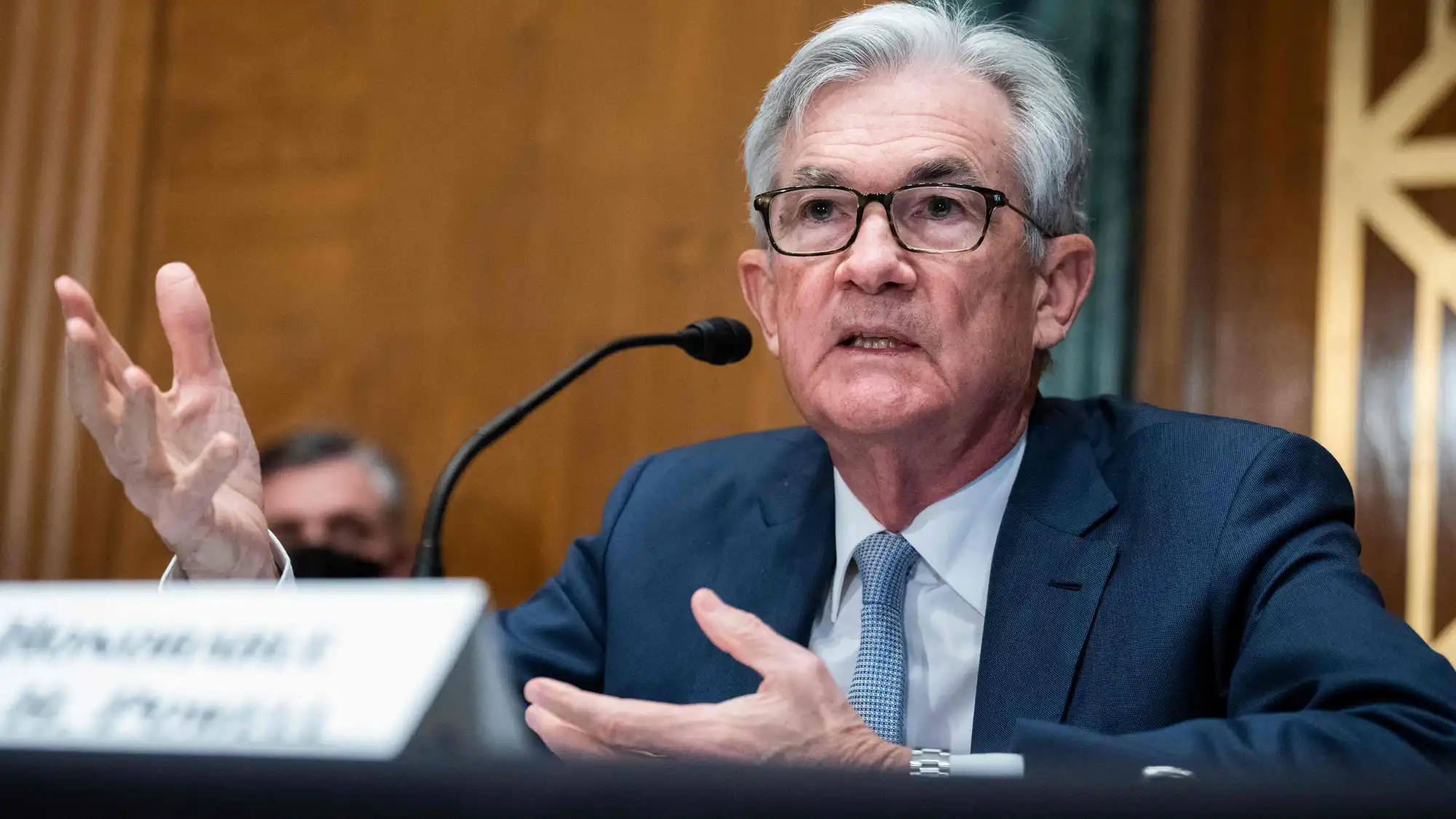
    The Federal Reserve’s top committee that sets interest rate targets is due to meet in the middle of this week, where it suddenly has a lot more to consider amid global unease about the banking system. Economist Julia Coronado explains what Jerome Powell and co. may be thinking. Meanwhile over the weekend, the Fed announced it’s coordinating with other world central banks to make sure there are enough dollars in the financial system. In Europe, stock markets took a hammering after the acquisition of Credit Suisse. And, a look at how holders of federal housing vouchers in Texas are facing difficulties finding a place to live. 

    Read MoreDownload
  • Deja vu? Another weekend of bank turmoil
    Igor Golovniov/SOPA Images/LightRocket via Getty Images

    It’s been a tough couple of weeks for the global banking sector — the embattled lender Credit Suisse was purchased by fellow Swiss rival UBS for a motley sum of around $3 billion. University of Michigan professor Erik Gordon explains what that means amid the wider unease about the financial sector. Meanwhile, the Fed was one a group of the world’s central banks that came up with system to ensure banks have cash if they need it. And, a look into what’s happened to Signature Bank since it was acquired by federal regulators little over a week ago. 

    Read MoreDownload
  • A shotgun wedding for UBS and Credit Suisse
    Michelle Limina/AFP via Getty Images

    From the BBC World Service: Just another manic Monday in the banking sector after UBS agrees a $3 billion deal to buy beleaguered Credit Suisse. But who loses out, and has it restored confidence in banks? Chinese President Xi Jinping is due to visit Russia this week, which may impact the latter’s fortunes in Ukraine. Plus, on the 20th anniversary of the invasion of Iraq, we travel to Baghdad’s central market and speak to traders about the country’s dollar crisis.

    Read MoreDownload
  • Inside Ireland’s shrewd St. Patrick’s day diplomacy
    Jeremy O'Donnell/Getty Images

    It’s St. Patrick’s Day, meaning people around the world will be wearing green and celebrating Irish culture — even those who don’t have roots there. But according to the BBC’s Leanna Byrne, it’s also a big day for Irish diplomacy and business, as the country uses its widely-recognized national day to foster economic ties around the world. And, we spoke with Yale’s Steven Kelly about the limits of comparing the now-defunct Silicon Valley Bank with the rest of the financial system. 

    Read MoreDownload
Nick Esposito