Marketplace®

Daily business news and economic stories
 

Molly Wood

Host and senior editor

Molly Wood is the former host and senior editor of "Marketplace Tech," a daily broadcast focused on demystifying the digital economy, and former co-host of "Make Me Smart," where she and co-host Kai Ryssdal would try to make sense of big topics in business, tech and culture. What was your first job? Grocery store checker (but I also drove an ice cream truck once). Fill in the blank: Money can’t buy you happiness, but it can buy you ______. Time, the most precious thing of all. What is something that everyone should own, no matter how much it costs? A pet! What’s the favorite item in your workspace and why? My electric fireplace! It is both cute and cozy.  

Latest from Molly Wood

  • One of the major challenges of using renewable energy like wind or solar is that there’s overproduction. The sun shines and the wind blows mostly during the day but then drops off at night — when people tend to use the most power. Batteries can help smooth out those peaks and valleys, but cost has limited wider adoption. Now battery storage is maturing as an industry. So what does that mean for regular people? Marketplace’s Jed Kim talks with Ravi Manghani, director of energy storage at energy consulting firm Wood Mackenzie, who says the tech is getting to houses through transmission lines, maybe even yours. Today’s show is sponsored by Pitney Bowes and WellFrame.

    Read More
  • "We're talking about about 80-85 percent cost reduction over the past decade for battery storage [of renewable energy]," said Ravi Manghani, director of energy storage at energy consulting firm Wood Mackenzie.
    Andreas Rentz/Getty Images

    Battery storage is getting to houses through electrical lines, maybe even yours.

    Read More
  • "If I choose to use one of these platforms and I'm giving it useful information about myself, then our research suggests that, in principle, I'm also giving it useful information about my friends," said Jim Bagrow, a professor at the University of Vermont who led a study about Twitter privacy.
    Leon Neal/Getty Images

    A new study shows your friends' posts can indicate what you're likely to say on social media.

    Read More
  • Social media was invented to keep up with friends, but if you’re fed up with data leaks and privacy concerns, you might decide to quit. It turns out social media may not even need you to know you, because your friends and their posts are pretty good indicators of who you are. In a new study, scientists took to Twitter and found people who interacted regularly. By analyzing the tweets of just eight or nine of a user’s friends, they could predict the kinds of things the original user would post. Marketplace’s Jed Kim talks with Jim Bagrow, a professor at the University of Vermont who led the study. Today’s show is sponsored by the University of Florida Warrington College of Business and Triple Byte.

    Read More
  • An American’s quest to track down his digital data… in the UK
    Chris J Ratcliffe/Getty Images

    One man takes on a multiyear legal battle with Cambridge Analytica.

    Read More
  • Many people are still active on Facebook, Twitter and Instagram despite digital privacy concerns. But even if you set out to truly understand all the information tech companies have about you, it’s close to impossible to get your hands on all of the data. Witness the plight of one American professor who’s waging a multiyear legal battle against political data firm Cambridge Analytica, trying to see what it collected, bought and sold about him. It’s a David and Goliath story, and in this case, David is David Carroll, a media design professor in New York. Marketplace’s Jed Kim talks about Carroll’s quest with Issie Lapowsky, a senior writer at Wired. Today’s show is sponsored by Pitney Bowes and Indeed.

    Read More
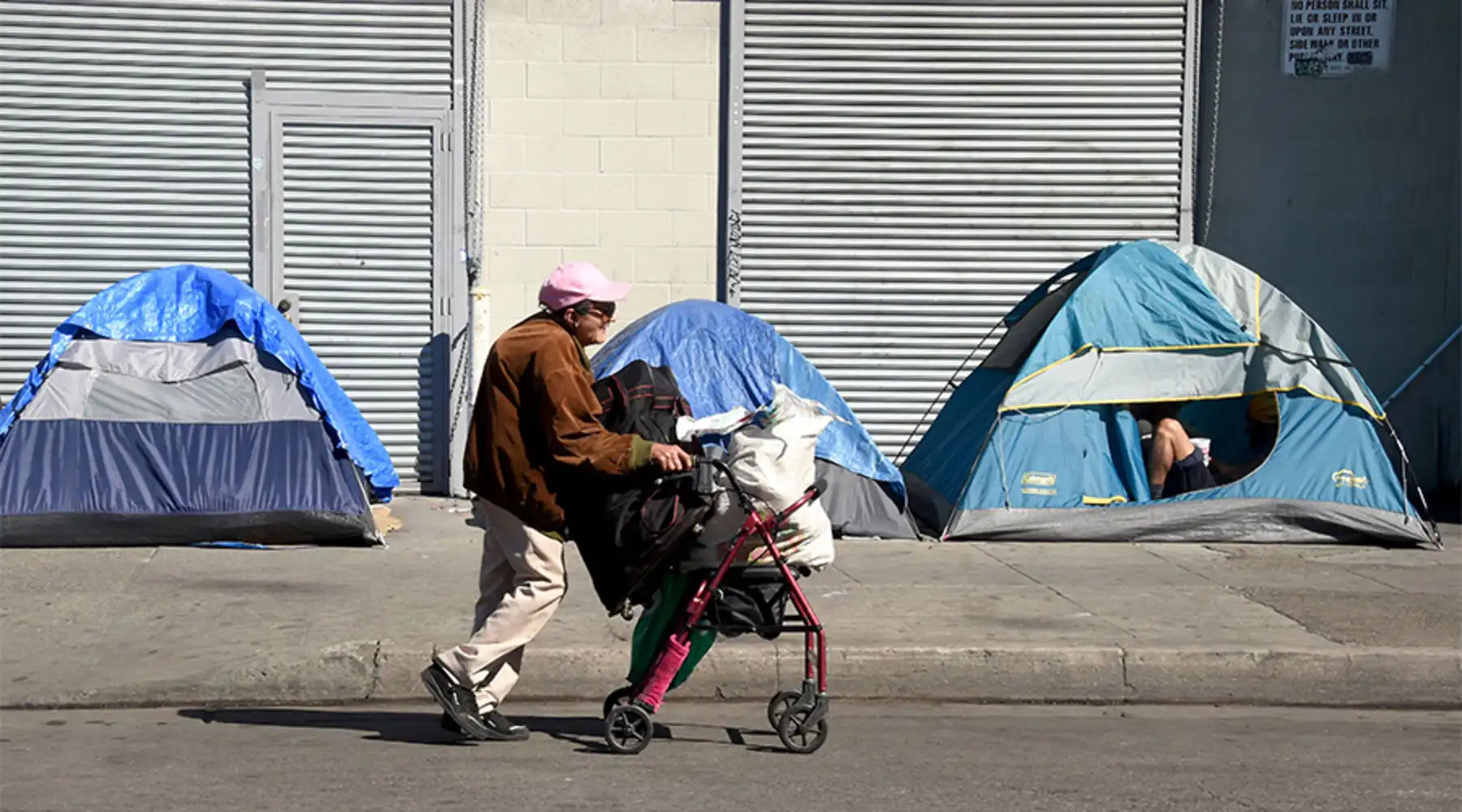
  • A woman pushes her walker past tents housing the homeless in Los Angeles, California.
    Frederic J. Brown/AFP/Getty Images

    In Southern California, where homelessness is high, a new app gets better data.

    Read More
  • Each year, the Department of Housing and Urban Development asks local governments to count the number of homeless people in their areas. The task on the ground falls to officials partnered with nonprofits and volunteers. The data is required if you want federal dollars to address homelessness. The count includes those staying in shelters and transitional housing, but in odd-numbered years, like this one, people also go out on the streets to count the homeless population sleeping on sidewalks and in cars. It’s a massive undertaking, especially in regions with high levels of homelessness, like Southern California. This year, some areas near Los Angeles are using an app to improve the quality of data they collect. It’s a big change from the pen and paper method still used by most. Marketplace’s Jed Kim talks with Jill Replogle, the Orange County reporter for Southern California Public Radio. The O.C. is one of the places using the new tech, and she joined the count and downloaded the app to see how it works. Today’s show is sponsored by the University of Florida Warrington College of Business and WellFrame.

    Read More
  • There’s tons of money in venture capital, as long as you’re a big company
    Andrew Caballero-Reynolds/AFP/Getty Images

    Do early-stage startups still have a chance at funding?

    Read More
  • In 2018 venture capital firms invested $130 billion in private companies — an all-time high. Sounds like a thriving startup ecosystem, right? The movie industry similarly hit a new high in 2018… because ticket prices were way higher and people paid more to go to a few big blockbusters. A similar thing happened with venture capital: Firms invested a lot of money in a few big blockbuster companies, like $1.3 billion in Fortnite maker Epic Games, or they made big investments in so-called “unicorn” companies with billion-dollar valuations, such as Uber or Airbnb or Pinterest. How is this pattern changing the landscape for smaller startups? Molly Wood talks with Bobby Franklin, president and CEO of the National Venture Capital Association, about where all the money is going. Today’s show is sponsored by Pitney Bowes and WellFrame.  

    Read More