Marketplace®

Daily business news and economic stories
Jesson Duller

Jesson Duller

Audio Engineer

Jesson is a former audio engineer at Marketplace.

Latest from Jesson Duller

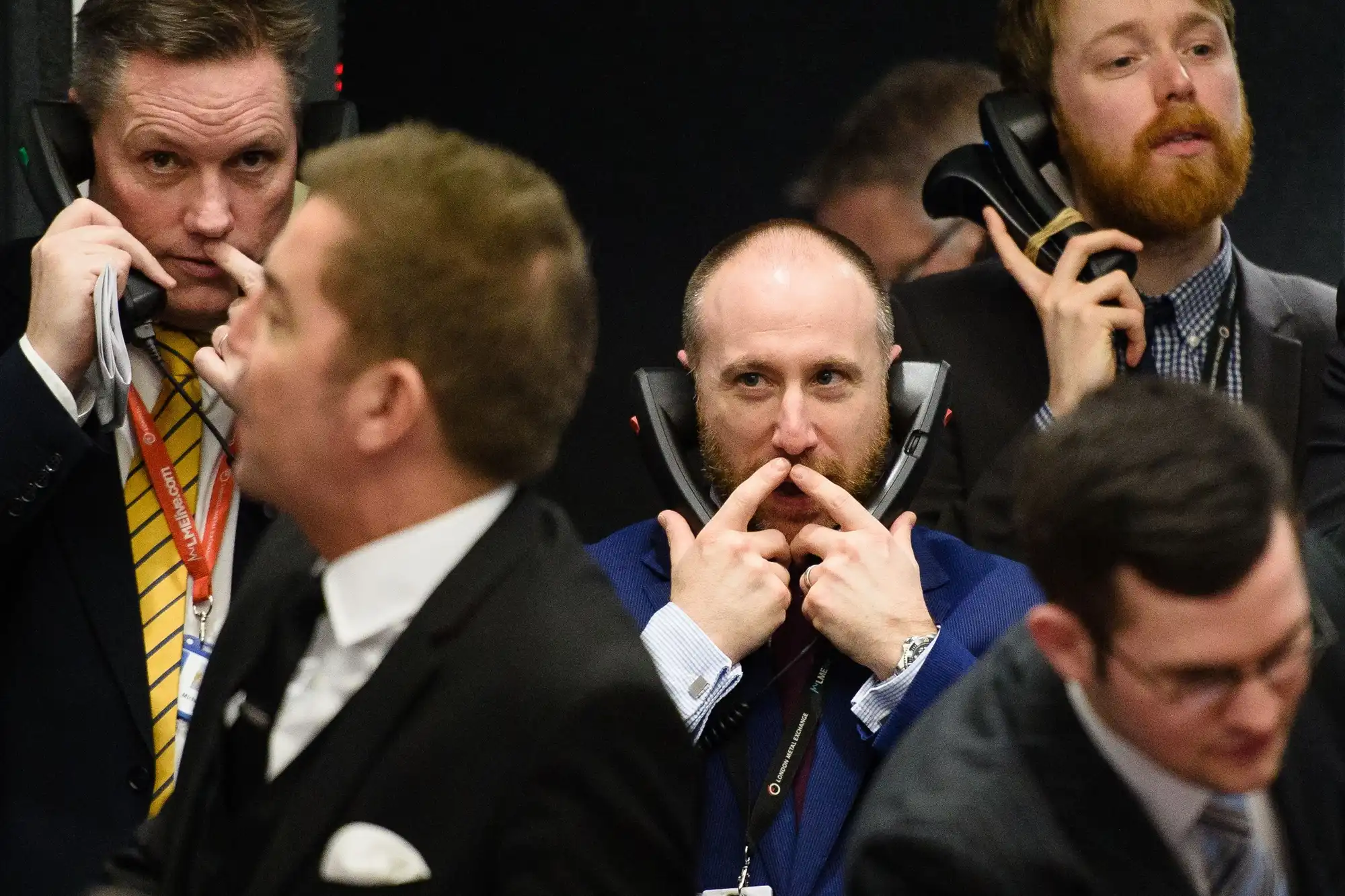
  • The London Metal Exchange last upgraded its trading floor back in 2016. In 2020, it stopped in-person trading due to COVID-19.
    Leon Neal/AFP via Getty Images

    From the BBC World Service: Following a 250% price surge over two days, trade was halted in nickel on the London Metal Exchange. We hear how the European Union plans to wean itself off Russian oil and gas. Plus the World Bank is making a package of emergency loans and grants available to Ukraine.

    Read MoreDownload
  • The pandemic has made the mapping problem even more obvious.
    Issouf Sanogo/AFP via Getty Images

    Good news or bad news first? Cybersecurity watchers around the world have been on high alert as the war in Ukraine continues to escalate, and there’s plenty of concern about Russian cyberattacks as the conflict continues. The good news is that the U.S. added 250,000 cybersecurity jobs between 2020 and 2021. The bad news: There’s about 500,000 more open spots to fill. Julia Coronado helps us look through market activity that signals that the markets are indeed working, despite the war in Ukraine. Many companies are cutting or suspending ties with Russia over the invasion.

    Read MoreDownload
  • Oil prices soared to $139 a barrel, the highest level for almost 14 years.
    TED ALJIBE/AFP via Getty Images

    From the BBC World Service: U.S. Secretary of State Antony Blinken has confirmed America and its allies are considering further sanctions against Russia, including a potential ban on the country’s crude-oil exports. Plus, one of the world’s biggest fertilizer makers warns the conflict could deliver a shock to food supplies. And we hear from a community center in western Ukraine where volunteers are working around the clock to distribute vital supplies.

    Read MoreDownload
  • Blockchain entrepreneur Vignesh Sundaresan purchased the non-fungible token for the digital collage "Everydays — The First 5,000 Days" by artist Beeple for $69.3 million in 2021.
    Roslan Rahman/AFP via Getty Images

    A year ago this week, a JPEG file containing a collage of digital illustrations by the artist known as Beeple sold for $69.3 million at an art auction. It was a record-setting sale, and it’s added fuel to the hype train surrounding NFTs. We spoke to art critic Blake Gopnik about what’s changed for artists and the art world – if anything – since the sale. Western countries are thinking about a Russian oil ban, something they hoped to avoid in the past.

    Read MoreDownload
  • The U.S. Capitol building in Washington. Congress is discussing what to do about the federal debt limit, again.
    Jim Watson/AFP via Getty Images

    Marketplace’s Kimberly Adams talks to us about how dark money operates at the federal, state and local levels, and whether there are any signs the rules around it could change in the future. We hear from Ukraine’s finance minister as the world’s markets react to what’s happening there. Christopher Low adds more market insight.

    Read MoreDownload
  • Rafael Grossi, Director General of the International Atomic Energy Agency (IAEA), points on a map of the Ukrainian Zaporizhzhia nuclear power plant as he informs the press about the situation of nuclear powerplants in Ukraine during a special press conference at the IAEA headquarters in Vienna, Austria on March 4, 2022. - Grossi offered to travel to Chernobyl in order to negotiate with Ukraine and Russia to try to ensure the security of Ukraine's nuclear sites. (Photo by JOE KLAMAR / AFP) (Photo by JOE KLAMAR/AFP via Getty Images)

    From the BBC World Service: As Russia seizes Ukraine’s largest nuclear power plant, we get reaction from Ukrainian Finance Minister Serhiy Marchenko. Plus, we explore the likely impact of Western sanctions on the Russian economy. And we hear from Berlin, where families are making space for Ukrainian refugees arriving in Germany.

    Read MoreDownload
  • A receiving station in Germany for Nord Stream 2, a natural gas line that would link Germany with Russia.
    John MacDougall/ AFP Getty Images

    Russia’s control over natural gas in Europe has been one of the subplots to follow leading up to its invasion into Ukraine. Europe has long relied on Russian gas to help support its wind and solar power efforts, and it keeps many a home warm in the winter, especially Germany. For more on this, we spoke with Vijay Vaitheeswaran, global energy and climate innovation editor at The Economist. The Labor Department issues its February jobs report, and its expected to show more growth as the pandemic is showing signs of subsiding.

    Read MoreDownload
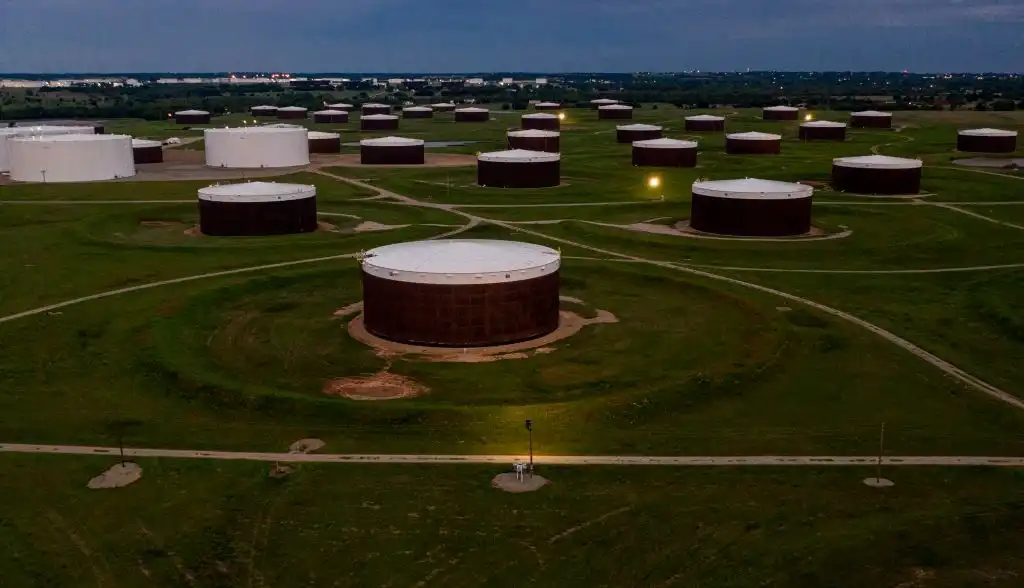
  • An aerial view of a crude oil storage facility is seen on May 5, 2020 in Cushing, Oklahoma. Rising demand for crude oil along with rising gas prices has led to an "energy shock" as the world attempts to transition to clean energy.
    Photo by JOHANNES EISELE/AFP via Getty Images

    Oil prices continue to climb this morning. Global benchmark Brent crude is at $116 a barrel, which is a near 20% increase just this week. The price may go higher as the United States imposes the first export controls connected to Russia’s energy sector. We discuss rate hikes coming in March and preview upcoming jobs numbers with Diane Swonk. Philadelphia Fed president Patrick Harker talks about the Russia-Ukraine conflict and its potential impact on what the Fed could do with interest rates.

    Read MoreDownload
  • Help wanted sign in front of a store front.

    Employers lowered the educational requirements for certain jobs during the pandemic, according to a new report from the Federal Reserve Bank of Philadelphia — potentially signaling new opportunities for workers without a bachelor’s degree. We spoke to Patrick Harker, the Philadelphia Fed’s president, about what the research can tell us about the economy. He also talked about whether Russia’s invasion of Ukraine and the resulting economic fallout could alter the Fed’s approach about raising interest rates in March. The war in Ukraine has led to high wheat prices, which impact certain parts of the world more than others. Fed chair Jerome Powell testifies today.

    Read MoreDownload
  • A harvester works in a wheat field in the Russian village of Nur-Shari.
    Oleg Nikishin/Getty Images

    From the BBC World Service: A number of commodity prices have seen sharp price increases over the past week, as has the impact of Western sanctions and reluctance to do business with Russia. As the conflict continues, what will it take to cool price swings? Plus: As Ukrainian refugees continue to flee to neighboring EU nations, interior ministers meet to discuss a plan to grant temporary protection.

    Read MoreDownload
Jesson Duller