Marketplace®
Every story is an economic story

David Brancaccio

"Future Effects" Senior Correspondent

David Brancaccio is Marketplace’s “future effects” senior correspondent. In this role, David aims to explore how short-term thinking can impact our personal finances, innovation, government policy, and more.

David worked as the host and senior editor of “Marketplace Morning Report” from 2013 to 2026, where he focused on the regulation of financial markets, the role of technology in labor markets, the history of innovation, digital privacy, sustainability, social enterprises, and financial vulnerability in older adults. David freelanced for Marketplace in 1989 before becoming the program’s European correspondent based in London in 1990.

David hosted the evening program from 1993-2003, then anchored the award-winning public television news program “Now” on PBS after a period co-hosting with journalist Bill Moyers. David has co-produced and appeared in several documentaries, including “Fixing the Future,” about alternative approaches to the economy, and “On Thin Ice,” about climate change and water security, with mountaineer Conrad Anker. David is the author of “Squandering Aimlessly,” a book about personal values and money. He enjoys moderating public policy discussions, including at the Aspen Ideas Festival, Chicago Ideas Week, and the Camden Conference in Maine.

David is from Waterville, Maine, and has degrees from Wesleyan and Stanford universities. Honors include the Peabody, Alfred I. duPont-Columbia University, Emmy, and Walter Cronkite awards. He is married to Mary Brancaccio, a poet and educator. They have three offspring, all adults. He likes making beer and building (and launching) pretty big rockets. Among his heroes are Edward R. Murrow and Wolfman Jack.

Latest from David Brancaccio

  • Coming off Easter weekend, let's look at some key economic data we may have missed. On Friday, data on core inflation in the U.S. came in much weaker than expected. Why is that important? It means that the Fed may not have to be aggressive with interest rates. Next, we'll explore how demographic surveys on the homeless population can lead to more funding for certain groups, and how a cocoa surplus in Ivory Coast is negatively affecting farmers.

    Read More
  • Robot-Proof Jobs 2: The winners of tomorrow
    Jay/Flickr

    The second episode of a special three-part podcast series on automation and the economy.

    Read More
  • Anca Dragan researches the interaction between humans and robots at UC Berkeley.
    David Brancaccio/Marketplace

    Robotics work is a good bet, if you can get it.

    Read More
  • A robot assembles parts to make engines at Nissan Motor Co. Ltd's Yokohama Plant on July 4 in Yokohama, Japan.
    Koichi Kamoshida/Getty Images

    The first episode of a special three-part podcast series on automation and the economy.

    Read More
  • A machine from Carnegie Mellon's Biorobotics Lab.
    Courtesy Carnegie Mellon Biorobotics Lab

    There's a new emphasis on designing robots to be teammates, not just tools.

    Read More
  • First up are the impending March jobs numbers, which will likely reinforce the strength of the underlying labor market, but could also reflect this winter's weather, the federal hiring freeze and a slowdown in foreign travel. Then, it's on to the President's upcoming meetings with China, where trade and North Korea are expected to be the focus.

    Read More
  • A man walks past a television screen showing file footage of a North Korean missile launch, at a railway station in Seoul on April 5, 2017. Nuclear-armed North Korea fired a ballistic missile into the Sea of Japan on April 5, just ahead of a highly-anticipated China-US summit at which Pyongyangs accelerating atomic weapons programme is set to top the agenda.
    Jung Yeon-Je / Getty Images

    President Trump's talks with China will center around both countries' relation to North Korea.

    Read More
  • Ahead of the Friday jobs report, the payroll processing company ADP is reporting that the U.S. added 263,000 private jobs to the economy in March, beating expectations. Susan Schmidt of Westwood Holdings Group explains what this says about the economy, and how this report differs from the one the government releases each month. Afterwards, we'll look at Italy's decision to place the Vatican bank on its list of states with transparent, cooperative financial systems. And finally, we'll discuss CBS' decision to create its own TV streaming service instead of striking a deal with Hulu like the other major networks. Was that a wise move?

    Read More
  • Boeing had struck a deal to sell dozens of planes to an Iranian airline, a move that got initial approval from the Obama administration. But now it needs final approval from the Trump administration. We'll look at the complicated dilemma the president's team faces. Afterwards, we'll chat with JPMorgan's chief global strategist, David Kelley, about the gap between people's attitudes and what people are actually spending. And finally, as part of our "Robot-Proof Jobs" series, we'll hear from a former real estate appraiser about how technology has affected her profession and where she is now.

    Read More
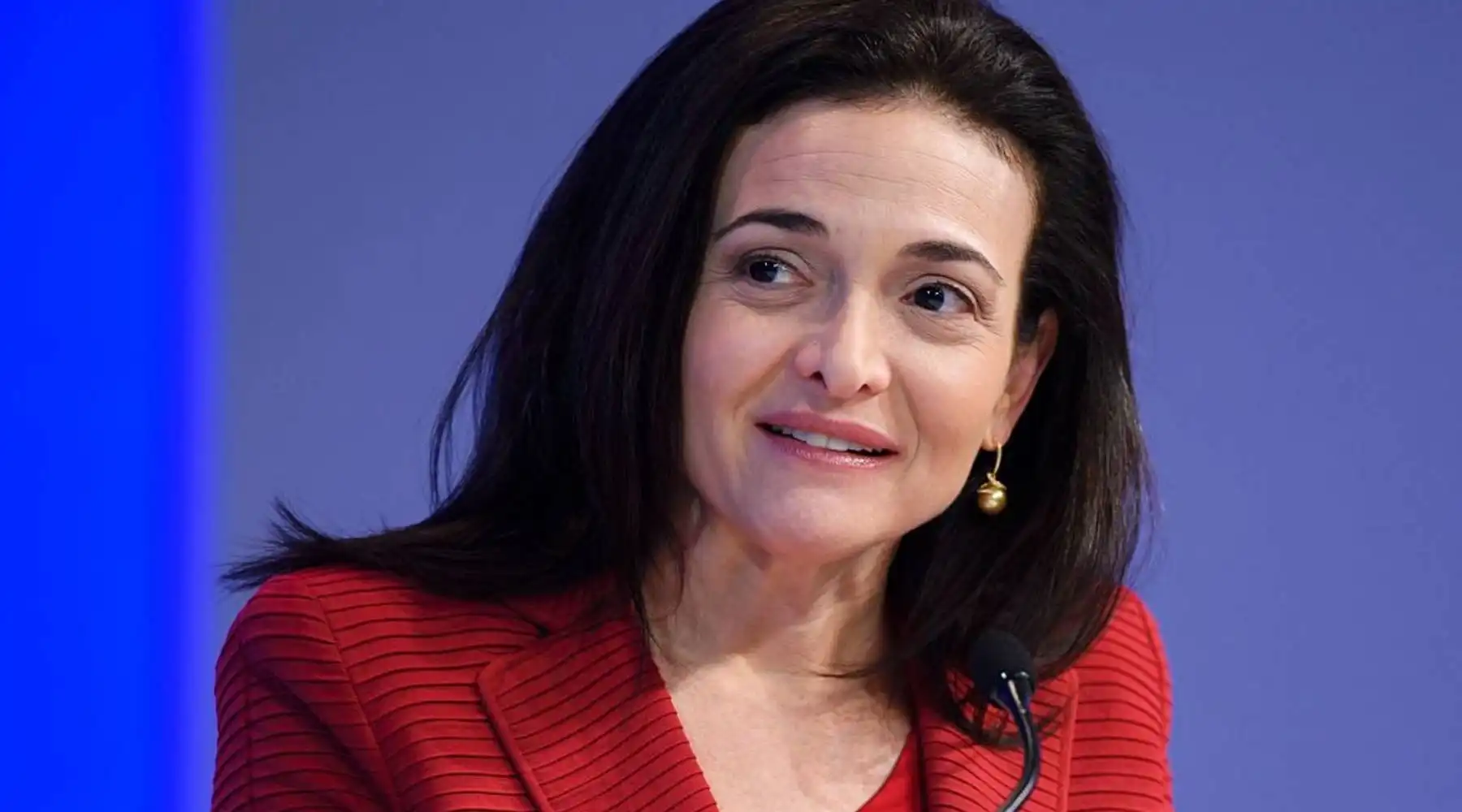
  • Sheryl Sandberg, chief operating officer of Facebook, speaks at the World Economic Forum in January in Davos, Switzerland.
    FABRICE COFFRINI/AFP/Getty Images

    The Facebook COO and LeanIn.org founder says companies need to be transparent about how they pay employees.

    Read More