Marketplace®
Every story is an economic story

David Brancaccio

"Future Effects" Senior Correspondent

David Brancaccio is Marketplace’s “future effects” senior correspondent. In this role, David aims to explore how short-term thinking can impact our personal finances, innovation, government policy, and more.

David worked as the host and senior editor of “Marketplace Morning Report” from 2013 to 2026, where he focused on the regulation of financial markets, the role of technology in labor markets, the history of innovation, digital privacy, sustainability, social enterprises, and financial vulnerability in older adults. David freelanced for Marketplace in 1989 before becoming the program’s European correspondent based in London in 1990.

David hosted the evening program from 1993-2003, then anchored the award-winning public television news program “Now” on PBS after a period co-hosting with journalist Bill Moyers. David has co-produced and appeared in several documentaries, including “Fixing the Future,” about alternative approaches to the economy, and “On Thin Ice,” about climate change and water security, with mountaineer Conrad Anker. David is the author of “Squandering Aimlessly,” a book about personal values and money. He enjoys moderating public policy discussions, including at the Aspen Ideas Festival, Chicago Ideas Week, and the Camden Conference in Maine.

David is from Waterville, Maine, and has degrees from Wesleyan and Stanford universities. Honors include the Peabody, Alfred I. duPont-Columbia University, Emmy, and Walter Cronkite awards. He is married to Mary Brancaccio, a poet and educator. They have three offspring, all adults. He likes making beer and building (and launching) pretty big rockets. Among his heroes are Edward R. Murrow and Wolfman Jack.

Latest from David Brancaccio

  • A Virgin Atlantic passenger plane comes in for a landing at Heathrow Airport.
    (Leon Neal/AFP/Getty Images)

    From the BBC World Service: For the first time in almost two years, the U.S. is allowing fully-vaccinated travelers in from 30 countries. Plus: Rising energy prices threaten the economic recovery in Spain.

    Read MoreDownload
  • Arkansas, Montana and South Carolina are opting out, but the U.S. economy is down more than 8 million jobs since the pandemic hit.
    Olivier Douliery/AFP via Getty Images

    Also today: we try to figure out who foots the bill when it comes to the new OSHA vaccination rules for companies. Union workers at John Deere are still on strike, and negotiations appear to be at an impasse. People who are entertaining thoughts of traveling for the holidays might want to consider a multitude of very costly factors.

    Read MoreDownload
  • SAN FRANCISCO, CALIFORNIA - SEPTEMBER 16: A pedestrian walks by a now hiring sign at a Lamps Plus store on September 16, 2021 in San Francisco, California. Unemployment claims inched up to 332,000 from a pandemic low of 312,000 a week before. (Photo by Justin Sullivan/Getty Images)
    Justin Sullivan via Getty Images

    Also today: The House of Representatives is expected to vote today on President Biden’s social spending and infrastructure bills. We speak to Smith College president Kathleen McCartney about her school’s move to go “no loan” in an effort to mitigate the issues of student debt.

    Read MoreDownload
  • Global markets were shocked when policymakers decided not to raise interest rates, despite weeks of hints they would.
    Justin Tallis/Getty Images

    From the BBC World Service: That credibility question is one many investors are asking today after the U.K. central bank shocked global markets yesterday when it opted to keep interest rates at an historic low amid rising inflation. Plus, ocean conservation in Belize is a key part of a $553 million “blue bond” debt restructuring deal.

    Read MoreDownload
  • Smith College is the latest school to go “no-loan,” targeting student debt
    Robyn Beck/AFP/Getty Images

    The college will eliminate student loans in financial aid packages, issuing grants instead.

    Read MoreDownload
  • The Federal Reserve building is seen on March 2021 in Washington, D.C. The Fed's tapering of bond-buying and upping of interest rates is likely to be a slow, gradual process.
    Daniel Slim/AFP via Getty Images

    Also today: Diane Swonk offers up some insight for our discussion about the markets. Airbnb is set to announce its earnings, and it’s also trying to make efforts to get on the good side of communities. We take a closer look at how the cap and trade system deals with carbon emissions. 

    Read MoreDownload
  • The transition to clean energy not only needs to move faster, but also better, according to Vijay Vaitheeswaran, global energy and climate innovation editor at The Economist.
    Getty Images

    Also today: The Federal Reserve is beginning to wind down its bond-buying program, which it started to support the economy during the pandemic.

    Read MoreDownload
  • Scandal-ridden Credit Suisse announces a sweeping overhaul
    Sebastien Bozon/AFP via Getty Images

    From the BBC World Service: The Swiss bank will expand its banking services for wealthy clients and scale back its investment banking, which has faced scandals including fraudulent loans and corporate espionage. Plus, fresh data shows global emissions have almost completely bounced back to pre-pandemic levels. And, why people in the west African country of The Gambia can’t sell their solar power, frustrating attempts to move away from fossil fuels as a source of energy.

    Read MoreDownload
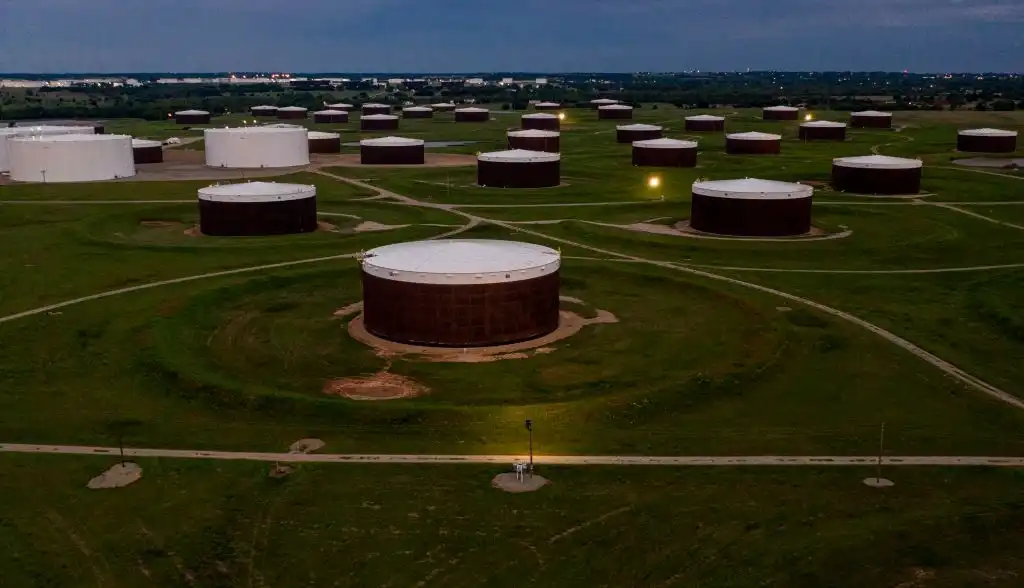
  • An aerial view of a crude oil storage facility is seen on May 5, 2020 in Cushing, Oklahoma. Rising demand for crude oil along with rising gas prices has led to an "energy shock" as the world attempts to transition to clean energy.
    Photo by JOHANNES EISELE/AFP via Getty Images

    Vijay Vaitheeswaran, editor at The Economist, on what energy shortages and rising fuel prices mean for the transition to clean energy.

    Read MoreDownload
  • Karen Petrou, author of "Engine of Inequality," laments that investors win and savers lose. "Every time the Fed steps into the market, the markets go up. The markets run by the Fed's clock," she says.
    Chip Somodevilla/Getty Images

    Also today: Supply chain issues might not have the same kind of impact on crafty retail sites such as Etsy, but there are still other logistical challenges. The BBC examines just how large inflation may loom over the U.K., especially through the eyes of one of its largest vegetable producers.

    Read MoreDownload