Marketplace®
Every story is an economic story

David Brancaccio

"Future Effects" Senior Correspondent

David Brancaccio is Marketplace’s “future effects” senior correspondent. In this role, David aims to explore how short-term thinking can impact our personal finances, innovation, government policy, and more.

David worked as the host and senior editor of “Marketplace Morning Report” from 2013 to 2026, where he focused on the regulation of financial markets, the role of technology in labor markets, the history of innovation, digital privacy, sustainability, social enterprises, and financial vulnerability in older adults. David freelanced for Marketplace in 1989 before becoming the program’s European correspondent based in London in 1990.

David hosted the evening program from 1993-2003, then anchored the award-winning public television news program “Now” on PBS after a period co-hosting with journalist Bill Moyers. David has co-produced and appeared in several documentaries, including “Fixing the Future,” about alternative approaches to the economy, and “On Thin Ice,” about climate change and water security, with mountaineer Conrad Anker. David is the author of “Squandering Aimlessly,” a book about personal values and money. He enjoys moderating public policy discussions, including at the Aspen Ideas Festival, Chicago Ideas Week, and the Camden Conference in Maine.

David is from Waterville, Maine, and has degrees from Wesleyan and Stanford universities. Honors include the Peabody, Alfred I. duPont-Columbia University, Emmy, and Walter Cronkite awards. He is married to Mary Brancaccio, a poet and educator. They have three offspring, all adults. He likes making beer and building (and launching) pretty big rockets. Among his heroes are Edward R. Murrow and Wolfman Jack.

Latest from David Brancaccio

  • War in Ukraine worsens Turkey’s cost-of-living spiral
    Burak Kara/Getty Images

    From the BBC World Service: Inflation in Turkey soared to 61.1% in March, a new record high. We take you to Istanbul to hear why higher commodity prices resulting from Russia’s war in Ukraine have exacerbated the problem in Turkey. Also, the rising cost of living is a problem being acutely felt by those in rural areas of France. And in Sri Lanka, an economic crisis has forced a series of cabinet resignations.

    Read MoreDownload
  • "I like to say that we're not doing something new, we're doing something that people have done for thousands of years, which is use everything that's grown and not throw it out," says Anna Hammond, founder of Matriark Foods.
    Patrick T. Fallon/AFP via Getty Images

    Economists say inflation is being driven by a number of factors, from supply chain disruptions to higher wages. But what about competition? In the food industry, restaurants that face more industry competition aren’t able to raise prices as much as food-at-home services. We spoke to Trevon Logan, a professor of economics at Ohio State University who helps us break down how a lack of competition in some markets could be contributing to rising prices.

    Read MoreDownload
  • "I like to say that we're not doing something new, we're doing something that people have done for thousands of years, which is use everything that's grown and not throw it out," says Anna Hammond, founder of Matriark Foods.
    Patrick T. Fallon/AFP via Getty Images

    Companies facing few competitors can hike prices more easily than those in competitive markets.

    Read MoreDownload
  • BERLIN, GERMANY - FEBRUARY 09:  (EDITORS NOTE: Image was created using a variable planed lens.) The natural-gas fuelled Heizkraftwerk Berlin-Mitte power and heating plant of Swedish energy company Vattenfall on February 9, 2022 in Berlin, Germany. Natural gas has become a central issue for Germany in its policy considerations regarding the simmering situation over the Russian troop build-up on the border to Ukraine. While Russian natural gas makes up half of Germany's foreign gas imports, Germany is also Europe's biggest importer of Russian natural gas. Should war break out and western countries impose tough sanctions on Russia, Moscow could retaliate by temporarily cutting off Germany and other European countries from its natural gas supply. (Photo by Sean Gallup/Getty Images)

    This week, Germany has begun the early part of an emergency plan that could lead to the rationing of natural gas. The Kremlin is demanding payment for gas in rubles from countries sanctioning Russia for its invasion of Ukraine, threatening to cut off supplies if its conditions aren’t met. We spoke to Stephen Richter, publisher and editor in chief of The Globalist and director of the Global Ideas Center, who is trying to conserve energy at home in Berlin. President Biden announced that the U.S. will release a lot more of its oil reserves over the next six months – could other countries follow suit?

    Read MoreDownload
  • Russia’s Foreign Minister visits India to shore up long-standing friendship
    iStock/Getty

    A meeting between Russia and India’s foreign ministers has just wrapped up in New Delhi. The BBC’s Rajini Vaidyanathan in Delhi says that top of the agenda was how India, which has remained neutral in the Ukraine conflict, can continue to pay for the oil it gets from Russia without breaking sanctions. Hungarians will go to the polls this Sunday as Prime Minister Viktor Orban seeks a record fifth term in office. We explain how the war in Ukraine and Orban’s relationship with Vladimir Putin have shaped this election. And last night in the Sri Lankan capital Colombo, police say they arrested more than 50 people as protesters stormed the presidential palace.

    Read MoreDownload
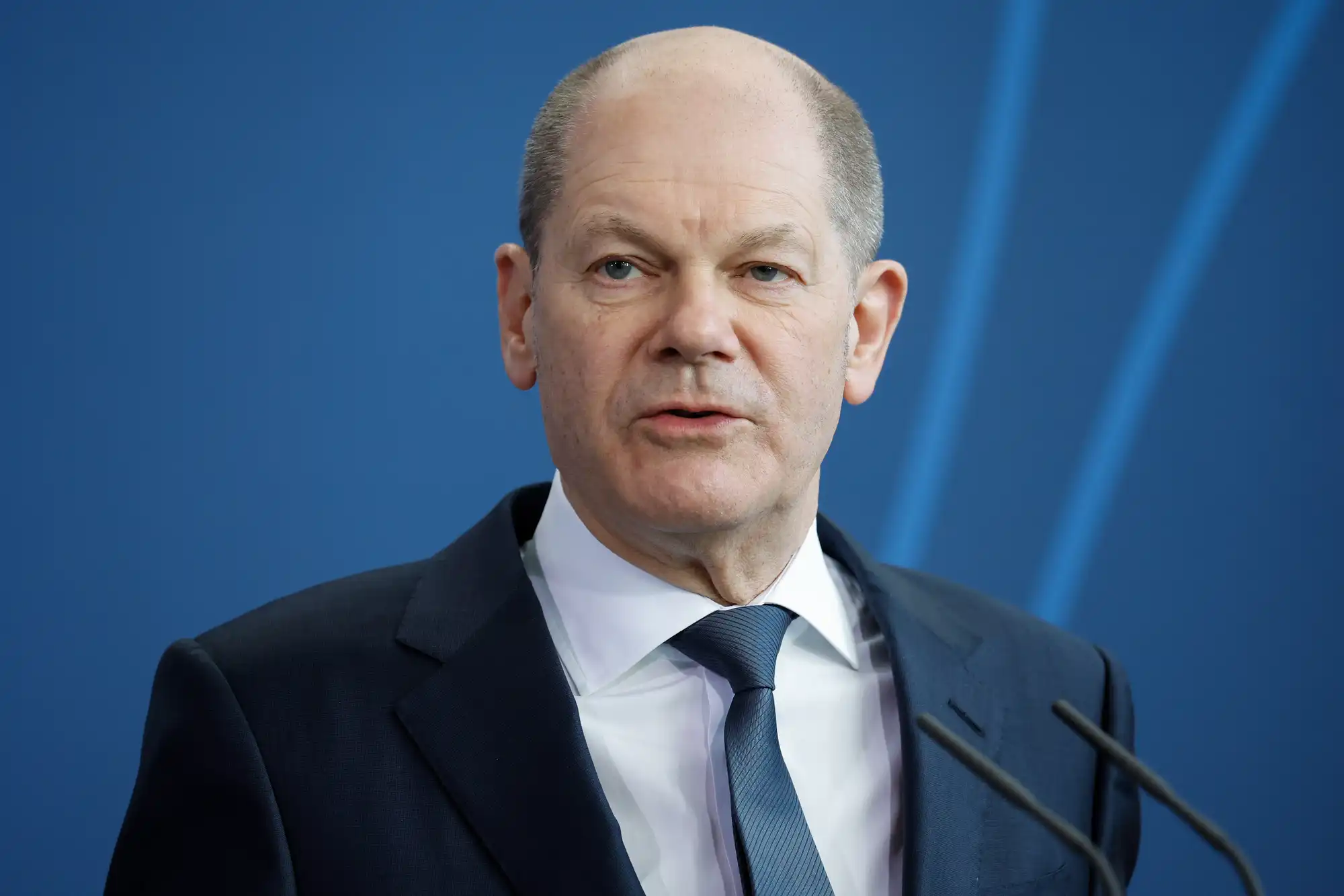
  • Forty percent of Germany's natural gas comes from Russia. Above, German Chancellor Olaf Scholz.
    Odd Andersen/Getty Images

    Stephen Richter of The Globalist says Germany is “paying dearly” for its dependence on cheap Russian energy.

    Read MoreDownload
  • Russia is prepared to help ease energy prices if a controversial natural gas pipeline is approved.
    Sergei Ilyin/Sputnik/AFP via Getty Images

    The Russian president said he has signed a decree that will force foreign buyers of his country’s natural gas to pay in rubles. Starting Friday, Vladimir Putin says pay in rubles – or contracts will be halted. Diane Swonk helps us dig into the latest data that shows a key inflation measure the Fed watches reach a 40-year high. The Securities and Exchange Commission is proposing new rules on the firms known as SPACs, or special-purpose acquisition companies. They raise money and buy out a startups to take them public.

    Read MoreDownload
  • OPEC and Russia have reached a deal on oil production. But can that stop the downward price trend?
    David McNew/Getty Images

    President Biden is ready to order the release of up to a million barrels a day of oil from the United States strategic petroleum reserve in an effort to battle rising gas costs. American workers are failing drug tests at the highest rate in decades, because the worker shortage has caused many companies to ease drug testing. A bill heading to the Senate would provide wider access to 401(k) benefits.

    Read MoreDownload
  • A supporter of ruling Pakistan Tehreek-e-Insaf (PTI) party holds a placard with a picture of Pakistan's Prime Minister Imran Khan during a rally in Islamabad on March 27, 2022
    Aamir Qureshi/AFP via Getty

    From the BBC World Service: Russia is saying it will require payments for energy exports in its own currency, the ruble, rather than via the current euro-denominated contracts. But the BBC’s Jenny Hill in Moscow says it’s not yet clear how that will work. The United Nations is launching the largest fundraising appeal in its history, hoping to raise nearly $4.5 billion for Afghanistan. And in Pakistan, Prime Minister Imran Khan faces a vote of no-confidence in parliament.

    Read MoreDownload
  • Computer trade in international financial markets

    Susan Schmidt of Aviva Investors dives into the latest data from private payroll processing firm ADP with us. A report from the NAACP and the Kapor Center reveals a lack of diversity in several facets of the tech industry. Where can homeless people go after they have to stay at a hospital? Medical respite centers that are starting to emerge all over the country could provide the answer.

    Read MoreDownload