Marketplace®
Every story is an economic story

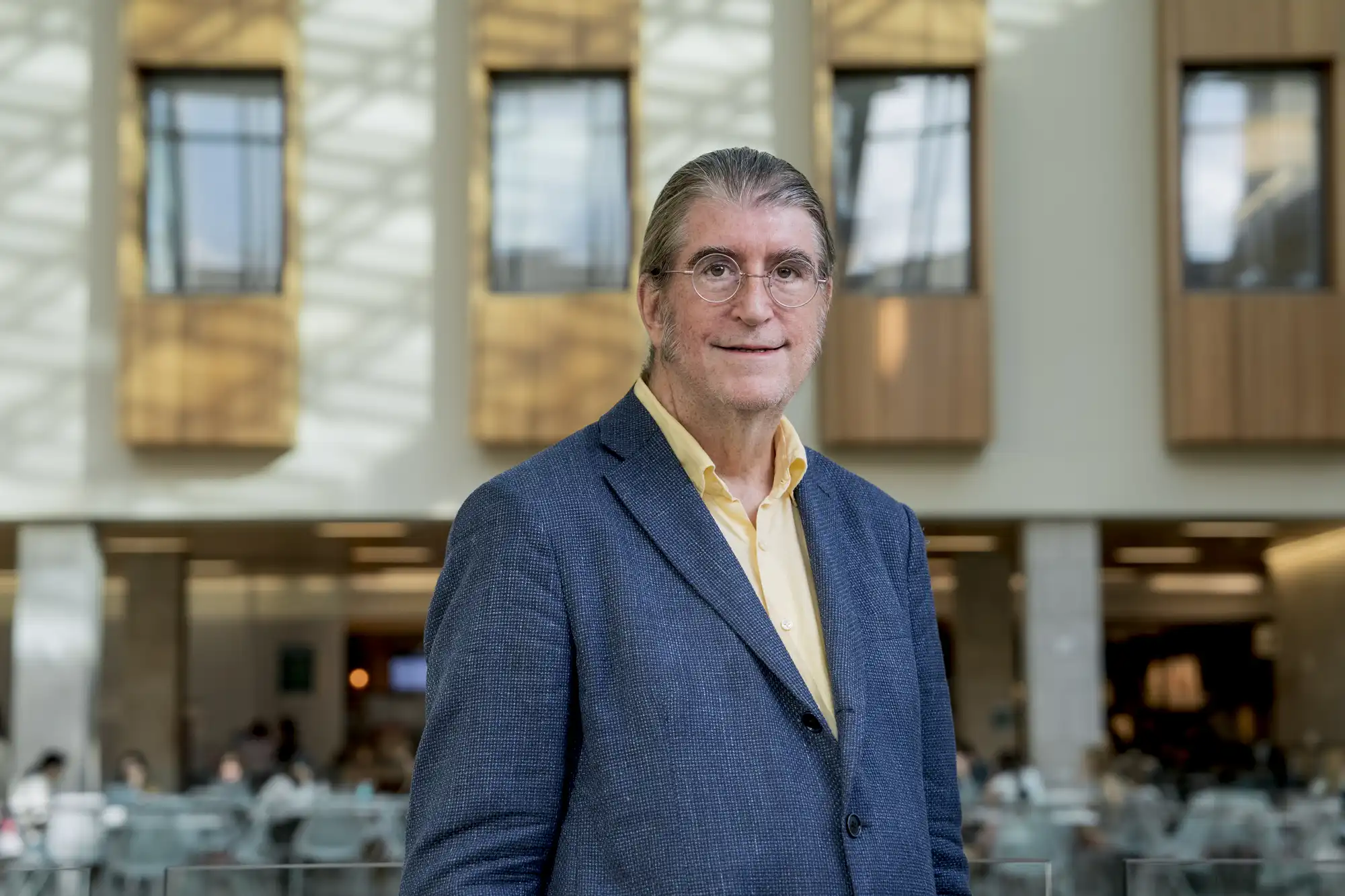
David Brancaccio

"Future Effects" Senior Correspondent

David Brancaccio is Marketplace’s “future effects” senior correspondent. In this role, David aims to explore how short-term thinking can impact our personal finances, innovation, government policy, and more.

David worked as the host and senior editor of “Marketplace Morning Report” from 2013 to 2026, where he focused on the regulation of financial markets, the role of technology in labor markets, the history of innovation, digital privacy, sustainability, social enterprises, and financial vulnerability in older adults. David freelanced for Marketplace in 1989 before becoming the program’s European correspondent based in London in 1990.

David hosted the evening program from 1993-2003, then anchored the award-winning public television news program “Now” on PBS after a period co-hosting with journalist Bill Moyers. David has co-produced and appeared in several documentaries, including “Fixing the Future,” about alternative approaches to the economy, and “On Thin Ice,” about climate change and water security, with mountaineer Conrad Anker. David is the author of “Squandering Aimlessly,” a book about personal values and money. He enjoys moderating public policy discussions, including at the Aspen Ideas Festival, Chicago Ideas Week, and the Camden Conference in Maine.

David is from Waterville, Maine, and has degrees from Wesleyan and Stanford universities. Honors include the Peabody, Alfred I. duPont-Columbia University, Emmy, and Walter Cronkite awards. He is married to Mary Brancaccio, a poet and educator. They have three offspring, all adults. He likes making beer and building (and launching) pretty big rockets. Among his heroes are Edward R. Murrow and Wolfman Jack.

Latest from David Brancaccio

  • An employee of an energy company inspects an electrical transformer substation destroyed by Russian missiles strike outskirts of Khark?v, on October 4, 2022, amid the Russian invasion of Ukraine. (Photo by SERGEY BOBOK / AFP) (Photo by SERGEY BOBOK/AFP via Getty Images)

    From the BBC World Service: After suffering a series of defeats on the battlefield, Moscow is now targeting electricity and water networks in Ukraine – President Zelensky says 30% of his country’s power stations have been destroyed so far. Citizens now face national energy restrictions for the first time since the invasion. Plus, Turkey’s unusual approach to interest rates at a time of soaring inflation. And, why the traditional South Korean dish of Kimchi is under threat.

    Read MoreDownload
  • Some tax relief from the IRS, courtesy of inflation
    Chip Somodevilla/Getty Images

    Because of the size of inflation these days, the IRS has had to make bigger adjustments than usual – which could be helpful. We talk bank runs with Philip Dybvig, one of the winners of the Nobel Prize in Economic Sciences.

    Read MoreDownload
  • A lesson in tribal sovereignty … from Tesla
    Joe Raedle/Getty Images

    Tesla’s entries into tribal lands also means entry into a different legal sphere as well. A reporter from The Markup helps shed some light on inequitable pricing on broadband internet around the country. We talk Miami real estate with Amy Scott as the second season of “How We Survive” debuts.

    Read MoreDownload
  • Philip Dybvig jointly won the 2022 Nobel Prize in Economic Sciences for his research on bank runs, deposit insurance, and financial regulation.
    Courtesy Washington University in St. Louis

    Professor Philip Dybvig, co-winner of this year’s Nobel Prize in Economic Sciences, co-authored a seminal paper on how deposit insurance can help prevent financial crises.

    Read MoreDownload
  • Hong Kong tackles a brain drain
    Anthony Kwan/Getty Images

    From the BBC World Service: Hong Kong’s new leader John Lee says he wants to rebuild the economy and attract potential new employees from around the globe. The economy has been undermined by an ongoing political crackdown following the national security law introduced in 2020 and coronavirus restrictions. Plus, while many countries have severed ties with Russia, India is pinning its defense export hopes on a joint venture. And, how can South Africa make its energy system more robust after years of blackouts?

    Read MoreDownload
  • Happy birthday, Clean Water Act
    Photo by Mario Tama/Getty Images

    The act, instituted in 1972, turns 50 today. We measure its impact thus far. Stifel Financial’s Lindsey Piegza helps dish out some market perspective. Then, we dive more into the difficult job landscape that awaits people who’ve been incarcerated.

    Read MoreDownload
  • Even in today's relatively hot job market, people who have served prison time may find it difficult to secure employment.
    Octavio Jones via Getty Images

    Getting a job with a record is hard, even in this labor market, says Robert Rooks, CEO of the non-profit REFORM Alliance.

    Read MoreDownload
  • Someone who spent time behind bars shares perspective of the job market
    Drew Angerer/Getty Images

    First, the U.S. plans to sell more oil to help dial back gas prices. Then, a Miami-based realtor opens up about his struggles finding employment after doing time in prison. 

    Read MoreDownload
  • Clara Mattei, author of "The Capital Order," argues government attempts to impose austerity reflect a deeper history of labor force suppression.
    Getty Images

    From the BBC World Service: Natural gas prices have spiked since the Kremlin limited supplies to European Union countries. The European Commission is outlining measures to try and control high energy prices. Plus, China delays publishing key economic data during the Communist Party Congress. And, why a city in Uganda has banned women from sitting in the front cabin of trucks.

    Read MoreDownload
  • Noel Barrientos, now a Miami-based realtor, wrestled with  employment and parole fees in the months after being released from prison.
    Courtesy Noel Barrientos

    Noel Barrientos, now a Miami-based realtor, shares his struggles (and successes) of navigating the economy after being released from prison.

    Read MoreDownload