“It was like, ‘OK, this is a horrific event. And how are we going to recover from this?'” says Dawn Speakman, founder of Drayage Solutions in Baltimore.
Stocks close mixed; Chicago Fed president says inflation progress has stalled; American Express profits rise; Netflix to stop reporting quarterly membership numbers.
The designation applies to chemicals long used in consumer goods; Israel’s credit rating gets a downgrade from S&P; France requires shrinkflation warnings; American Express profits jump on more consumer spending.
From the BBC World Service: Hospitality businesses in New York City have said quicker work permits for arriving migrants could be key to filling vacancies in the sector.
Wall Street loves artificial intelligence companies, but has the romance gone too far, too soon? Plus, regional banks are vulnerable to the state of commercial real estate.
D.R. Horton increased quarterly profit by 27%; TSMC forecasts sales increase of up to 30% on A.I. chip demand; initial jobless claims remain at a low of 212,000; U.S. investigating China’s shipbuilding industry over potential unfair subsidies.
Ikea is launching a new line of gaming furniture more suited for the living room than the basement. It’s a sign of how gamer demographics are maturing.
From the BBC World Service: The European Commission has given TikTok 24 hours to provide more information on its new app that pays users to watch videos.
Reporter Eve Thomas explains how breakthroughs in nuclear magnetic resonance spectroscopy could bring definition and regulation to an unbridled spirit.
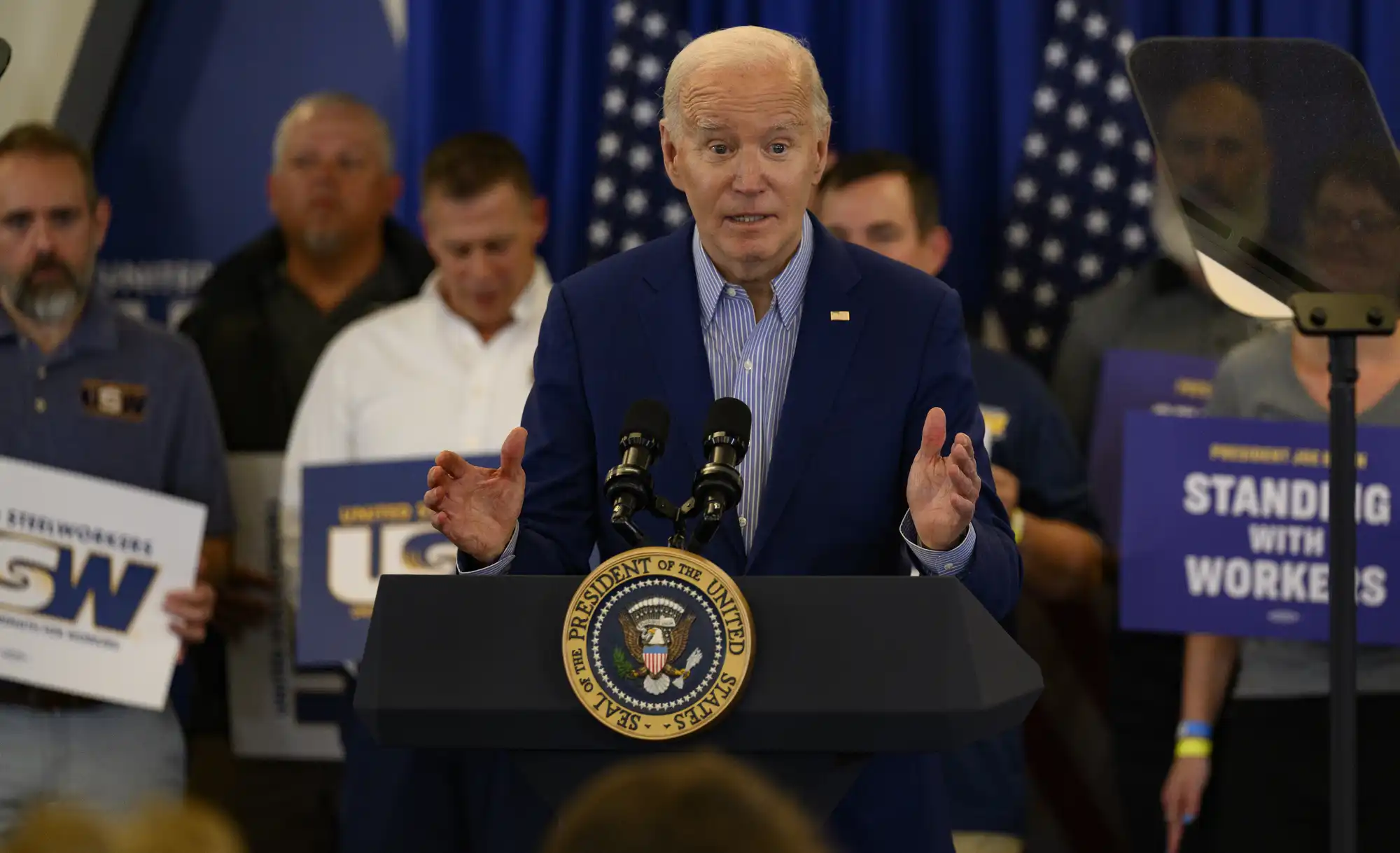
White House says China is flooding U.S. with artificially cheap steel, aluminum; United Airlines Q1 losses less than feared; Tesla wants shareholders to reinstate Musk’s $56 billion pay package; Transportation Department to partner with states to investigate airline passenger complaints.
Courtesy Architectural Salvage Warehouse of Detroit
Chris Rutherford, executive director of Salvage Warehouse of Detroit,
shares how the deconstruction business is a huge benefit for communities economically, environmentally and socially.
From the BBC World Service: Despite extensive sanctions, the International Monetary Fund has forecast Russia’s economy will grow more than any other rich nation this year.
The EPA says forever chemicals, or PFAS, should be filtered out of drinking water. Tasha Stoiber of the Environmental Working Group discusses the technology for doing so and explains how people can mitigate the risk at home.
Stocks close mixed; Powell says it’ll take longer than expected to be confident that inflation is moving down; housing starts fall; industrial production rises.
Some remote workers, able to work anywhere, are opting to move to Medellín. It’s brought a welcome financial boost to some locals, but others say they’re being priced out.
IMF improves global economic growth forecast to 3.2%; new housing construction plummets in March; UnitedHealth beats earnings forecasts despite ransomware attack; Bank of America’s profit falls amid high interest rates.
New York Times’ best-selling author Michael Arceneaux discusses his personal journey with debt and the importance of letting go of the shame often attached to it.
Arizona became a hotbed of election-related conspiracy theories in 2020 after President Joe Biden won the state by a narrow margin. As artificial intelligence threatens to supercharge the spread of misinformation, Arizona Secretary of State Adrian Fontes discusses how his office is responding.
If you’ve recently dug through the racks of a Goodwill and found a lot of lower-quality fast fashion, you’re not alone, says Kelsey Vlamis of Business Insider.